 |
|
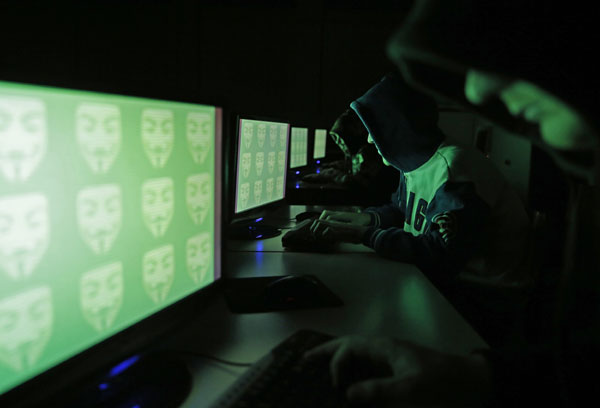
People pose in front of a display showing the word 'cyber' in binary code, in this picture illustration taken in Zenica December 27, 2014. [Photo/Agencies] |
There are strikingly divergent arguments over whether the Chinese portion of cyberspace is under-or over-regulated.
But there is little disagreement that the virtual space, a prominent aspect of the public sphere, needs rules. And, not just in China.
Legislating on cyber security is becoming more pressing as countries have become increasingly aware it is a matter of national security.
However, it is a complex issue because a good law covering cyberspace must balance security concerns and civil rights and liberties.
A law that is so closely related to the ways and extents to which people access and benefit from the Internet, or any form of information networks, must have the endorsement of the general public. And the authorities have taken the sensible step of presenting the draft legislation for public scrutiny.
As has been anticipated, the draft law appears to be a mixed blessing. It provides answers to some of the oft-asked questions, but it fails to answer others.
Which is why some love it, and some fear it.
Cyber sovereignty advocates will endorse it; because from their perspective, it bestows on domestic authorities ample latitude to do whatever they deem necessary for national sovereignty. For this country, sovereignty is unquestionable, nonnegotiable.
Stability-and-order preachers will also applaud it; because it arms regulators with all the tools available to make sure all sorts of harms are kept at bay. In particular, government offices can order the suspension of network services when they believe national security is threatened.
Law enforcement agencies too will treasure it; because the real-name registration requirements for accessing information networks will guarantee traceability of online activities. When necessary, they can order network service providers to "cooperate" and "assist".
Parents and teachers worried about the omnipresence of porn and other forms of obscenity on the Internet will no doubt appreciate the obligations it places on service providers regarding content.
And those of us who have been driven crazy by the rampant theft and trade in personal information may find its clauses on individual privacy protection reassuring.
But it would be unfair if a law like this is introduced without proper precautions against potential abuse by the regulators. This is especially true given public office holders' poor track records when it comes to self-regulation.
To prevent abuse, national security concerns must be defined in explicit terms, and restrictions on information flow must be subject to stricter approval procedures.
 Being unaware of hypocrisy is itself hypocrisy

Copyright 1995 - . All rights reserved. The content (including but not limited to text, photo, multimedia information, etc) published in this site belongs to China Daily Information Co (CDIC). Without written authorization from CDIC, such content shall not be republished or used in any form. Note: Browsers with 1024*768 or higher resolution are suggested for this site.
License for publishing multimedia online 0108263 Registration Number: 130349