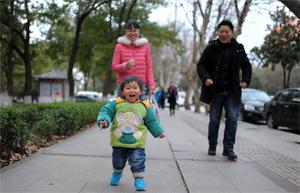
October 17 is the UN designated International Day for the Eradication of Poverty - what we are calling End Poverty Day.
There is much to celebrate on this day: the World Bank’s latest numbers show that since 1990 nearly 1.1 billion people have escaped extreme poverty. China’s role in this global success storyhas been crucial: The country lifted 730 million people out of extreme poverty over the same time period, due to impressive growth, and policies that favored the improvements in incomes and livelihoods of the poorest.
This success, however, is no cause for complacency. Worldwide nearly 800 million people were still living on less than $1.90 a day in 2013, the latest year for which we have global numbers. This is unacceptable in a world in which so many have so much. According to official figures, in China, 55 million people were living in povertyin 2015 - so reductions in poverty in China will continue to have a strong impact on the world’s goal to end extreme poverty by 2030.The road ahead will not be easy. Over half of the world’s remaining extreme poor are now living in Sub-Saharan Africa, and in the future willincreasingly live in fragile situations and be part of marginalized groups that have traditionally not benefitted from policies and programs that have worked for others- so it will take deliberate policy action and new approaches to go the last miles toward 2030.
Beyond poverty,many citizens and policy makers around the world are increasingly concerned about income inequality. Reducing highincome inequality will, simply put, be vital to ending extreme poverty by 2030, the goal that the world community has committed to as part of the Sustainable Development Goals. We cannot rely solely on economic growth to get there. It will be crucial to ensure that growth benefits the poorest the most, and is able to unlock opportunities for today’s extreme poor to get better jobs, access better quality services, and lay the foundations for the next generation to escape the confines of extreme deprivation. Reducing inequality is also crucial for sustaining the political support for the measures countries need to take to generate the economic growth and jobs that can lift people out of poverty.
Contrary topopular belief, inequality between all people in the world has declined consistently since 1990- and this was driven in large part by countries like China and India catching up with richer countries. Even within-country inequality has been falling in many countriessince 2008—for every country that saw a substantial increase in inequality during this time period, two others saw a similar decrease. Inequality is still far too high, though, and important concerns remain around the concentration of wealth among those at the top of the income distribution. Income inequality in China seems to have peaked, but more can be done to further its recent decline. Official statistics show that income inequality (using the Gini coefficient, the most common measure of income inequality) declined from 0.49 to 0.46 between 2008 and 2015, but remains considerably higher than it was thirty years ago.
China has set the ambitious goal to eliminate extreme poverty during the 13th five year plan period. Already, the country has made important strides in a number of areas identified by our researchers as essential to building poor people’s earnings, including in early childhood development and nutrition, universal health coverage, universal access to quality education, cash transfers to poor families, rural infrastructure- especially roads and electrification, and progressive taxation.Key challenges ahead include further improving access to better jobs through further reforms in the household registration system, strengthening poverty data and targeting of poverty programs on the remaining poor who may be harder to reach, such as the elderly and ethnic minorities, and improving targeting and depth of China’s main social safety net, dibao.
As we mark End Poverty Day 2016 in China, we can be proud of the role that the country has played in lifting hundreds of millions out of extreme poverty, while being realistic about the challenges ahead. China will undoubtedly continue to drive global progress in eliminating poverty, and has an opportunity to show that more inclusive growth and better opportunities for its poorest citizens is possible.
The author?is the World Bank Country Director for China。


Copyright 1995 - . All rights reserved. The content (including but not limited to text, photo, multimedia information, etc) published in this site belongs to China Daily Information Co (CDIC). Without written authorization from CDIC, such content shall not be republished or used in any form. Note: Browsers with 1024*768 or higher resolution are suggested for this site.
License for publishing multimedia online 0108263 Registration Number: 130349