Reform can bring gaokao level with the times
 |
|
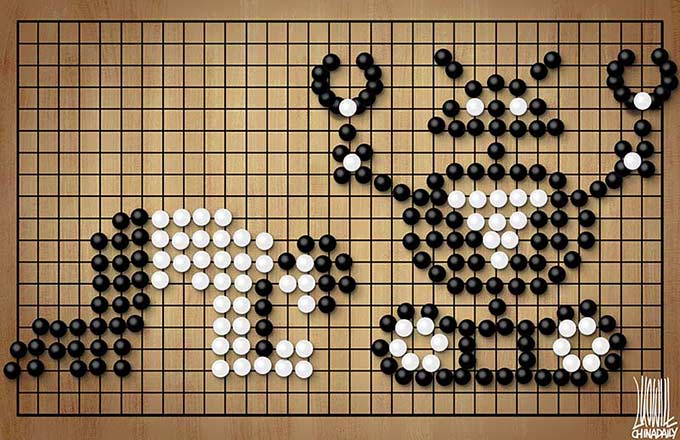
SHI YU / CHINA DAILY |
But with the passage of time, it seems gaokao's power of giving people a better future is weakening.
International experiences show that higher education can drastically change people's lives in developing regions and less-developed regions, while attending college is not the only choice of people in advanced societies. The declining attraction of gaokao is the inevitable result of China's rapid social and economic development. Therefore, it is unrealistic to expect a majority of the college students to get the same opportunities and benefits that the successful 4 percent students got four decades ago.
People should realize that the standard of gaokao and the college admission procedure have not changed much in the past four decades, even though the number of examinees has increased from hundreds of thousands to about 10 million, which could hinder China's education reform as well as the students' overall development.
Most of the gaokao examinees labor with single-minded focus to get high scores. But high scores can only get them admission to a college, without necessarily helping them get good jobs or build brighter careers. As the examinees increase in numbers and become more diversified, the contradiction between the requirements of gaokao and the path to people's healthy growth becomes more complicated.
Since the gaokao system is very rigid, it cannot help the 10 million examinees every year to choose their true calling or to succeed in the fields they are compelled to opt for. Besides, in comparison with the evaluation and admission standards in other countries, China's gaokao seems outdated.
Gaokao is in urgent need of reform, and the educators have already launched it. But it will take some time to yield results.
In the interim period, students should change their attitude toward gaokao. They have to learn to see gaokao, not as their goal, but as a means to achieve their respective goals. True, gaokao can change your life, but whether it actually will or not depends on the choices you make.
Only when students, their parents and teachers make sincere joint efforts can they strike a balance between the pursuit of high scores in gaokao and the quest for healthy individual development.
As more and more people get admitted to colleges, how to master all the aspects of your discipline and acquire practical skills are more important than just getting a college degree. If the students are conscious of this fact, they could use gaokao to make better preparations for the career of their choice and avoid the negative impact the exams can have on their development.
Countless numbers of youths with diverse natures and choices have taken gaokao in the past four decades. But to better meet the new generations' growth and development requirements, gaokao needs more practical reform. For one, more diverse standards should be introduced in gaokao to suit the disparate requirements of the students and prepare them for not just the job market but also research and development, entrepreneurship and other creative fields. And for that, the examinees should be given more space and independent choices.
The author is a researcher at the National Institute of Education Sciences.