BRICS looks forward to brighter future
 |
|
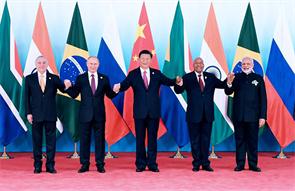
Leaders of BRICS countries pose for group photos after the ninth BRICS summit in the eastern city of Xiamen, Fujian province, Sept 4, 2017. [Photo/Xinhua] |
The BRICS (Brazil, Russia, India, China and South Africa) Forum was established in 2011, with the intention to support and encourage cooperation between the BRICS nations in commercial, political and cultural dimensions. The five member states of BRICS are nations across the globe, each with unique culture, different economic sizes, and social and economic developments. However, one thing the BRICS nations have in common is that each plays significant roles in their regional affairs.
The Xiamen BRICS Forum deepened and extended the cooperation among the BRICS nations by removing some of the trading barriers, and developing blueprints and mechanisms for fostering eased service trading, faster currency swap and currency settlement. The organization also introduced joint ventures supported by both government capital and social capital. With the New Development Bank, formerly known as the "BRICS Development Bank", in place since 2014, these inked proposals and signed agreements will further strengthen the economic and financial cooperation among the BRICS nations in supporting public and private projects by providing more options in working capital, and speedier handling of currency swap and currency settlement.
The total foreign investment made during the past decade, by the BRICS nations, amounted to 197 billion US dollar, while only 7 percent of those investments were devoted in the BRICS nations. There are huge potentials in strengthened economic, financial and technological cooperation waiting to be explored and fully utilized for the mutual benefits of the BRICS nations. It is noteworthy to mention that the five nations represent approximately 40 percent of the world population, contributing around 50 percent to the world economic growth during the past decade. The prosperity of the BRICS can and will contribute to the economic and financial stability of the world economy, as well as to the wellbeing of the world populations – for example, by providing more job opportunities to the general public of the five nations through expanded economic and financial cooperation. The BRICS nations are seeking more innovative ways to work together to benefit their people directly and people living their surrounding countries indirectly.
The Xiamen BRICS forum has also invited leaders from emerging market economies and developing countries – including Egypt, Mexico, Thailand, Tajikistan and Guinea – to participate in the forum. With gradual cooperation from more developing countries and emerging market economies, the BRICS Forum can build inclusive cooperation with more developing economies or emerging market economies who share similar concerns: ranging from deep-seated economic and social structural problems to underdeveloped infrastructures, which are required to support continuous and sustainable economic and social developments. Hence, those successful experiences from the BRICS nations can and will provide some of the answers to help these nations to address some of the challenges they are facing.
Chinese President Xi Jinping emphasized, multiple times in his keynote speech to the BRICS heads, as well as to the business and industrial leaders from the participation nations, that the BRICS highly value mutual respect, openness and tolerance, as well as mutual benefit which, President Xi said he believes, is the cornerstone to the success of the cooperation among the BRICS nations in the past decade and will continue to be so in the foreseeable future cooperation among the BRICS nations, and cooperation between BRICS and other emerging market economies and developing economies.
The author is Assistant Professor in economics at?Nottingham University Business School China.
- Ningbo products shine at BRICS Summit
- BRICS nations stride on for second 'golden decade' of cooperation
- BRICS leaders launch BRICS Cultural Festival and Photo Exhibition in Xiamen
- BRICS Plus leaders agree on closer South-South cooperation: Xi
- BRICS committed to making pie of global economy bigger
- Full text of President Xi's remarks at press conference of BRICS Xiamen Summit
- BRICS focus on South-South synergy