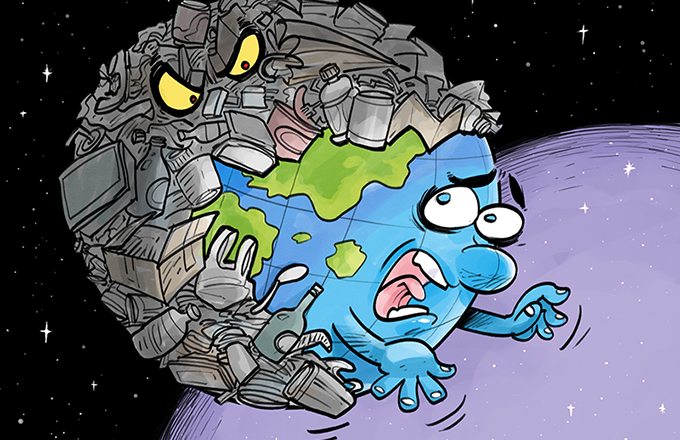
Vision for a pollution-free planet Earth
 |
|
Italian architect's 'vertical forest' to address pollution [Photo/Stefano Boeri Architects] |
But global trends are showing that this is no longer the case. It's now clear that sustainable development is the only form of development that makes sense, including in financial and economic terms. The drive toward a pollution-free planet provides an opportunity to innovate and become more competitive.
The energy revolution currently unfolding is a game changer, as is the increased mobilization around climate. The rapidly falling cost of energy from renewable sources, such as wind and solar power, means that the countries leading the shift away from fossil fuels will reap the greatest benefits to their economies, as well as their environments. These countries will have better, faster transport networks and more flexible power grids.
With the transition to green and sustainable development under way, we now need to focus on how to intensify and accelerate these trends in order to protect the environment, combat climate change and curb pollution. As I see it, there are five critical pieces to this puzzle:
First, we need political leadership and partnerships. A global compact on pollution would ensure sustained engagement at the highest level and make prevention a priority for all. It would also encourage policymakers and other key partners, including the private sector, to integrate prevention into national and local planning, development processes, and business and finance strategies.
Second, we need the right policies. Environmental governance needs to be strengthened-with targeted action on "hard-hitting" pollutants through risk assessments and enhanced implementation of environmental legislation, including multilateral environmental agreements and other measures.
Third, we need a new approach to managing our lives and economies. Sustainable consumption and production, through improved resource efficiency and lifestyle changes, should be promoted. Waste reduction and management must be prioritized.
Fourth, we need to invest big. Mobilizing finance and investment in low-carbon opportunities and cleaner production and consumption will drive innovation and help to counter pollution. Increased funding is also needed for research, pollution monitoring, infrastructure, management and control.
And fifth, we need advocacy for action. Citizens need to be informed and inspired to reduce their own pollution footprint and advocate for bold pollution-beating commitments from the public and private sectors.
With the United Nations Environment Assembly just over a month away, we now have the opportunity to dramatically step up our ambitions. Science is delivering great advances in our understanding of pollution and its impacts on people, economies and the environment.
Citizens are more aware than ever before of how pollution affects their lives and they are demanding action on what has become a critical public health issue. At the same time, experts and businesses are developing the technology to tackle these problems at all scales, from local to global. Financiers are increasingly ready to support them, while international bodies and forums, including the UN, stand ready to help to channel this momentum and turn it into firm action.
The responsibility for driving change on this broad front is shared among and within nations. Government policies and programs will play a central role, both nationally and internationally. Businesses, consumers, investors, community groups and thought leaders must also be fully involved if we are to succeed. Technology and economic innovation are key, as is mobilizing finance at scale. Investments need to be harnessed to address climate and pollution challenges.
My report to the UN Environment Assembly examines the dimensions of pollution and identifies a way forward through a framework for action. I invite our partners in government, business, and civil society, as well as citizens around the world, to consider the report, act on its recommendations, and join us in the fight to beat pollution around the world.
The author is head of UN Environment.