Poor Pakistanis donate kidneys for money
(AP)Updated: 2006-11-13 09:33
JANDALA, Pakistan - Nassem Kausar has done it. So, she says, have her sister, six brothers, five sisters-in-law and two nephews. Each has sold a kidney to a trade that has led Pakistan's media to dub the country a "kidney bazaar."
"We do this because of our poverty," said Kausar, who is in her 30s and lives with her family in Sultanpur Mor, a village in eastern Pakistan.
|
|
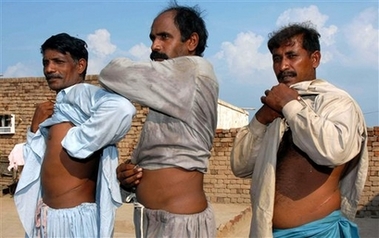
Critics blame an economic system that enmeshes farmers in chronic debt, forcing them to sell their kidneys, and say the trade should be banned. The government says it is taking action.
In the United States, donating kidneys for money is banned. But the Belgium-based International Society of Nephrology has suggested expanding the pool of kidney donors by legalizing payment of about $40,000 to donors.
At least 20 transplant clinics exist in Pakistan, and 10 percent of the patients are foreigners, many from the Middle East and "one or two" from Europe, said Bakhsh Ali, a senior official at the Sindh Institute of Urology and Transplantation.
The institute, a free transplant clinic run jointly by the government and private organizations, has joined the call for banning the sale of kidneys.
The government has drafted legislation to "regulate" kidney transplants, monitor surgeries and "encourage family donors," said Health Ministry official Athar Saeed Dil, who has helped draft the proposed law.
He declined to say if an outright ban was planned, but Mukhtar Hamid Shah, a prominent surgeon who opened a transplant center in 1979, said the government plans to outlaw donations for money by non-family members and impose seven-year prison sentences on surgeons who break the law.
Shah, an ex-army surgeon, opposes any ban. "We have no interest in whether or not a donor is a relative of the recipient. The patient should have life," he said at his hospital in Rawalpindi, near the capital, Islamabad.
The Sindh Institute's Ali said donors need constant check-ups to keep their blood pressure and sugar under control and protect the remaining kidney. In Jandala, another eastern village, kidney donors said they received no follow-up care.
"I pant. I cannot run. I cannot pick up heavy things," said Allah Yar, a 50-year-old farmer who has suffered poor health for seven years since selling a kidney. The father of six said he needed to pay off a $3,000 loan to his landlord, but got only about $1,200 for his kidney, meaning he remains deep in debt.
Sitting nearby, Mohammed Akram, a 22-year-old brick kiln worker, said he sold his kidney to pay off his father's debt.
"I cannot work like I did before. I cannot walk. I cannot run," said Akram. "I did this for my father but destroyed myself."
Shah, the surgeon, said the government and transplant clinics should form a joint trust to give money to donors and give them postoperative care. Meanwhile, he said, he charges Pakistanis half what foreigners pay. Kidneys are not shipped abroad because Pakistan does not have any facility for storing and transporting them, he said.
Ahmed Jama, a 47-year-old British national of Somali origin, was recuperating at Shah's clinic after a transplant that cost him $10,000.
Describing his meeting with his donor, the former schoolteacher and father of six said: "I thanked him many times. I told him 'you saved my life and starting from today I feel as if we are brothers.'"
|
||
|
||
|
|