Chest presses, not breaths, better CPR
(AP)Updated: 2007-03-19 11:07
Chest compression - not mouth-to-mouth resuscitation - seems to be the key in helping someone recover from cardiac arrest, according to new research that further bolsters advice from heart experts.
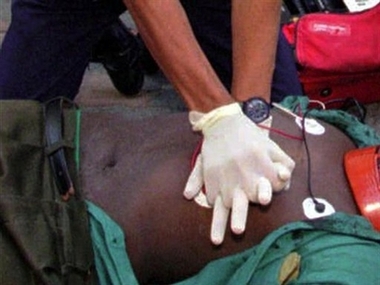 A man is given CPR. Chest compression - not mouth-to-mouth resuscitation - seems to be the key in helping someone recover from cardiac arrest, according to new research that further bolsters advice from heart experts. [AP]  |
More than a year ago, the American Heart Association revised CPR guidelines to put more emphasis on chest presses, urging 30 instead of 15 for every two breaths given. Stopping chest compressions to blow air into the lungs of someone who is unresponsive detracts from the more important task of keeping blood moving to provide oxygen and nourishment to the brain and heart.
Another big advantage to dropping the rescue breaths: It could make bystanders more willing to provide CPR in the first place. Many are unwilling to do the mouth-to-mouth part and become flummoxed and fearful of getting the ratio right in an emergency.
Sudden cardiac arrest - when the heart suddenly stops beating - can occur after a heart attack or as a result of electrocution or near-drowning. It's most often caused by an abnormal heart rhythm. The person experiencing it collapses, is unresponsive to gentle shaking and stops normal breathing.
In the new study, researchers led by Dr Ken Nagao of Surugadai Nihon University Hospital in Tokyo analyzed 4,068 adult patients who had cardiac arrest witnessed by bystanders. Of those, 439 received chest compressions only from bystanders, and 712 received conventional CPR - compressions and breaths.
Any CPR attempt improved survival odds. However, 22 percent of those who received just chest compressions survived with good neurological function compared with only 10 percent of those who received combination CPR.
"Eliminating the need for mouth-to-mouth ventilation will dramatically increase the occurrence of bystander-initiated resuscitation efforts and will increase survival," Dr. Gordon Ewy, a cardiologist at the University of Arizona College of Medicine in Tucson, writes in an accompanying editorial.
A big caveat: The combination CPR in the Japanese study was given according to the old guidelines of 15 presses for every two breaths, not the 30 presses recommended now.
The American Heart Association said the study supports a focus on chest presses, but the association does not expect its advice to change. It recommends that bystanders provide compression-only CPR if they are "unwilling or unable" to do mouth-to-mouth breathing at the same time and for emergency dispatchers to give instructions on that.
The association wants to see survival results from programs that use compression-only CPR for cardiac arrest.
"It is important to note that victims of cardiac arrest from non-cardiac causes, like near-drowning or electrocution, and almost all victims of pediatric cardiac arrest benefit from a combination of rescue breathing and chest compressions," a heart association statement says.
More than 300,000 Americans die from cardiac arrest each year. About 75 percent to 80 percent of all cardiac arrests outside a hospital happen at home, and effective CPR can double a victim's chance of survival.
Roughly 9 out of 10 cardiac arrest victims die before they get to the hospital - partly because they don't get CPR.
|
||
|
||
|
|