Study may help develop ADD treatments
(AP)Updated: 2007-03-30 11:13
WASHINGTON - Spot a bear in the woods, and a different part of your brain will yell "pay attention" than if you were studying bears at the zoo. New research shows it takes one part of the brain to start concentrating and another to be distracted. This discovery could help scientists develop better treatments for attention deficit disorder.
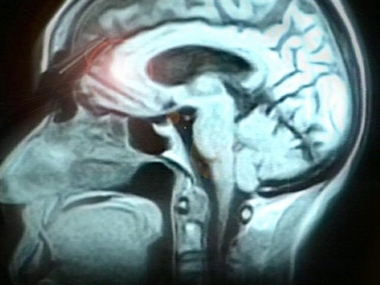 New research shows it takes one part of the brain to start concentrating and another to be distracted. This discovery could help scientists develop better treatments for attention deficit disorder. [AP]  |
"Now we know these two things are separate, it raises the possibility that we can fix them independently," Miller said.
There are two main ways the brain pays attention: "top down" or willful, goal-oriented attention, such as when you focus to read, and "bottom-up" or reflexive attention to sensory information - loud noises or bright colors or threatening animals.
Likewise, there are different degrees of attention disorders. Some people have a harder time focusing, while others have a harder time filtering out distractions.
Scientists knew that paying attention involved multiple brain regions but they did not know how, because studies until now have examined one region at a time.
Miller hooked painless electrodes onto monkeys to track how two key areas react together when the brain jumps to attention.
The monkeys were trained to take attention tests on a video screen in return for a treat of apple juice. Sometimes they had to concentrate, picking out, say, only the left-leaning red rectangle from a field of red rectangles; in the same way, the human brain picks a friend's face out of a crowd. Other times bright rectangles - the attention-grabbers - flashed off the screen at the monkeys.
When the monkeys voluntarily concentrated, the so-called executive center in the front of the brain - the prefrontal cortex - was in charge. But when something distracting grabbed the monkeys' attention, that signal originated in the parietal cortex, toward the back of the brain.
The electrical activity in these two areas began vibrating in synchrony as they signaled each other. But it was at different frequencies, almost like being at different spots on the radio dial.
Sustaining concentration involved lower-frequency neuron activity. Distraction occurred at higher frequencies. So, Miller concluded, scientists one day might find a treatment that essentially turns up or down the volume to boost attention.
The study provides the first good look at how these physically distinct brain regions interact to govern at least part of attention, said Dr. Debra Babcock, a neurologist at the National Institutes of Health.
"Once we understand how attention works, we'll understand how better to treat disorders of attention, and lord knows there are plenty of those," Babcock said. "This could, in the long term, help us devise therapies."
It makes evolutionary sense that these two types of attention would originate in different areas. Reflexive attention is a more primitive survival tool, while concentration is more advanced.
"If something leaps out of the bush at me, that's going to be really important and I have to react to it right away. Your brain is equipped to notice things salient in the environment," Miller said. "It takes a truly intelligent creature to know what's important and focus."
The government-funded work raises some logical next questions. For example, once the parietal lobe recognizes an attention-grabber, how does it evaluate what's important enough to focus on - and thus signal other brain regions to join in - and what was just a distraction that can be ignored?
It is the snap judgment that determines if a loud beeping is a fire alarm you should heed or just another car alarm down the street - or if that bear down the trail is going to be a threat or is already ambling away.
"It's how your brain decides when it can just do a quick ... analysis and decides when it really needs to focus down," Babcock said. "We have a lot more to learn."
|
||
|
||
|
|