Comments
  Print
Print  Mail
Mail  Large Medium Small
The annual theatrics of the climate change conference has entered the second half of its intense but, by all accounts, futile negotiation process in Doha. If the world, especially the developing world, didn't get anything out of the Copenhagen climate conference in 2009, which was supposed to finalize a binding agreement to succeed the Kyoto Protocol, it cannot expect anything from Doha either.
Copenhagen was supposed to see the fruition of the 2007 Bali Road Map, which included the Bali Action Plan, the launch of the Adaptation Fund (for developing countries), the decisions on technology transfer (to developing countries) and on reducing emissions from deforestation. But the hype and hoopla over the Copenhagen conference proved to be a lot of hot air.
The world was back to square one at the 2010 climate conference in Cancun, Mexico, and the 2011 conference in Durban, South Africa, to all intents and purposes, was a non-starter.
It is against this background that the 18th Conference of the Parties to the UN Framework Convention on Climate Change is taking place.
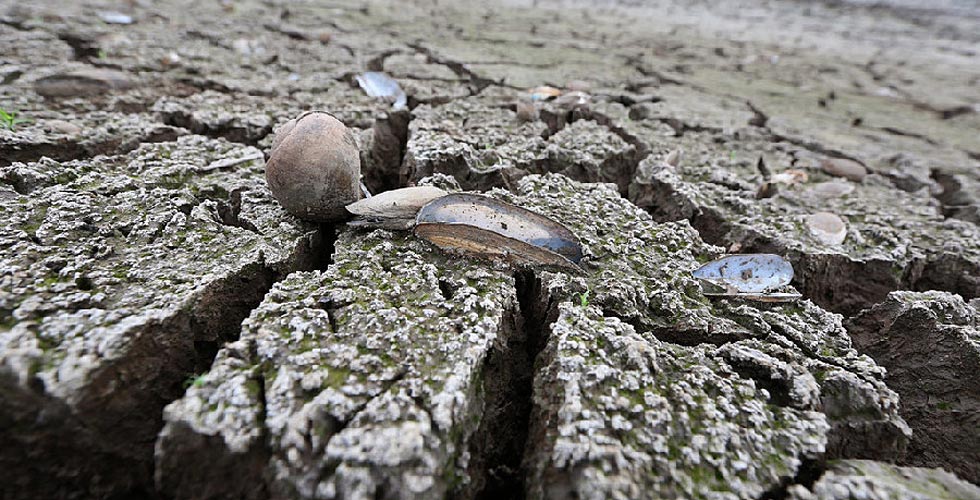
It would thus be naive to expect the negotiators to be shocked by the World Meteorological Organization report released just a week before the Doha talks began. For the uninitiated, the WMO's Greenhouse Gas Report says the level of greenhouse gases in the atmosphere hit a record high in 2011, with carbon dioxide levels reaching 391 parts per million. Carbon dioxide, it says, accounts for 85 percent of the "radiative forcing" that leads to an increase in global temperature. Other potent greenhouse gases such as methane, also reached record highs last year.
On Nov 30, the WMO's annual climate report issued another warning: The ice cover in the area around the North Pole had reached "a new record low" and the ice melt from March to September was a mind-boggling 11.83 million square kilometers, an area bigger than the United States. The WMO blamed the loss of the ice cover squarely on climate change.
Again it would be naive to expect this finding to change the course of negotiations or the hearts of negotiators who matter the most in Doha. The very fact that Qatar's capital Doha is hosting the climate change conference is an indication of the way things will go.
Qatar has the highest per capita carbon dioxide emissions in the world. On average, each Qatari emits about 50 tons of carbon dioxide a year, compared with 17 tons by a US citizen, 5.3 tons by a Chinese and 1.4 tons by an Indian. Most of Qatar's GDP comes from selling fossil fuels - oil and gas. Doha's lavish apartment buildings, massive shopping malls and swanky hotels are among the most energy inefficient in the world. As if this were not enough of an irony, Qatar plans to hold a closed-door ministerial-level meeting outside the official schedule that could render the negotiator-level talks redundant.
Qatar could say that Denmark and South Africa did the same as host countries in 2009 and 2011. But we know what happened after that. In Copenhagen, the talks ended without the 190-odd countries approving the decisions taken behind closed doors, with Denmark drawing flak for its "deceptive ploy". And Durban saw the developed and developing countries clashing over the "nonofficial" negotiating texts.
Normally, a climate conference starts with talks among all the countries' officials, who try to hammer out as much of an agreement as they can and leave the political decisions to the ministers. The decisions are adopted by the conference only when there is a consensus among all the countries.
Now it seems that Qatar, as the host and thus the presiding country, wants to nullify the work done by the officials and "invite" ministers from key countries to draft a new text for negotiations. No wonder, most of the developing countries are angry with Qatar's unilateral and "dubious" move, as it could make many smaller countries insignificant in the decision process.
Perhaps there's a reason why Qatar wants to nullify the efforts made by officials so far. The US is against the inclusion of any unresolved issue from earlier conferences, especially the Bali Road Map, in the Doha negotiations because it doesn't want to accept an all-binding agreement to succeed the Kyoto Protocol, which it did not ratify. Several other developed countries want the same. These countries, including the US, want neither to contribute to the Adaptation Fund nor to transfer advanced technology to developing countries to combat climate change.
Such being the state of affairs, is a deal in Doha possible?
The author is a senior editor with China Daily.

 The world in photos: May 29 - June 4
 Beijing puts its best foot forward on Belt and Road
 Tai chi takes over Sydney Harbour Bridge
 World in photos: April 24 - May 1
 Chinese ships pay visit to Philippines
 Princess Charlotte about to turn 2
 Cherry blossoms in full bloom in New YorkMay 'not in different galaxy' over Brexit
 Incredible! Australian girl with cerebral palsy climbs Great Wall
 Baby Asian elephant train for release into the wild
 UK voters head for polling booths as country's general election gets under way
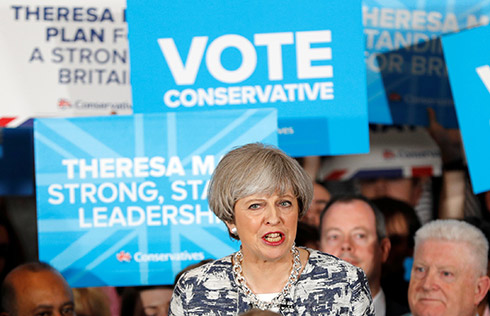 Polls on eve of UK election suggest PM May will boost majority
 Nadal into French Open semi-finals, Thiem dismantles titleholder Djokovic
 China beats Switzerland 3-0 at Montreux Volleyball Masters


Copyright 1995 - . All rights reserved. The content (including but not limited to text, photo, multimedia information, etc) published in this site belongs to China Daily Information Co (CDIC). Without written authorization from CDIC, such content shall not be republished or used in any form. Note: Browsers with 1024*768 or higher resolution are suggested for this site.
License for publishing multimedia online 0108263 Registration Number: 20100000002731