Comments
  Print
Print  Mail
Mail  Large Medium Small
This year Xi Jinping will be seen as the symbolof a geopolitical rebalancing
Global Trends 2030, a highly publicized document produced by the US National Intelligence Council, recognizes in its fifth edition that one of its major challenges is a better grasp of the speed of change: "Past Global Trends works correctly foresaw the direction of the vectors: China up, Russia down, but China's power has consistently increased faster than expected."
 |
Obviously, the report overestimated Beijing's weaknesses. Since its publication the Chinese economy has expanded eightfold, and two major power transitions, in 2002 and 2012, have taken place in the most populous country.
While a West-centered global order has ended over the past 10 years, the coming decade will give shape to a multipolar system in which the "Asian Mediterranean", that is the Association of Southeast Asian Nations (ASEAN) plus 3 (China, Japan and South Korea), will affirm its importance.
In this new environment without any hegemony and characterized by a massive boom in South-South financial, trade and cultural relations, the West, China, Latin America, the Muslim world and others will co-share the responsibility to manage a crowded and interconnected planet on which the opportunities for the progress of mankind are as large as the perils that threaten it.
For last year's Nobel Peace Prize laureate, the European Union, still the world's largest economic bloc, 2013 will be another year of turbulence as political uncertainties in Italy and Spain complicate an already fragile financial and economic situation. Despite the adoption of the European Stability Mechanism and the collective efforts to overcome the debt crisis, growth of 0.2 percent in the euro area will be insufficient to bring down its unemployment rate of 11.7 percent.
Facing elections in autumn, the German Chancellor, Angela Merkel, will not be in a position to support policies that could generate growth over the continent. On the contrary, to gather support at home she will call for more rigor and discipline when, as she warned in her New Year's address, "the economic environment will not in fact be easier but rather more difficult next year."
Even if euroscepticism is more vocal in the 27 members of the EU, the long journey toward the political integration of the European continent appears irreversible. Most EU citizens accept that by gradually transferring their sovereignties to a supranational entity, European countries will maintain a certain level of influence in a world of giants.
While Ireland holds the Presidency of the Council of the EU, it is time, especially in Paris, London and Berlin, to meditate on Jonathan Swift's insights on power and scale. Lemuel Gulliver was potent among the miniatures of Lilliput but powerless in Brobdingnag, the realm of giants.
The results of recent elections in Catalonia and in the Netherlands illustrate that despite nationalistic temptations, Europeans consider that their union has become the necessary condition to the political relevance of the old continent.
In the months ahead, in order to measure the momentum of the integration project, it will be interesting to see whether Poland, the only EU country that avoided a recession through the 2008-09 economic downturn, moves, as advocated by its Prime Minister, Donald Tusk, to accelerate its entry into the eurozone.
In the US, the second Barack Obama administration takes office in the midst of a weakened recovery, and the International Monetary Fund World Economic Outlook forecasts growth of 2.1 percent this year, compared with 2.2 percent last year. The "fiscal cliff" was avoided in the last hours of 2012, but for Washington public debt is still an enormous burden. But the vitality of US demography, the vigor of its businesses - 132 of the Fortune Global 500 are from the US - the global capabilities of its diplomacy and military, the attractiveness of its top schools and an energy revolution - the shale rush - are all solid foundations of US power.
In that context, Global Trends 2030 explains that "the US most likely will remain 'first among equals' among the other great powers". The use of the expression "first among equals" is noteworthy. In social psychology the "primus inter pares effect" describes a cognitive bias, also known as illusory superiority, that causes people to overestimate their strengths and systematically underestimate their shortcomings.
In a region marked by volatility, the reemergence of Turkey offers stability and is a source of hope. To a certain extent, the dynamics of the Eurasian "Middle Country", Turkey, mirror, on a smaller scale, the changes of the world's "Middle Country", China.
Established just 90 years ago by Mustafa Kemal Ataturk, the Republic of Turkey's success signals to 1.6 billion Muslims that Islam is compatible with modernity. While the country of 74 million inhabitants grew at a rate of 5.1 percent on average over the past decade, its leadership around the popular Recep Tayyip Erdogan has been able to strike a balance between Neo-Ottomanism and Kemalist prudence.
The immense African continent and its 54 countries is a land of contrasts and of unparalleled diversity; among the 166 million people in Nigeria there are more than 250 ethnic groups. While the instability in Sahel, in the Democratic Republic of Congo, in the Central African Republic, stands as a serious obstacle on the road toward development, the achievements in Ghana, Angola, Mozambique and South Africa give substance to the notion of an African Renaissance developed by the African statesman Thabo Mbeki.
With a rapidly increasing population - 20 percent of the world's population by 2050 - Africa can be seen as the last frontier with unique potential, but progress on the continent is largely conditioned to more internal integration, and in that sense the role of Nkosazana Dlamini-Zuma, who took office in October as the head of the African Union, is of the utmost importance.
As host of the soccer World Cup in 2014 and the Olympics Games in 2016, Brazil, which ensures Latin America's rank in the 21st century, will capture international media attention. With GDP surpassing that of Russia and India, the value of Brazil's output is already equal to the value of the French and the British economies.
In Asia's Far East, analysts should not be misled by the recurrent rhetorical disputes triggered by demagoguery and populism, in fact, through elaborate industrial clusters and economic interdependence Northeast Asia is advancing toward more integration. In the first half of this year the trade ministers of Japan, the Republic of Korea and China will start negotiations on a trilateral free-trade agreement.
The new pivot of this multipolar world, certainly better represented by the G20 than the G8, and in which the South-South connections matter as much as the North-North interactions, is the Middle Country.
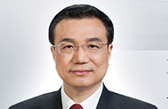
In March, when Xi Jinping becomes the Chinese president, he will have, with one entire decade of strategic visibility, the means to serve his country's peaceful renaissance and, at this year's G20 summit in Russia, he will be perceived as the symbol of a geopolitical rebalancing.
By 2020, three years before the end of his two five-year mandates, China will become the world's largest economy, taking Asia, a more cohesive African continent, Latin America and the Middle East to another level of development and a little further from Western influence.
The author is director of the Academia Sinica Europaea at China Europe International Business School, Shanghai, Beijing & Accra, and founder of the Euro-China Forum. The views do not necessarily reflect those of China Daily.
 The world in photos: May 29 - June 4
 Beijing puts its best foot forward on Belt and Road
 Tai chi takes over Sydney Harbour Bridge
 World in photos: April 24 - May 1
 Chinese ships pay visit to Philippines
 Princess Charlotte about to turn 2
 Cherry blossoms in full bloom in New YorkMay 'not in different galaxy' over Brexit
 Incredible! Australian girl with cerebral palsy climbs Great Wall
 Baby Asian elephant train for release into the wild
 UK voters head for polling booths as country's general election gets under way
 Polls on eve of UK election suggest PM May will boost majority
 Nadal into French Open semi-finals, Thiem dismantles titleholder Djokovic
 China beats Switzerland 3-0 at Montreux Volleyball Masters


Copyright 1995 - . All rights reserved. The content (including but not limited to text, photo, multimedia information, etc) published in this site belongs to China Daily Information Co (CDIC). Without written authorization from CDIC, such content shall not be republished or used in any form. Note: Browsers with 1024*768 or higher resolution are suggested for this site.
License for publishing multimedia online 0108263 Registration Number: 20100000002731