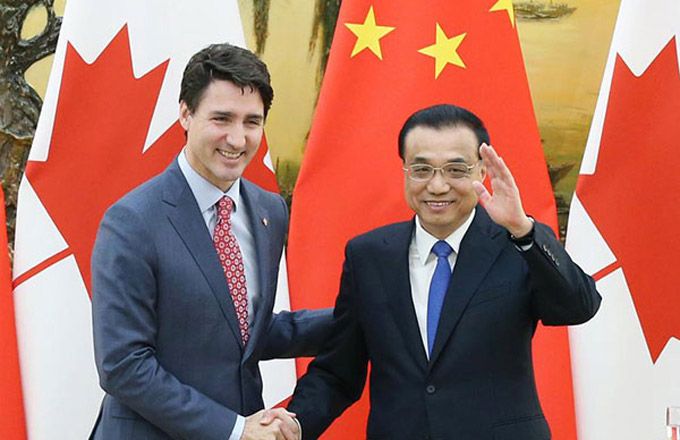
Leaders from more than 50 countries and international organizations are attending the Nuclear Security Summit in The Hague from March 24 to 25, with the focus on nuclear security and the prevention of nuclear terrorism.
Just ahead of the summit, the Democratic People's Republic of Korea (DPRK) fired 30 short-range rockets into the sea off the east of the Korean Peninsula early on Saturday. The rockets, which are believed to be old Soviet-developed FROG rockets that the DPRK has had since the 1960s, flew for 60 km before crashing into the sea, Yonhap said. One week ago, the DPRK had fired 25 short-range rockets into the sea off its east coast. It's widely believed the short-range-rocket launches by the DPRK this month are an "armed protest" against the ongoing annual ROK-US military drills.
The DPRK's launching rockets in protest against ROK-US military drills in fact is nothing new, which has highlighted the difficulty in resolving the DPRK nuclear issue.
Shortly after taking office, US President Barack Obama set forth his vision of a world free of nuclear weapons, with preventing nuclear proliferation and nuclear terrorism the first priority, and promised to make painstaking efforts to this end.
However, the Obama administration has made little effort to solve the crisis over nuclear program of the DPRK. Since Pyongyang carried out its third nuclear test, the DPRK nuclear crisis has escalated, and although the situation has eased somewhat, the outlook is still not optimistic.
Pyongyang has adopted a new strategy of carrying out economic development and building nuclear armed forces simultaneously, and it now proclaims itself as a nuclear power in its Constitution. It sees developing nuclear weapons as necessary for its self-preservation, so Pyongyang will not give up its nuclear weapons development program without security guarantees. According to US satellite images, Yongbyon has begun to produce nuclear fuel, and the construction of the nuclear test site in Punggye-ri is proceeding smoothly. If Pyongyang conducts a fourth nuclear test, it will trigger a new round of confrontation, which will seriously threaten peace and security in Northeast Asia.
The United States continues to pursue a tough policy toward the DPRK, demanding complete, verifiable and irreversible dismantlement of all nuclear capabilities by Pyongyang, and claims that if Pyongyang wants to hold direct talks with Washington, it must first improve diplomatic relations with the Republic of Korea.
The US is attempting to push the ROK to the front in efforts to find a solution to the DPRK nuclear issue, discounting the influence of China and Russia on the DPRK. The US wants to act behind the scenes and retain the leeway to exert pressure on the DPRK so as to play a leading role in peninsula affairs.
The DPRK nuclear crisis is rooted in the US administration's miscalculations and missteps. But Washington also is exploiting the DPRK nuclear crisis to speed up the implementation of its rebalancing strategy in the Asia-Pacific region. As it attempts to encircle and contain China and Russia strategically, the US must build up the scale of its troops in the ROK and Japan. Therefore, Washington needs the DPRK to play the role of its enemy, and always exaggerates and plays up the severity of the DPRK nuclear crisis. The US has continued to increase the number of troops stationed in the ROK, constructed anti-missile systems in Asia, and strengthened its military alliances with Japan and the ROK so as to strengthen the strategic deterrence against Russia and China.
In addition, the US has attempted to blame China for the ongoing crisis, with the Obama administration calling for China to exert more pressure on Pyongyang in a bid to drive a wedge between China and the DPRK
However, with the DPRK witnessing a series of high-level personnel changes, the Obama administration is counting on an upheaval soon inside the country. But the longer the nuclear crisis continues, the more detrimental it is to the US and regional security, waiting will only make the problem worse.
The US needs to be proactive in seeking a solution to the crisis. As one of the two main parties involved in the DPRK nuclear issue, the US holds the initiative to solve the problem. If the US refuses to change its DPRK policy or only makes limited tactical adjustments and insists on its containment strategy toward Pyongyang, the nuclear issue cannot be effectively solved and the peninsula will remain in a state of military confrontation.
Based on this, the US should abandon its passivity and actively become involved in the process of solving the DPRK nuclear issue, encourage Pyongyang to return to the Six-Party Talks and to resolve the issue through diplomatic negotiations within the framework of the Six-Party Talks, in order to ease tensions on the Korean peninsula.
At the same time, the US should work together with the ROK to open a communication channel to break the current stalemate, promote high-level talks between the DPRK and the ROK, strengthen reconciliation and cooperation, and enhance political mutual trust. Rather than blindly exerting pressure on Pyongyang to submit to its will, the US should abandon its Cold War mentality that is hostile to the DPRK's social system and ideology and abandon its pursuit of absolute security, reduce mutual distrust between the two countries, and ease Pyongyang's insecurity and deep mistrust toward the US with a goodwill gesture. By making greater efforts the US can create a positive environment for achieving a solution to the complicated issue on the Korean peninsula.
The author is an associate researcher at the Center for Northeast Asian Studies, a research institute in Jilin province.
Copyright 1995 - . All rights reserved. The content (including but not limited to text, photo, multimedia information, etc) published in this site belongs to China Daily Information Co (CDIC). Without written authorization from CDIC, such content shall not be republished or used in any form. Note: Browsers with 1024*768 or higher resolution are suggested for this site.
License for publishing multimedia online 0108263 Registration Number: 130349