US President Barack Obama, in an interview with Fareed Zakaria of CNN aired Sunday, said he was surprised that the Chinese government put out statements regarding his visit to India.
CNN showed only the headlines of two op-eds: one from Xinhua News Agency which reads "US, India unlikely on the same page"; the other from the Global Times that says "India, China mustn't fall into trap of rivalry set by the West".
Such by-lined op-eds were not statements from the Chinese government. 
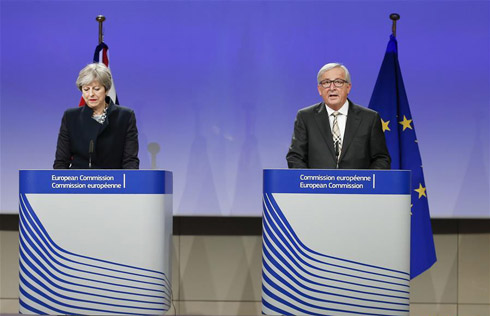
Chinese Foreign Ministry spokeswoman Hua Chunying did comment when asked in Beijing on Jan 26 about Obama's visit to India and the statement by Obama and Indian Prime Minister Narendra Modi regarding the South China Sea.
Hua said both the US and India carry significant influence in the Asia-Pacific region and China hopes the development of a US-India relationship will contribute to enhancing mutual trust and cooperation among countries in the region, as well as peace, stability and prosperity in the region.
She reiterated China's stance that disputes over maritime territorial issues should be resolved peacefully through dialogue between countries directly involved, emphasizing that the overall situation in the South China Sea has been stable, there have never been problems with freedom of navigation there and she believes it won't be a problem in the future.
While some Chinese are wary of any US move in the neighborhood, some Americans also smell conspiracies.
In an op-ed piece published on Jan 25, former US Ambassador to China Jon Huntsman said the larger goal that the United States should be pursuing here is to convince India to join a coalition of democracies to balance China's rise.
"Although it won't be publicized, this topic will likely be ever present in their private conversation," said the op-ed co-authored by Huntsman and Bharath Gopalaswamy, acting director of the South Asia Center of the Atlantic Council, where Huntsman serves as chairman.
In another op-ed in the Wall Street Journal on Jan 26, Richard Fontaine, president of the Center for a New American Security, said that just a few years ago, Pakistan would have dominated any conversation between an Indian prime minister and an American president. But during Obama's visit to India last week, the two no doubt spent significantly more time discussing their shared geopolitical challenge in China.
"In managing relations with Beijing and deepening security ties across the Indo-Pacific, New Delhi and Washington can help each other help themselves," he wrote.
These op-eds suggest that the concerns by some Chinese are not totally unfounded.
Obama dismissed such concerns by saying that "China doesn't need to be threatened because we have good relations with India".
"My belief is that in this moment of history, there is an opportunity to create a win-win formula, in which all countries are abiding by a common set of rules and standards," he told Zakaria.
"And we are focused on lifting the prosperity for our people not at the expense of others, but together with each other," he said.
Such a tone is in contrast to his State of the Union address on Jan 20 in which he claimed that it should be the US, not China, that writes the rules, and also touted that more than half of the executives of manufacturing industries have said they're actively looking at bringing jobs back from China - a statement that factcheck.org found to be an exaggeration.
Obama did acknowledge that he had very successful meetings with President Xi Jinping last November. "I continually emphasized that it is very much in America's interest to see China continue with its peaceful rise. What's dangerous for us is a destabilized and impoverished and disintegrated China," he said.
"It's much better for us if China is doing well."
Obama said: "I care deeply about China's success. I want to make sure that we continue to maintain a constructive relationship."
But he also pointed a finger at China for bullying small countries like Vietnam and the Philippines over maritime issues, for currency manipulation and for being a free rider.
Most Chinese believe that the US is biased on such issues. The US has never publicly criticized Japan for nationalizing the Diaoyu Islands in the East China Sea in late 2012. It has failed to publicly denounce provocative actions taken by Vietnam and the Philippines in the South China Sea, including building many more man-made structures on disputed isles and reefs than the Chinese.
China also argues that its currency has appreciated dramatically over the past decade and is now under great selling pressure to depreciate. And China is playing an increasingly important role on the global stage.
Such US double standards not only apply to China. When Zakaria asked why the US kept such a close relationship with the authoritarian Saudi Arabia government, where women are not allowed to drive and bloggers were lashed a thousand times for expressing their views, Obama stressed the common strategic interests shared by the two countries.
His words suggest that the US will be much nicer to authoritarian governments which align with the US' geopolitical interests.
Contact the writer at chenweihua@chinadailyusa.com.
Copyright 1995 - . All rights reserved. The content (including but not limited to text, photo, multimedia information, etc) published in this site belongs to China Daily Information Co (CDIC). Without written authorization from CDIC, such content shall not be republished or used in any form. Note: Browsers with 1024*768 or higher resolution are suggested for this site.
License for publishing multimedia online 0108263 Registration Number: 130349