Ladies and Gentlemen,
I know you are all interested in the outlook of the Chinese economy. Some of you may even worry about the possible potential impact of China's economic slowdown and transition. To ease your concerns, let me spend more time today on what is really happening in China.
The Chinese economy has entered a state of new normal. The gear of growth is shifting from high speed to medium-to-high speed, and development needs to move from low-to-medium level to medium-to-high level. This has made it all the more necessary for us to press ahead with structural reform.
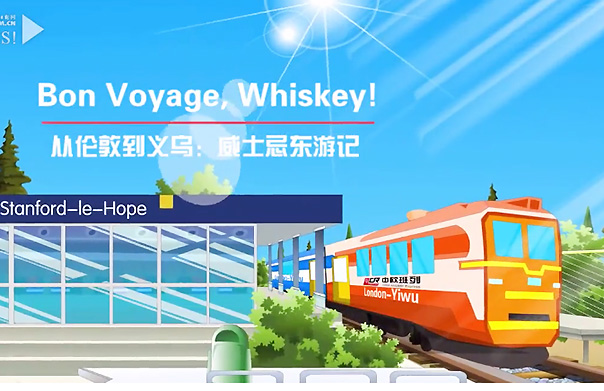
It must be noted that the moderation of growth speed in China reflects both profound adjustments in the world economy as well as the law of economics. The Chinese economy is now the second largest in the world. With a larger base figure, a growth even at 7% will produce an annual increase of more than 800 billion US dollars at current price, larger than a 10% growth five years ago. With the economy performing within the reasonable range and the speed of growth no longer taken as the sole yardstick, the strained supply-demand relationship will be eased, the pressure on resources and the environment will be lowered, and more time and energy will be devoted to push forward structural reform. That means, the economy will enter a more advanced stage of development, with more sophisticated division of labor and a more optimized structure. If I could compare the Chinese economy to a running train. What I want you to know is that this train will not lose speed or momentum. It will only be powered by stronger dynamo and run with greater steadiness, bringing along new opportunities and new momentum of growth.
In 2014, we followed exactly the afore-mentioned approach. In the face of downward pressure, we did not resort to strong stimulus; instead, we vigorously pursued reforms, and the government in fact led these reforms by streamlining administration and delegating power. This has motivated both the market and the business sector. GDP grew by 7.4% for the whole year, the best among major economies in the world. Over 13 million new jobs were created in cities, with both registered and surveyed unemployment rates lower than the previous year. That is, we achieved growth in employment despite the economic slowdown. CPI was kept at 2%, lower than the target set at the beginning of the year. These outcomes prove that the host of macro-regulation measures China adopted have been right and effective. More importantly, new progress has been made in advancing structural reform.
Needless to say, the Chinese economy will continue to face substantial downward pressure in 2015. What shall we choose to do under such circumstances? Shall we go for even higher growth for the short term, or for medium-to-high growth and a higher quality of development over the long run? The answer is definitely the latter. We will maintain our strategic focus and continue to pursue a proactive fiscal policy and a prudent monetary policy. We will avoid adopting indiscriminate policies. Instead, we will put more emphasis on anticipatory adjustment and fine-tuning, do an even better job with targeted macro-regulation to keep the economy operating within the reasonable range, and raise the quality and performance of the economy.
We are taking effective measures to fend off debt, financial and other potential risks. China's high savings rate, which now stands at 50%, generates sufficient funds for sustaining economic growth. Besides, China's local debt, over 70% of which was incurred for infrastructure development, is backed by assets. And reform of the financial system is making progress. What I want to emphasize is that regional or systemic financial crisis will not happen in China, and the Chinese economy will not head for a hard landing.
It must be pointed out that China is still a developing country and still has a long way to go before achieving modernization. While peace is the basic condition for China's development, reform and opening-up along with our people's desire for a happy life constitute the strongest impetus propelling development. The space of development in China's rural and urban areas and various regions is enormous, and the country's domestic demand will simply generate great potential of growth. Development at medium-to-high speed for another ten to twenty years will bring even bigger changes to China and create more development opportunities for the world.
For the Chinese economy to withstand downward pressure, and to maintain medium-to-high speed of growth and achieve medium-to-high level of development, we need to say "no" to traditional mindset. We must encourage innovative institutions, and press ahead with structural reform. We need to adopt more innovative macro-regulation policies and develop a more vigorous micro economy. We need to promote more balanced development of industries, between rural and urban areas and among regions. We need to ensure relatively high employment rate, especially sufficient employment for the young people. And we need to optimize income distribution and raise the people's welfare. All this certainly calls for tremendous efforts. Yet we will stay undaunted in the face of difficulties. We will unswervingly press ahead with reform and restructuring to ensure that our economy maintains medium-to-high speed of growth and achieves medium-to-high level of development.
To ensure long-term and steady growth of the Chinese economy, we need to comprehensively deepen reforms. We need to properly use both the hand of the government and the hand of the market, and rely on both the traditional and new engines of growth. We will let the market play a decisive role in resource allocation to foster a new engine of growth. At the same time, we will give better scope to the role of the government to transform and upgrade the traditional engine of growth.
To foster a new engine of growth, we will encourage mass entrepreneurship and innovation. China has 1.3 billion people, a 900-million workforce, and over 70 million enterprises and self-employed businesses. Our people are hard-working and talented. If we could activate every cell in society, the economy of China as a whole will brim with more vigor and gather stronger power for growth. Mass entrepreneurship and innovation, in our eyes, is a "gold mine" that provides constant source of creativity and wealth.
Speaking of this, I think of China's rural reform conducted more than 30 years ago. The reform brought farmers' initiatives into full play and allowed them to decide for themselves matters related to rural production and management. Consequently, the problem of hunger that previously haunted China was solved in just a couple of years. In short, a structural innovation that unleashed the creativity of the people changed the lot of hundreds of millions in China. I also think of a small village I visited two months ago in eastern China. In the village were some 700 households and over 2,800 registered online stores. Each day, more than 30 million items of various sorts were sold to different parts of the world. The story of the village speaks vividly of the hard-working Chinese people actively engaged in entrepreneurship.
Going forward, China needs new sources of dynamism to carry development forward. Dynamism comes from diversity, which sparks wisdom and fosters innovation. Mass entrepreneurship and innovation serves to unleash people's ingenuity and power. It will result in greater demand and residents' consumption, greater social wealth, and greater welfare for the people. More importantly, it will bring opportunity for many and give people the stage to reach life's full potential. It will also bring about greater social mobility, equity and justice.
Excessive regulation discourages innovation, and healthy competition is the way to prosperity. We will deepen reform of the administrative system. This means we will continue to abolish or delegate to lower-level governments items previously subject to State Council review and approval. We will comprehensively sort out items requiring non-governmental review and approval, and put in place a negative-list approach for market access. This will incentivize market players, and help reduce the possibility of rent-seeking and corruption. We will protect intellectual property rights in accordance with the law, and do our best to foster an environment that encourages entrepreneurship and tolerates failure. Moreover, we will give protection to all sorts of legal property rights.
To transform the traditional engine of growth, we will focus on increasing the supply of public goods and services. China has made remarkable economic achievements, but inadequate supply of public goods and services remains a weak link in development. China's capital stock on public infrastructure, in per capita terms, is only 38% that of Western Europe and 23% that of North America. The development of its service sector is 10 percentage points lower than other developing countries at similar development stages. And its rate of urbanization is more than 20 percentage points lower than developed countries. This means a massive space for increasing public goods and services. To deliver such public goods and services to improve people's lives is the government's responsibility. They are also important ways to boost domestic demand.
This year, we have identified some key areas for investment, including building railways in central and western provinces, constructing water conservancy projects, rebuilding rundown urban areas and old houses in cities and villages, and preventing and controlling pollutions. The government will increase investment in these areas, and it will not act alone. Efforts will be made to break monopoly and reform the investment and financing systems to encourage the participation of private and foreign capitals. The model of public-private partnership (PPP), Sino-foreign cooperatives and government purchase of services will be adopted to better leverage various investment sources. I have an example here to cite. A few years ago, the plan was made to build a sewage treatment plant in a province in western China, and a total of 335 million RMB yuan was needed. The project later attracted investment from a German water company, with the German side controlling 70 percent of the total shares.
Moving forward, we will deepen fiscal and taxation reform, reduce the tax and fees charged to businesses, particularly those in the service sector, and take new steps to support SMEs. We will deepen reform of the financial system, continue to promote liberalization of interest and exchange rates, and accelerate the development of small- and medium-sized financial institutions, private banks in particular, with a view to developing a multi-tiered capital market. We will speed up reform of the pricing system, substantially reduce the types and items for which the government sets the prices, and liberate price regulation to the maximum extent possible. More emphasis will be given to the government's role in creating a favorable "soft environment". That means better market regulation, a world-class business environment established on market principles and the rule of law. In this way, we will be able to provide efficient and quality public services to all market players.

Copyright 1995 - . All rights reserved. The content (including but not limited to text, photo, multimedia information, etc) published in this site belongs to China Daily Information Co (CDIC). Without written authorization from CDIC, such content shall not be republished or used in any form. Note: Browsers with 1024*768 or higher resolution are suggested for this site.
License for publishing multimedia online 0108263 Registration Number: 130349