A long history of cooperation
Updated: 2015-01-04 13:16
By Kuruvilla Mathews (China Daily Africa)
Comments Print Mail Large Medium SmallChina undeniably has helped africa, but the onus is on the continent to manage chinese engagement
China's rapidly expanding economic and political involvement in Africa continues to draw diverse responses from various quarters. China has today become the largest trading partner of African countries and its influence and interests extend all across the continent.
|
Song Chen / China Daily |

Perhaps, nowhere else in the world is China's development more evident than in Africa. From multibillion-dollar investments in oil and minerals to the influx of thousands of Chinese personnel and cheap consumer goods, China's economic and political reach is redefining Africa's traditional ties with the international community.
China has emerged as an engine of global economic growth with more than $3 trillion in foreign exchange reserves. China is also the largest foreign holder of US debt, the second-biggest consumer of luxury products and the planet's top buyer of gold and mobile phones. Rapid industrialization has boosted China's demand for oil and all kinds of minerals, which Africa can supply.
The rapid development of China, now the world's second-largest economy after the United States - and the largest if measured by purchasing power parity, based on what people's money can buy - may well prove to be the most momentous happening in the early 21st century. To assess the future trajectories of China-Africa cooperation it may be appropriate to provide a brief historical setting to the growth of China-Africa relations.
Sino-African relations are not new. For analytical purposes, these relations can be divided into three broad historical phases. The first phase was the early 15th century mercantile expansion of China associated with the Ming Dynasty (1368-1644), which saw China "discover" much of the eastern coast of Africa some 100 years before the first arrival of Europeans. The best-known is Zheng He's seven voyages (1405-1433) to as far as east African countries adjoining the Indian Ocean.
The second phase of China's engagement with Africa occurred only after the establishment of the People's Republic of China in 1949, when China started pursuing an active foreign policy in Africa.
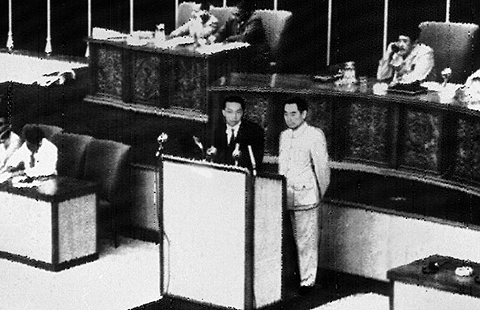
In the immediate post-colonial period, China forged a series of political relationships with newly independent African states when it mainly supported liberation movements in southern Africa. This phase of China-Africa relations remained distinctly political and ideological, underpinned by the Cold War rivalries of the period. The historic Asian-African Bandung Conference of 1955 is regarded as the real foundation of modern Sino-African relations. The third and current phase in China-Africa relations could be traced from the beginning of the new millennium. This current phase of intense engagement of the Chinese on the African continent also coincides with the launching of the Forum on China-Africa Cooperation.
Over the past 15 years, FOCAC has become an effective mechanism for collective dialogue and multilateral cooperation between China and Africa. FOCAC has put in place an important framework and platform for a new type of China-Africa partnership.
The Chinese government's "going global" policy, launched in 2000, which greatly encouraged Chinese companies to become multinationals, has supported a rise in China's foreign direct investment in Africa to $5.4 billion in 2009, up from a negligible amount just a decade ago.
China's bilateral trade with Africa exploded from just $10 billion in 2000 to $210 billion in 2013, a growth rate of around 25 percent per year. China is currently Africa's largest trading partner, having surpassed the US in 2009. Some, however, are content to believe that China's engagement in Africa is limited to exploitation of African raw materials to feed Chinese demand and exports of cheap Chinese goods to the continent.
Opinions on the impact of China-Africa relations differ among observers. China has made, however, undeniable contributions to the present scenario of positive economic development in much of Africa. In every sector of the economy, all across Africa, the participation of Chinese companies is increasing day by day. Throughout the continent, Chinese products are sold and used by large numbers of people. This development has understandably caused great anxiety among Western powers, some of them Africa's erstwhile colonial masters.
Among the positive outcomes of China's influence on Africa's economy the following are worthy of emphasis: First, it is widely believed that China's growing economic engagement in Africa has contributed greatly to the revival of Africa's economic fortunes in recent years and has improved the economic outlook for Africa following more than a decade of growth averaging 5.4 percent annually. As Africa's economy surges, the need for massive investment is becoming clear. China, with its huge foreign exchange reserves, has real potential to solve the debilitating capital shortage in Africa. China also could play a key role in the industrialization of Africa.
Undoubtedly, close economic ties with Africa have secured China the raw materials essential for its industrial development. For Africa it has yielded previously unimaginable growth rates and helped end its much-decried economic marginalization in the world economy.
Deeper engagement with China (and other emerging powers like India) is both desirable and inevitable for Africa. Beyond critics, one thing is clear: Cooperation between Africa and each of its main economic development partners (the European Union, China, the United States, India) is strategically different and each is driven by economic self-interests.
It is widely acknowledged that China's deep engagement in Africa over the past decade and a half has completely altered the continent's traditional dependency on the US and former European colonial powers. Africa now has alternative sources of aid, trade and investment from emerging powers such as China, India and Brazil, among others.
As an important component of China's external strategy, FOCAC has established a new international cooperation framework. FOCAC in particular offers Africa a new opportunity for partnership with China and the prospect of a long-term, mutually beneficial relationship with the world's fastest growing economy.
Indeed, China knows what it wants in Africa and is prepared to get it, but so far Africa seems to lack the leadership, the will and thought-out plan of what it wants from China. One main problem is the lack of coherent and collective policy on the part of African countries for its relations with China.
It is necessary for Africa to develop a coherent and structured plan in successfully asserting its political, economic and social ties with China. It must avoid repeating some of the mistakes committed in its past relations with its traditional development partners. African leaders must be able to define and formulate strategic and comprehensive policies individually for the influx of Chinese investments. The onus thus rests on Africa to take on the Chinese investment.
China's transformation from a poor developing country some six decades ago into an economic giant today offers great lessons for Africa. Undoubtedly, what China has managed to achieve in about 30 years is impressive and can provide lessons for African nations.
China's transformation is inspiring and teaches that a nation that truly believes in itself and has the right mindset can overcome any challenge and achieve greatness. As long as Africa's development requires huge foreign investments, China will continue to be relevant.
Irrespective of the concerns being voiced in some circles in Africa, Chinese involvement is widely considered to be a positive-sum game. As a number of perceptive observers have pointed out, China-Africa relations are highly likely to grow stronger in 2015 and beyond.
The author is a professor at Addis Ababa University, Ethiopia. The views do not necessarily reflect those of China Daily.
Schedule
Chinese President Xi Jinping will visit Pakistan and attend the Asian-African Summit and activities commemorating the 60th anniversary of the Bandung Conference in Indonesia from April 20 to 24.
April 22
Attend the opening ceremony of the Asian-African Summit;
Meeting with Indonesian President Joko Widodo;
April 23
Bilateral meetings;
Attend the closing ceremony of the Asian-African Summit;
April 24
Historical walk from Savoy Homann Hotel to Gedung Merdeka;
Attend activities commemorating the 60th anniversary of the Bandung Conference;

Feature