The Natural Jewels in Africa's Crown


There are even more savings to be made by stemming the illicit flow of money from illegal logging, the illegal trade in wildlife, illegal fishing, illegal mining practices and degraded ecosystems.
In addition, sub-Saharan Africa currently spends $35 billion every year on food imports, a vast amount when you consider that only 3.5 million hectares out of a possible 240 million hectares of land suitable for wetland rice cultivation have been exploited.
By one of the most conservative estimates, the illegal plunder of the continent's natural resources, its food imports and the damage done to its ecosystems loses Africa $195 billion every year.
This astonishing figure exceeds the total amount of money that Africa requires every year to invest in improving infrastructure, healthcare and education, and combatting climate change – all key goals of the 2030 Agenda.
If Africa is to achieve the sustainable development goals, then it is vital that we reverse these losses. This will require governments to roll back the damage done to ecosystems and tackle illicit financial flows. We can then redirect the recovered funds back into African economies and ensure that these funds are used to boost natural capital-based sectors like clean energy and agriculture.
The benefits of doing this are clear. In Africa, simply increasing crop yields by 10 per cent equates to a seven per cent reduction in poverty. Providing access to clean energy will reduce the indoor pollution that kills 600,000 people every year on the continent. And reversing environmental degradation and prioritising healthy ecosystems not only combats climate change but also helps to tackle desertification and reduce biodiversity loss.
Strong work has already gone into laying the foundation for a future that recognises the importance of natural capital. In 2012, in Botswana, a meeting between African heads of state and public and private sector partners adopted the Gaborone Declaration for Sustainability in Africa.
The aim of the declaration is “to ensure that the contributions of natural capital to sustainable economic growth, maintenance and improvement of social capital and human well-being are quantified and integrated into development and business practice”.
This month, at the African Ministerial Conference on the Environment in Cairo, Egypt, Africa will seek to build on the momentum generated in Gaborone by focusing on how natural capital can contribute to implementing the 2030 Agenda and the African Union's Agenda 2063 and its first ten-year plan, which aims to achieve a “prosperous Africa based on inclusive growth and sustainable development”.
These are major steps forward but they are only the beginning of the fight for a brighter, more prosperous future.To rally the world to greater action, countries like Botswana are pushing for the international community to come up with a clear plan on how best to manage natural capital in a way that fosters sustainable development and eradicates poverty.
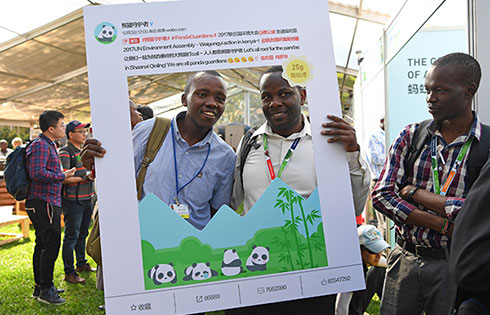
In May 2016, countries will meet in Nairobi for the United Nations Environment Assembly (UNEA) – the world's most powerful decision-making body on the environment. At UNEA, Botswana, the DRC, Kenya and Zimbabwe will table a resolution that seeks to develop policies and programmes that will enable countries to sustainably harness natural capital, crack down on illicit financial flows, reverse the degradation of environmental assets and foster international cooperation.
It is crucial that the world comes together to pass this resolution so that we can expand and diversify our economies, create jobs, achieve food security, enhance the productivity of our ecosystems and achieve a more inclusive society.
These are noble ideals that we urgently need to make a reality. This is the Africa that we want and it is the future that people all over the world deserve.
The author is the Minister of Environment, Wildlife and Tourism of Botswana.