
The China Story
at your Fingertips
OPEN


"A Date with China" International Media Tour 2025 invites media correspondents and internet influencers to explore different areas across China.
Nov 10-14: Shanxi province
Nov 26-28: Shenzhen
Dec 15-17: Tianjin

A Chinese journalist teams up with her Brazilian counterpart for a burnout-free adventure in Tianjin. From the folk vibes of Pingju Opera, crosstalk and shadow puppetry, to the high-tech magic of holograms and AI, and finally, the stunning night views of the glittering Haihe River from over 300m height—three unique charms combine to showcase a dynamic Tianjin where tradition and modernity coexist in harmony.



In the rehearsal room of the Red Flag Theatre — with the accompaniment of the band playing the pipa, erhu, suona, guzheng, yangqin, and cello — young actors practiced basic skills such as water-sleeve flipping and handkerchief throwing.
"Pingju Opera and the city of Tianjin have mutually enhanced each other," Zeng Zhaojuan, the director of Tianjin Pingju Opera Theatre, said. "Tianjin people have a strong sense of loyalty. The Pingju Opera is good at depicting daily life stories and human emotions, it perfectly aligns with the temperament of Tianjin. The inclusiveness of this city and the applause of the audience have become the driving force for the actors of Pingju opera to keep striving."
With many similarities to the costumes and makeup of Peking Opera, Pingju Opera is one of the five major Chinese opera genres. As a national intangible cultural heritage, Pingju Opera is popular in Beijing, Tianjin, Hebei, and other areas in the northeast. Its themes are usually close to people's daily lives — such as the imperial examination and the relationship between mother-in-law and daughter-in-law, Li Xuanjie, a young male lead of Tianjin Pingju Opera Theatre, said.
The Tianjin Pingju Opera Theatre, also known as the Hongqi Theatre, was established in 1958 and has been passed down to the seventh generation. With a diverse range of styles, the theatre's classic plays — including "The Legend of the Seal", "Zhao Jintang", and "Revolutionary Family" — have all won the "Splendor Award for Professional Theatrical Artworks".
"Among the founders of the four major schools of Pingju Opera, Li Jinshun, Liu Cuixia, and Ai Lianjun were all from Tianjin, highlighting the city's irreplaceable role in the development of Chinese Pingju Opera," Zeng said.
Recently, over 20 foreign journalists from countries including the United States and Italy visited the Tianjin Pingju Opera Theatre. A makeup artist picked up a costume adorned with intricate designs and explained the roles and plot symbols represented by each pattern. Nearby, journalists imitated the actors' stage walks, seeking advice on adjusting their steps and postures.
Through interactions with well-known actors and makeup artists both backstage and on stage, they learned about the development history of Pingju Opera, experienced the costumes and makeup of the opera, and even learned to sing some classic Pingju Opera excerpts.
"This is truly amazing; the costumes and makeup of Pingju Opera are so exquisite," Tom, an American journalist, said. "I never imagined there would be so many details in the makeup and costumes of traditional Chinese opera."
Tom discovered that classic plays such as "Tea Bottle Stratagem" and "Du Shiniang" tell touching stories of star-crossed lovers — similar to the classic Western play "Romeo and Juliet", written by William Shakespeare. On the stage, Li taught Tom the basic gesture of "Cloud Hand" or yunshou in Chinese. "Yunshou is one of the commonly used gestures in opera," Li explained while demonstrating. "It requires the arms to be smooth and round, like floating clouds and flowing water."
Li mentioned that Pingju Opera has grown rapidly in recent years. Initially, there was only one or two actors for each performance. But now, for the play "Revolutionary Family", the number of actors has exceeded 150.
"We attach great importance to the cultivation of young actors," Li said. "Each actor undergoes six years of professional training before their debut performances.
The Tianjin Opera Theatre has carried out the "Opera Entering Campus" activities at multiple schools in Tianjin, such as Tianjin University of Technology, Tianjin Normal University, and Tianjin Chengjian University, receiving enthusiastic applause from teachers and students.
The staff also invites students to the 700-seat theatre and brings drama classes onto the stage and showcases the behind-the-scenes processes of makeup application and costume dressing up.
"This performance style is very appealing to students, and we're seeing more young people develop a liking for Pingju Opera," Zeng said.
Furthermore, Zeng has actively promoted the popularization of Pingju Opera among young people through new media such as short videos and live-streaming, insisting on both preserving classics and creating modern works that reflect the spirit of the times.
"How to attract more young actors to join the Pingju Opera has been a question we have been constantly pondering," Zeng said, expressing hope that over the next decade, more outstanding Pingju plays would emerge, attracting more young audiences and nurturing more young actors.
"We actively explore cross-border integration. In July, we collaborated with Guo Degang, the leader of De Yun She, to hold a re-performance celebration for Taiping Opera Society," Zeng said. "We hope to pass on the art of Pingju through the revival of classic plays."
Chen Yijun contributed to this story.

The 2025 "A Date with China" international media delegation concluded a three-day visit to Tianjin, getting a glimpse of the city's development in preserving intangible cultural heritages, driving cutting-edge technological innovations, and advancing global vocational education.
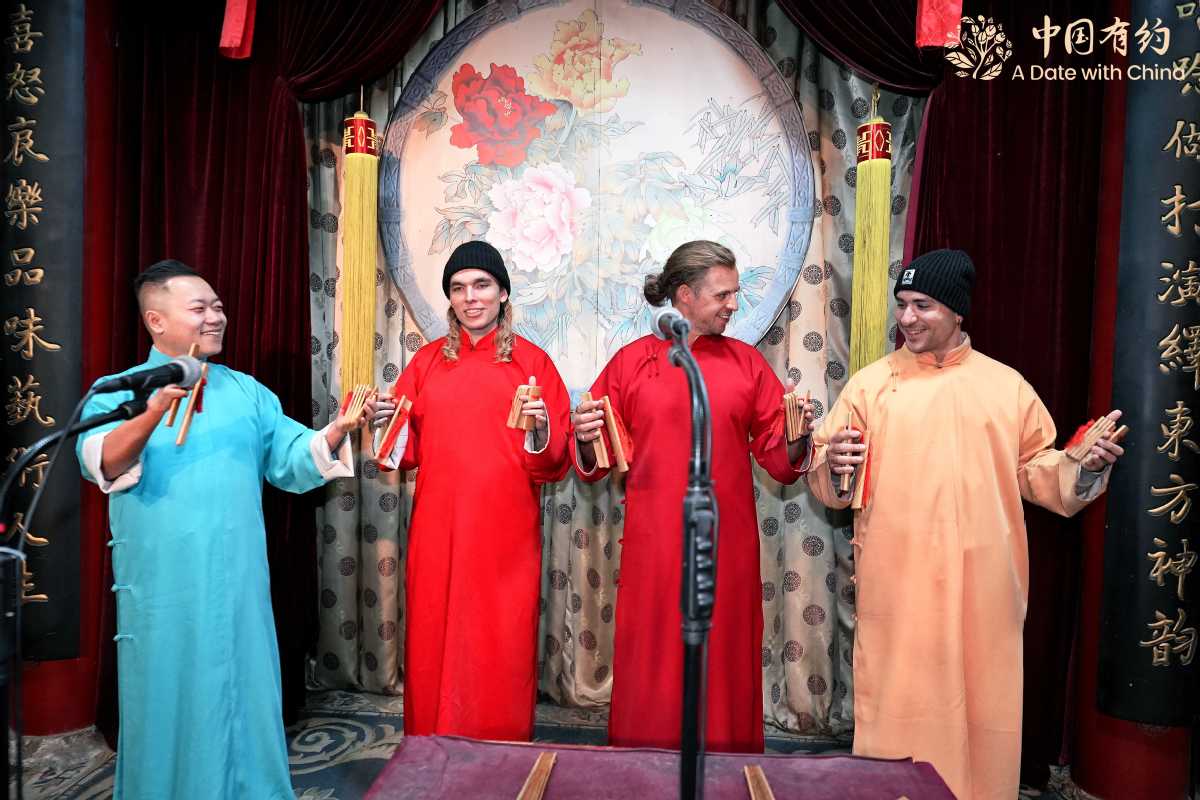
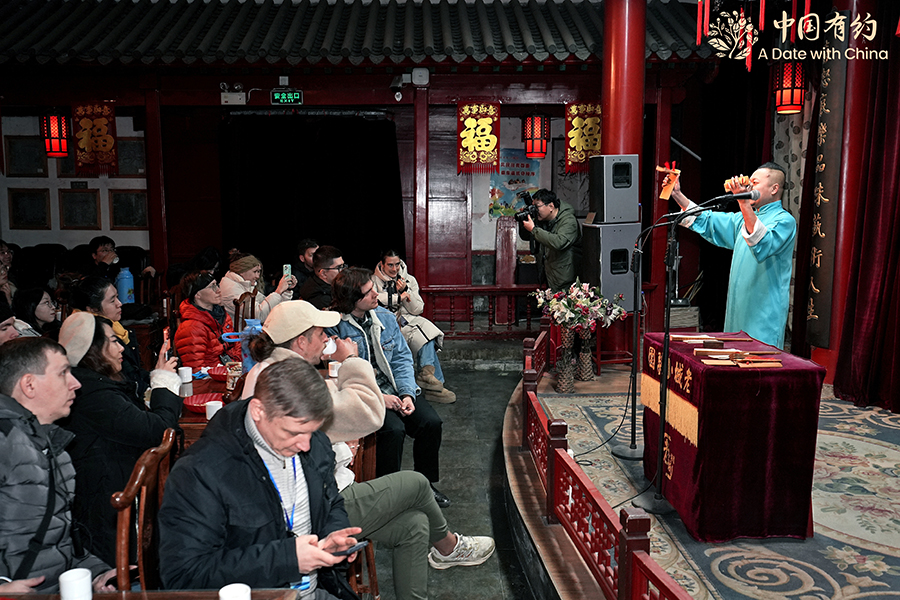
To get a taste of Tianjin's vibrant intangible cultural heritage, the group visited Tianjin Pingju Opera Theatre, Guangdong Guild Hall, and Xiaoliyuan Crosstalk Teahouse, where they donned traditional opera costumes, practiced kuaiban (rhythmic bamboo clappers), and experienced the art of "speaking, imitating, teasing, and singing".
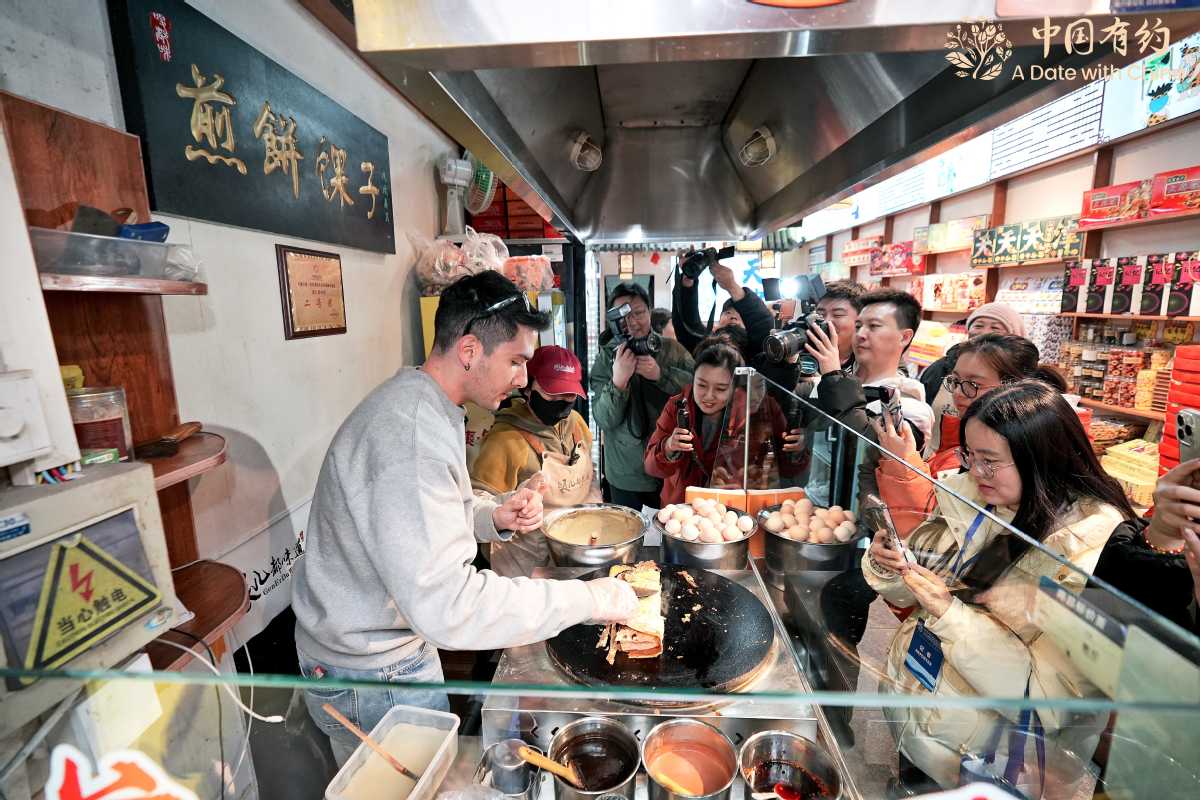
On Ancient Culture Street, Italian blogger Andrea stepped up to the griddle and tried his hand at making jianbing guozi (Chinese pancake wrap), joking, "You may have seen Italians make pizza, but this is probably the first time you've seen an Italian make jianbing guozi." The finished product was met with enthusiastic praise from the group.
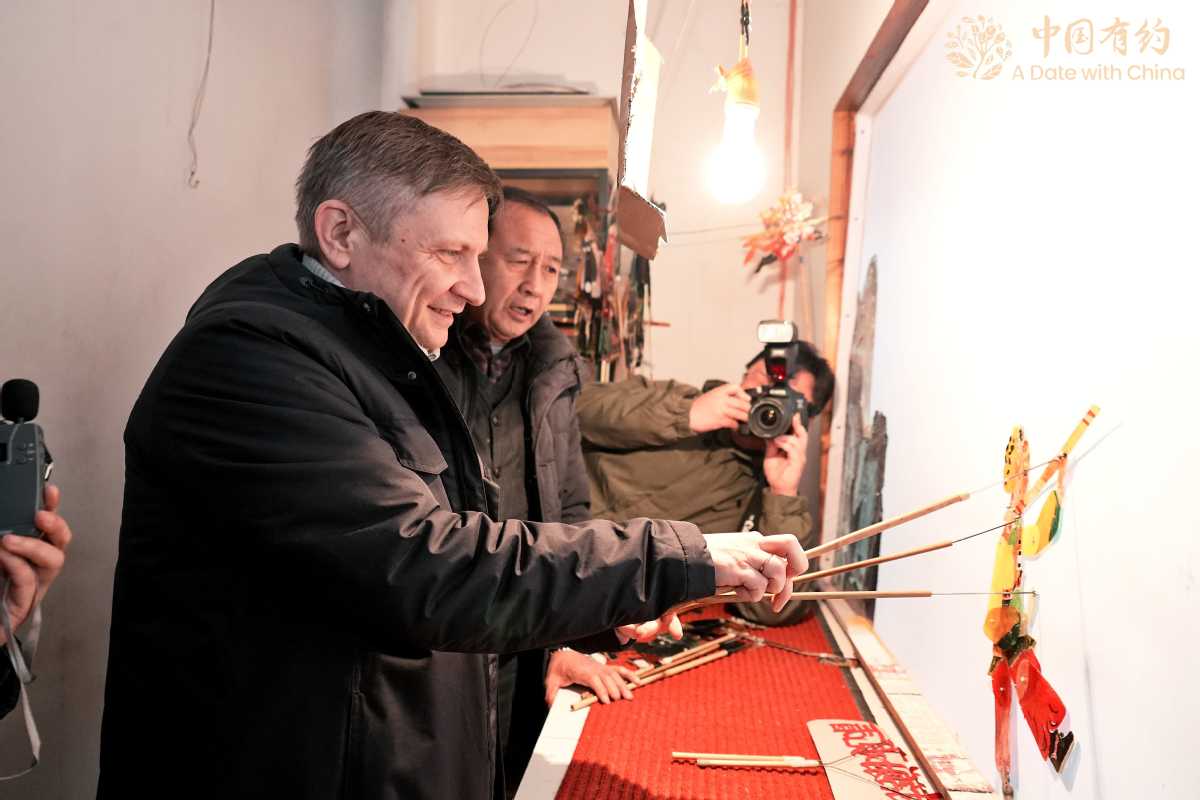
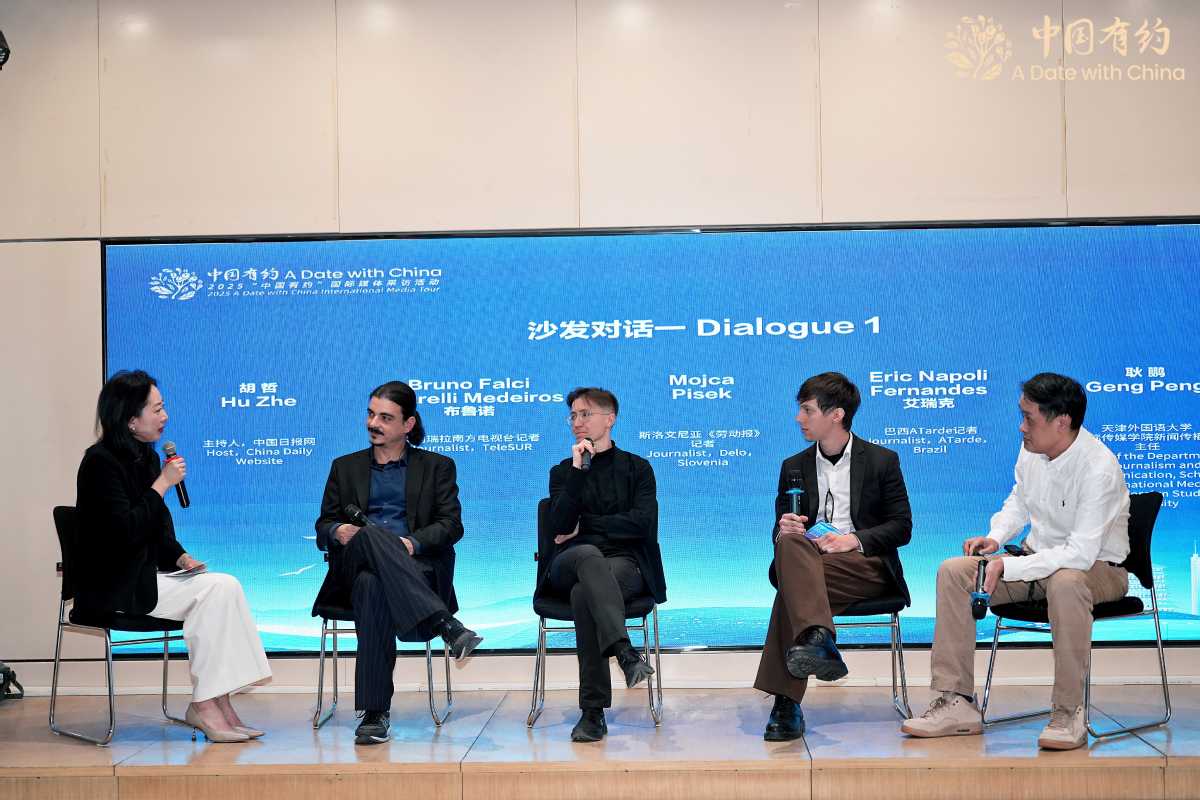
The group also experienced Clay Figure Zhang and saw a shadow puppetry performance of Journey to the West. Bruno Falci, a reporter from TeleSUR, said that foreign journalists eagerly want to understand these art forms, and seized every chance to deeply explore Chinese culture.
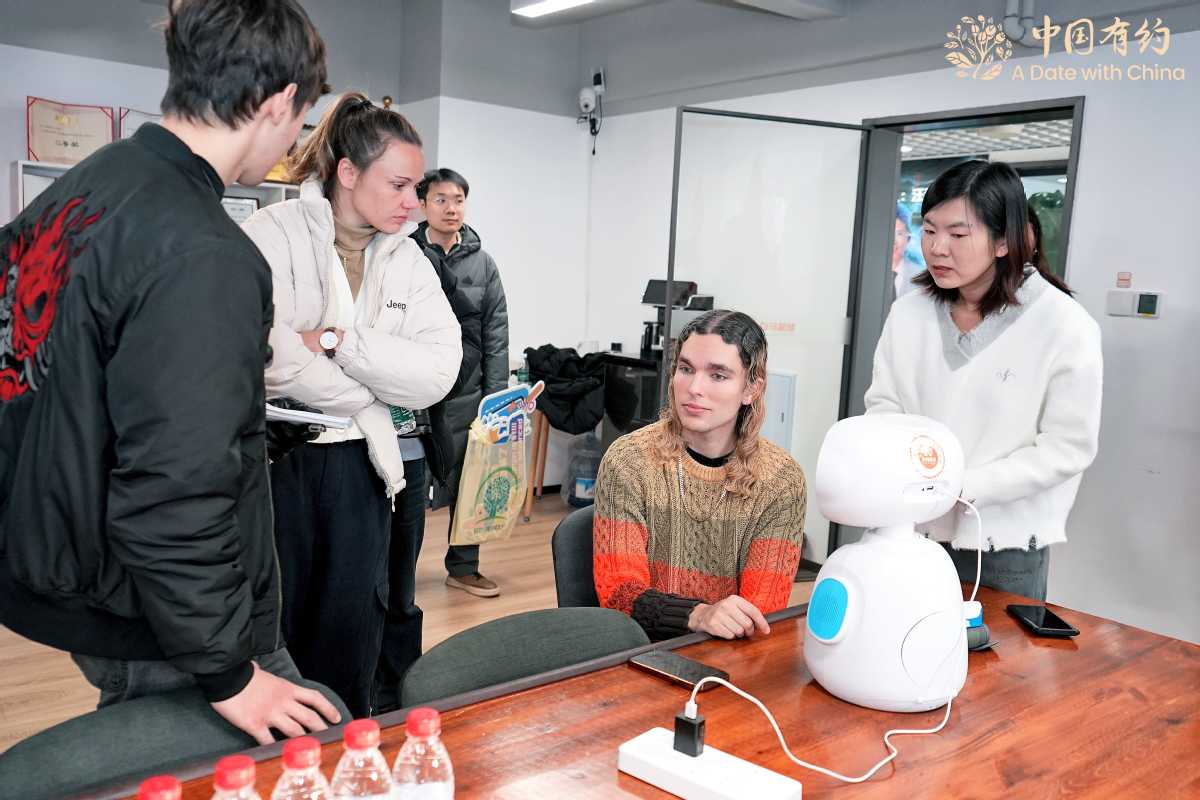
The international media group also got a firsthand experience of Tianjin's technological vitality at industrial parks and tech enterprises. American blogger Dante Munoz showed great interest in cutting-edge products, trying out foldable tablets, AI chat assistant, VR immersive experience, and intelligent health robots.
"Chinese products are high-tech and reliable; enterprises grasp global needs well," Munoz said, adding that he's looking forward to better localized products.

The intelligent upgrading of Tianjin Metro Line 1 also amazed global guests. The line features a driver monitoring system that uses AI facial analysis to real-time track drivers' facial features and postures as well as detect fatigue and distraction. A 360-degree vehicle exterior image detection system can identify loose screws and foreign objects, while an intelligent vehicle operation and maintenance system monitors door operations, driving modes, and traction braking levels. This human-machine collaboration enhances efficiency and reduces maintenance costs.
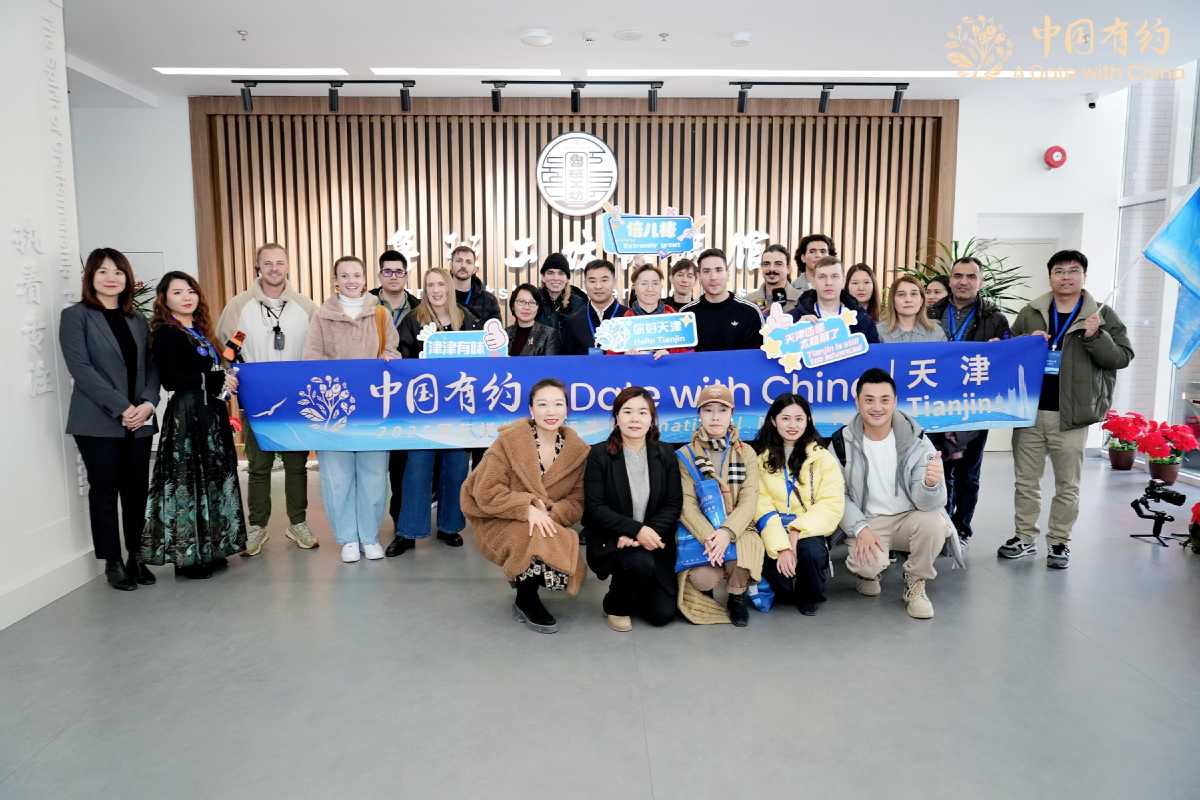
At the Luban Workshop Experience Museum, the delegation learned about China's global vocational education achievements. They met four Egyptian students majoring in computer numerical control, who aspire to become engineers after graduation. Student Ibrahim Maher said studying there boosted his growth and that he hoped to bring Chinese skills back to Egypt.
Luban Workshop is a world-renowned cooperation brand created by Tianjin, introduced by Wang Juan, director of International Exchange and Cooperation Department at Tianjin Light Industry Vocational Technical College. Now, 36 Luban Workshops exist in 30 countries, training talents for local development like Egypt's industrialization. "Luban Workshops teach practical skills," Italian blogger Andrea said. "China now exports not just products but professional skills — remarkable."
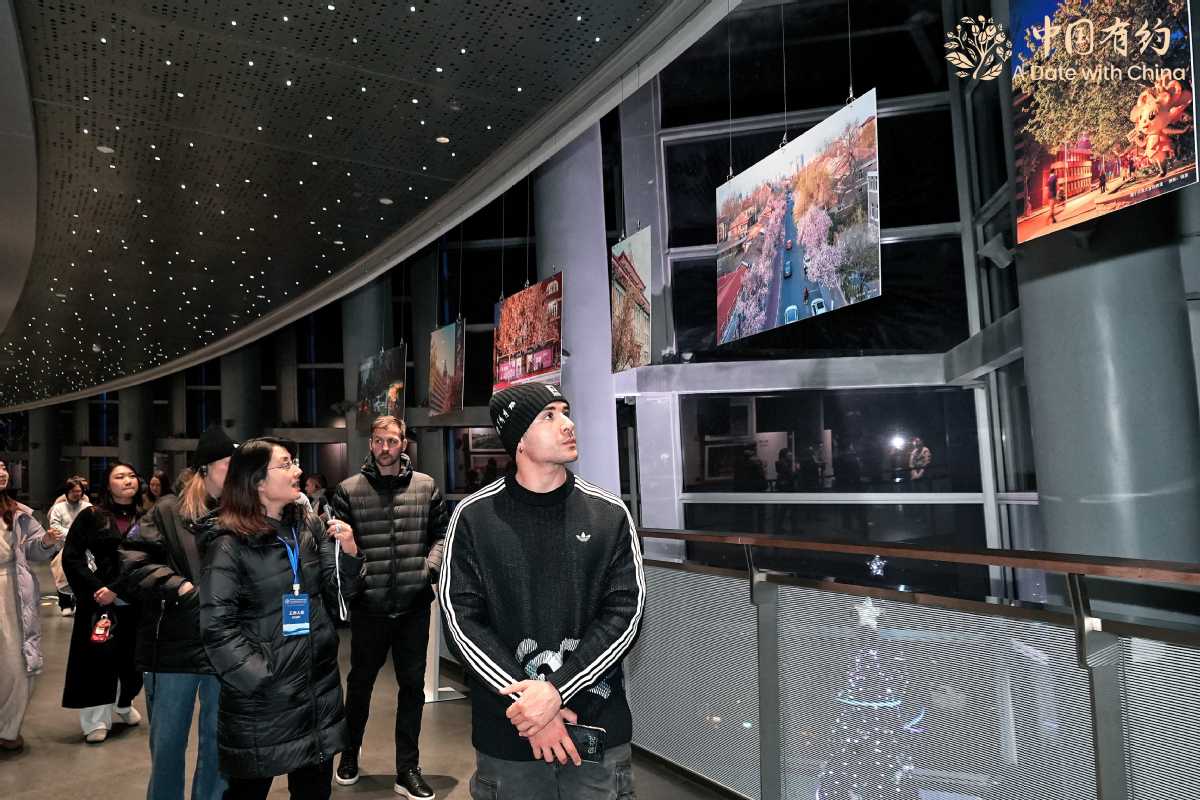
Over the past five years, "A Date with China" international media tour has woven a global tapestry, as hundreds of voices from over 40 countries traversed more than 500 sites in China. Their lenses and pens captured the pulse of China's modernization — a vivid portrait of progress rooted in profound heritage, now shared with the world.


Situated on the banks of the Hai River, Tianjin, while known as a major international port city, has been steadily cultivating an identity as one of the premier hubs for technological innovation in China. However, although Tianjin remains on the cutting edge of innovation and boasts a thriving research environment — ranking as the 15th leading city in the world in terms of research output in 2024— Tianjin has not lost touch with the traditions and culture that made the city stand out long before its turn as an innovation center.
As a participant in the 2025 "A Date with China – Charming Tianjin" international media tour, I was able to experience this duality firsthand.
My date with Tianjin began with a very special crash course in Pingju Opera at the Hongqi Theater. As part of a China Daily livestream, I took on the very appropriate role of the "clown" in the Pingju classic Du Shiniang. I was made up, outfitted in a costume, and coached in the movements and singing of the character I was playing by experts who have studied Pingju Opera for decades.
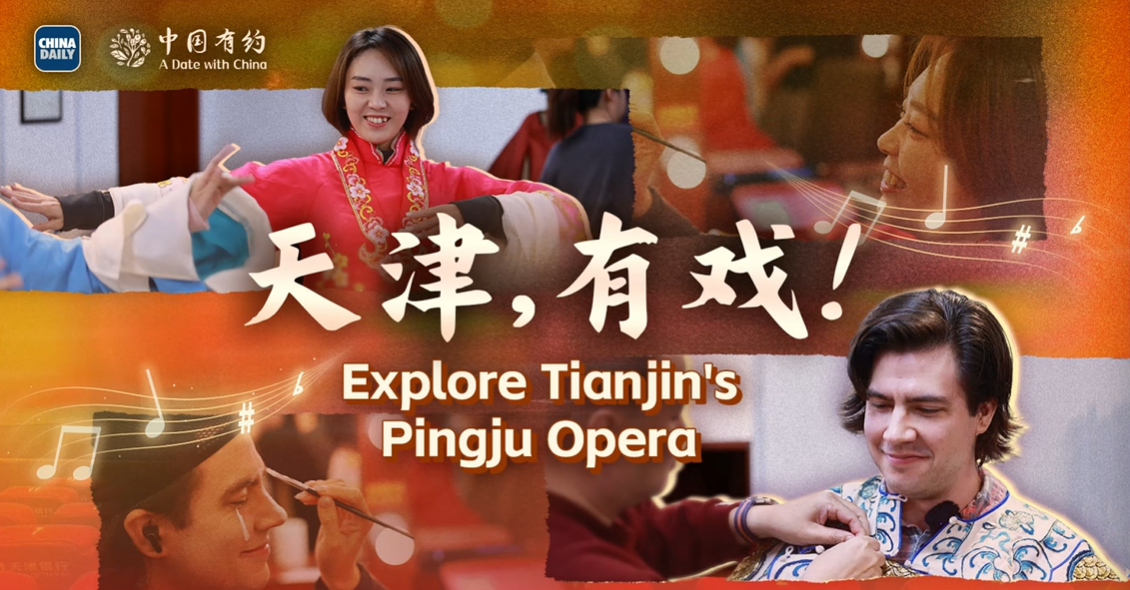
For a first time effort, it was still quite poor, but I appreciate the efforts of the Hongqi Theater staff for doing their best to coach a modicum of grace from my clumsy form.
In subsequent days, I was able to visit the Circular Economy Exhibition Hall of the Tianjin Ziya Economic and Technological Development Zone to learn about China's green development philosophy and model for enhancing resource-use efficiency to protect the environment while also ensuring sustainable economic development.
We visited the Lenovo Innovation Industrial Park where the company's latest AI infused products were demonstrated, and also stopped to explore AI intelligent home health management robots by Baima Planet.
To get acquainted with Chinese intangible cultural heritage and folk customs, we walked along Tianjin's Ancient Culture Street, visited the clay figurine museum of the Zhang family, a shadow puppet theater, and Guangdong Guild Hall where we admired the beauty of Chinese classical architecture and opera.
This is by no means an exhaustive list, just some of the highlights.
The structure of the tour was a masterstroke by the organizers — showcasing Tianjin as a model for moving forward without abandoning the past — alternating between experiences in the technological innovations that are driving economic development and experiences in the traditions and culture of the city.
My main takeaway from the tour is this: the future is inevitable. There is no escape hatch on the path that the collective "we" are heading down. There's simply too much momentum, too much investment, and too much riding — from an economic standpoint — on technological advancement and its integration into every facet of our daily lives.
Given this harsh reality, in an age of the major, technology-driven societal upheaval being led by rapid advancements in AI, it's more important than ever that these traditions be continued and protected. After all, a millennium from now, will anyone tell tales of the AI-generated cat videos their ancestors watched on the subway ride to work? Not likely.
But, just days ago, I watched a shadow puppetry performance of Journey to the West — a story that has been told for hundreds of years in a medium that itself is thousands of years old.
Lest we forget, as one of the earliest forms of visual storytelling, shadow puppetry was a major technological advancement in its day. While new forms of entertainment have since come along and captured our imaginations and destroyed our attention spans, the old ways have earned their place in history as vehicles for Chinese values and cultural identity.
China boasts 5,000 years of civilization, but what would that matter if the links to that history were allowed to fade away? What if there were no more inheritors of the ancient arts? I shudder to think. However, Tianjin gives me hope that tragedy will be avoided.
The writer is a foreign expert of China Daily Website.

During the 2025 "A Date with China" international media tour in Tianjin, global guests folded tablets like book, chatted with AI companions and met health-monitoring robots—then gave a collective thumbs-up. They praised Chinese companies for their keen understanding of global consumer needs and expressed anticipation for more localized products to come.

The 2025 "A Date with China" international media tour immersed itself in Tianjin's vibrant folk culture. Foreign guests dressed in Pingju Opera costumes, played kuaiban (rhythmic bamboo clappers), and even performed crosstalk. Language gaps? No problem! The joy of traditional arts knows no borders. Laughter, cheers and shared moments bridged every gap.

Pingju Opera, a national intangible cultural heritage, is deeply rooted in Tianjin's cultural fabric. Join China Daily reporters as they step inside the Tianjin Pingju Opera Theatre, offering a glimpse into the intricate process of bringing a Pingju Opera performance to life! Watch as professional performers prepare on stage, see the full costume and makeup transformation up close, and experience the artistry behind every detail. From the spotlight to the backstage, get ready for a truly Pingju Opera experience!
Tune in at 10 am on Wednesday to watch the program.

The 2025 "A Date with China" international media tour has visited the Luban Workshop Experience Museum in Tianjin. There, an Egyptian student shared his skill-building journey at the workshop, saying he hoped to apply the knowledge and expertise gained in China to the development of his hometown. He is now forging his path as an engineer and preparing to build a brighter future back home.

The sky is no longer the limit—it's the new urban layer.
Join us on our journey to see how Futian in Shenzhen is turning "future mobility" into real life.

Have you ever gilded a pixiu yourself? Or flown low over a megacity? Shenzhen offers both, where ancient craftsmanship meets futuristic flight. This isn't just a trip, it's a double thrill!

As a Special Economic Zone initially tasked with blazing a trail toward modernizing an underdeveloped country, Shenzhen once set its sights on global cities like Singapore, New York, and Tokyo, among others, as models for urban planning and the modernization of its industries and economy at large. In just four decades, Shenzhen has grown from a fishing village into a high-tech hub — becoming a window into the future for international visitors and the expats living in the city.
"No city in world history has grown with the speed of Shenzhen," Erik Solheim, former head of the United Nations Environment Programme, said on X on Nov 3. "From a fishing village to an 18 million population metropolis in 45 years. Incredibly, it's also an extremely green, high-tech and people-friendly city."
The post drew responses from others sharing their experiences watching Shenzhen's growth into a megacity.
"I have written about the same before — I was there in 2000 — most of the growth happened in the last 25 years," Ole H. Sanne, who identifies himself as Head Commercial at Allianz Bulk CFR8, in a comment under Solheim's post. "I quoted it as 'the first city to reach 20 million in 25 years; any other city with more than 20 million inhabitants has needed 500 years — and Shenzhen is like a science fiction movie.'"
Sean Upton-McLaughlin, an American business consultant who has lived in Shenzhen for years, tweeted earlier this year: "China now officially has the top innovation hub in the world in Shenzhen, Hong Kong, and Guangzhou. Silicon Valley isn't even #2 — that goes to Japan (Tokyo-Yokohama). If this isn't a sign that China's going to lead tech in the future, I don't know what is."
Taylor Ogan, CEO of Snow Bull Capital, who moved to Shenzhen from Boston in early 2023, has been sharing Shenzhen's city life and new technologies with overseas audiences via social media. His company focuses on sectors like autonomous vehicles, electric vehicles (EVs), batteries, 5G, and artificial intelligence (AI).
From time to time, he posts new gadgets and innovative technologies that emerge from Shenzhen. "I'm at the Bay Area Semiconductor Expo in Shenzhen," he tweeted on Oct 15. "A company called Qiyunfang, a subsidiary of (Shenzhen-based) SiCarrier, just unveiled two fully domestic EDA software platforms: one for schematic and one for PCB design. Yet another Made in China 2025 success."
His posts about Shenzhen are not always serious business content. On Oct 15, he tweeted a photo taken on a street, with a caption saying: "A Tesla ran out of battery in Shenzhen and a BYD came to the rescue, using its battery to charge the Tesla."
His posts reveal his enthusiasm for Shenzhen-made electric vehicles, drones, and other high-tech products.
Daichi Araki, a Japanese man who used to live in Shenzhen, operates a website named "Shenzhen Fan" and social media accounts about the city, which feature tech events, new technologies, and his experiences in Shenzhen.
"Experience a 'fully' autonomous driving ride in Shenzhen," Daichi said in a post. "This is truly moving, so if you're in Shenzhen, you absolutely have to try it! ... As you can see from the video, it drives carefully, avoiding pedestrians and Meituan drivers, making it safer than human driving. Even when parking, it makes fine adjustments until it stops precisely in a safe spot."
For cities that aspire to become boomtowns, Shenzhen serves as a compelling model. Prasanna Karthik, a Fulbright, Clinton Foundation, and Raisina Dialogue fellow from India, posted his thoughts on how his hometown Gurgaon — a financial and technology hub southwest of New Delhi — should learn from Shenzhen after visiting here.
"DLF Cyber City was and continues to be the epicenter of Gurgaon's economic nerve center, but it hasn't seen significant new developments in the last 15 years," Karthik said in a post. "In contrast, Shenzhen's economic activity is not concentrated around one office complex; instead, every corner of Shenzhen boasts world-class commercial developments that surpass Cyber City in several aspects."
Shenzhen, the futuristic city, indeed has much to be proud of: brand-new Metro stations and sleek, fully automated trains; skyscrapers like China Resources Tower, nicknamed the "Bamboo Shoot"; and iconic landmarks such as the Shenzhen Book City's Eyes of Bay Area Store — designed on the concept of two eyes looking into the future — the spaceship-like Shenzhen Science & Technology Museum, and the AirPod-shaped Shenzhen Bay Cultural Square.
With state-of-the-art research facilities seamlessly integrated into a "green island" concept, even Guangming Life Science Park, a biotech research and industrial park, leaves a lasting impression.
Daniel K. Cheong, from Mauritius, was apparently wowed by the architectural design of Gangxia North Metro Station, posting photos of its "Shenzhen Eye" ceiling on Facebook, saying: "Welcome to the future. The most beautiful and futuristic subway station I have ever seen! And remember, it's just a subway station!"
Shenzhen never fails to impress. The subtropical city now has the world's largest ski center. Located at the lowest latitude of any ski center in the world, Qianhai Snow World spans 100,000 square meters — about 14 football fields — showcasing a new facet of the city's vibrant urban life.
"Shenzhen Speed is insane!!! The largest indoor ski facility in the world (by far!) in a matter of months!!!" Taylor Ogan exclaimed, referring to Qianhai Snow World.
For expats like Ogan, Shenzhen is never a boring city. The ceaseless rollouts of new technologies and the convenient, state-of-the-art facilities underpinning a modern lifestyle are key to the city's appeal for people from around the world who came here to experience the future.
The author is a senior advisor at Shenzhen News Group.
linmin@szpgm.com


In Lianhua Hill Park at the heart of Shenzhen, visitors can find patrolling robots, automated garbage-collecting boats, and an autonomous minibus. They can also enjoy drinks and take-out food delivered by drone. These high-tech applications are not just for show. They are increasingly woven into the daily lives of Shenzhen residents.
They are part of a broader wave of new technologies and products that Shenzhen is integrating into people's lives. China is striving to drive high-quality economic development by expanding application scenarios for new technologies and products, and Shenzhen is leading the way. Li Chunlin, deputy head of the National Development and Reform Commission, speaking at a policy briefing on Nov 10, described "application scenarios" as a bridge connecting technology and industry and linking research and development to the market.
Drones, one of the iconic products that Shenzhen is known for, are taking over the city's skyline. According to official statistics, Shenzhen produced 2.75 million civilian unmanned aerial vehicles (UAVs) in the first half of 2025, marking a 59 percent year-on-year growth. So far, the city has opened 306 UAV logistics flight routes. In the first three quarters of this year, 630,000 UAV flights were conducted to deliver goods. These figures show that Shenzhen not only boasts a fast-growing UAV industry cluster, but also offers more and more real-world application scenarios that bring technology into people's daily lives.
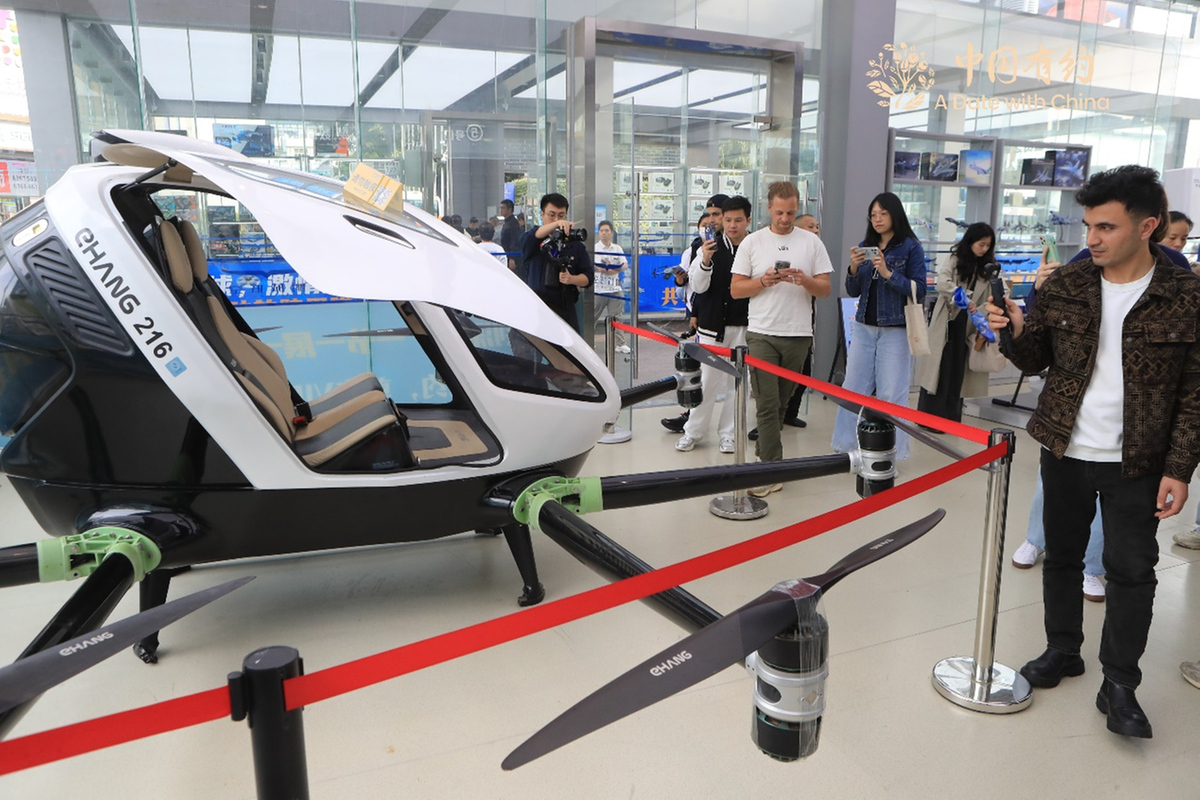
In March, the "Wings of Futian" Low-altitude UAV Showroom opened in Huaqiangbei, the globally-renowned electronics hub, showcasing cutting-edge electric vertical takeoff and landing (eVTOL) aircraft and UAVs. The showroom adds to Huaqiangbei's growing list of dedicated venues for the low-altitude economy. Earlier this year, China's first all-industry-chain UAV equipment selection center began operations in the area.
While drone deliveries are becoming a common sight in parks and universities in Shenzhen, sightseeing flights aboard eVTOLs are set to take off, with test flights launched for coastal sightseeing in Yantian and excursions over Wutong Mountain and Donghu Reservoir in Luohu. Luohu has designated 15 passenger-carrying take-off and landing sites for eVTOLs.
Education is another field where technological innovation is benefiting residents in Shenzhen.
The new Shenzhen Science and Technology Museum offers a wide range of hands-on facilities designed for students and the general public to explore scientific research across disciplines such as basic science, life and health, intelligent industries and space exploration. The museum features both interactive exhibits and advanced simulation labs, allowing visitors to experience scientific concepts through engaging experiments. Highlights include the AI Evolution Touch Wall, which traces milestones in artificial intelligence and invites visitors to vote on AI ethics dilemmas, and the Global Data Globe, a 3-meter holographic projection that visualizes real-time international data flows. The Innovation Workshop offers 3D printing, robotics and drone assembly courses, while the museum's high-tech theaters provide immersive science experiences—from quantum superposition visualizations to interactive science talks—making the museum a comprehensive hub for experiential learning and scientific exploration.
As a high-tech powerhouse, Shenzhen is aggressively advancing AI research and applications. In addition to a string of humanoid robot startups, companies in Shenzhen have embraced the AI wave, seeking to apply AI across industries and daily life. While Tencent is pursuing AI development and applications in every segment of its sprawling business empire, a growing number of startups are delving into niche markets and specific sectors. XtalPi Holdings Limited, founded by three MIT postdoctoral physicists, is engaged in drug research, biotechnology, and materials science using AI, quantum physics and robotics. AI accelerates drug research and discovery by analyzing vast biological and chemical data to identify promising compounds, predict their efficacy and safety, and optimize molecular design.
In hospitals, doctors are using AI tools to diagnose diseases more accurately and efficiently, such as AI-powered analysis of CT scans and surgery robots to help surgeons perform procedures more accurately and reliably.
In Shenzhen, even traditional industries and services are under transformation through digital and AI technologies. A company named Jubaohui uses an app to help buyers customize their gold jewelry through an intelligent service, and provides retailers with smart supply chain management services. Weather forecasts have become more accurate and tailored to each subdistrict thanks to AI models. Police deploy drones to detect violations and improve traffic flow.
Even visiting a bookstore or reading in a library has become smarter and more enjoyable. The Shenzhen Book City's Eyes of Bay Area Store incorporates technologies such as AI-powered Q&A, VR immersive experiences, and digital twins to create innovative features like an intelligent book repository, smart retrieval system, and "magic bookshelves". Facilities such as AI reading booths and smart reading spaces further elevate the reading experience.
Technological innovation is a means, not an end. In Shenzhen, it transforms industries, enhances services, and improves everyday life. Technology for the greater good, the people and the future.
The author is a senior advisor at Shenzhen News Group.
linmin@szpgm.com


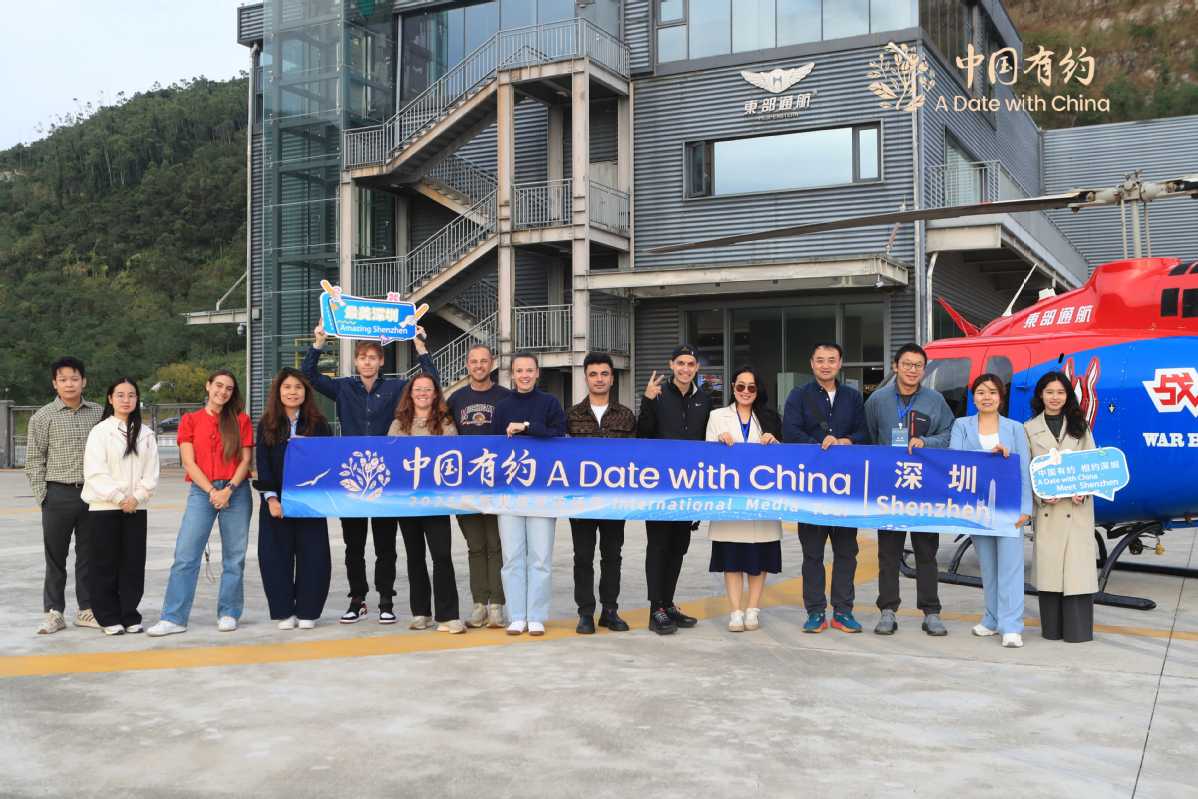
The 2025 "A Date with China" international media delegation embarked on a captivating journey through Shenzhen, a city where cutting-edge innovation, vibrant tech vitality, and joyful exploration converge, from Nov 26 to 28.
Spanning Futian, Luohu and Yantian districts—and even reaching Guangming and Bao'an—the group delved into how the global hub of futuristic possibilities is shaping the future with its high-tech marvels and down-to-earth fun-filled atmosphere.

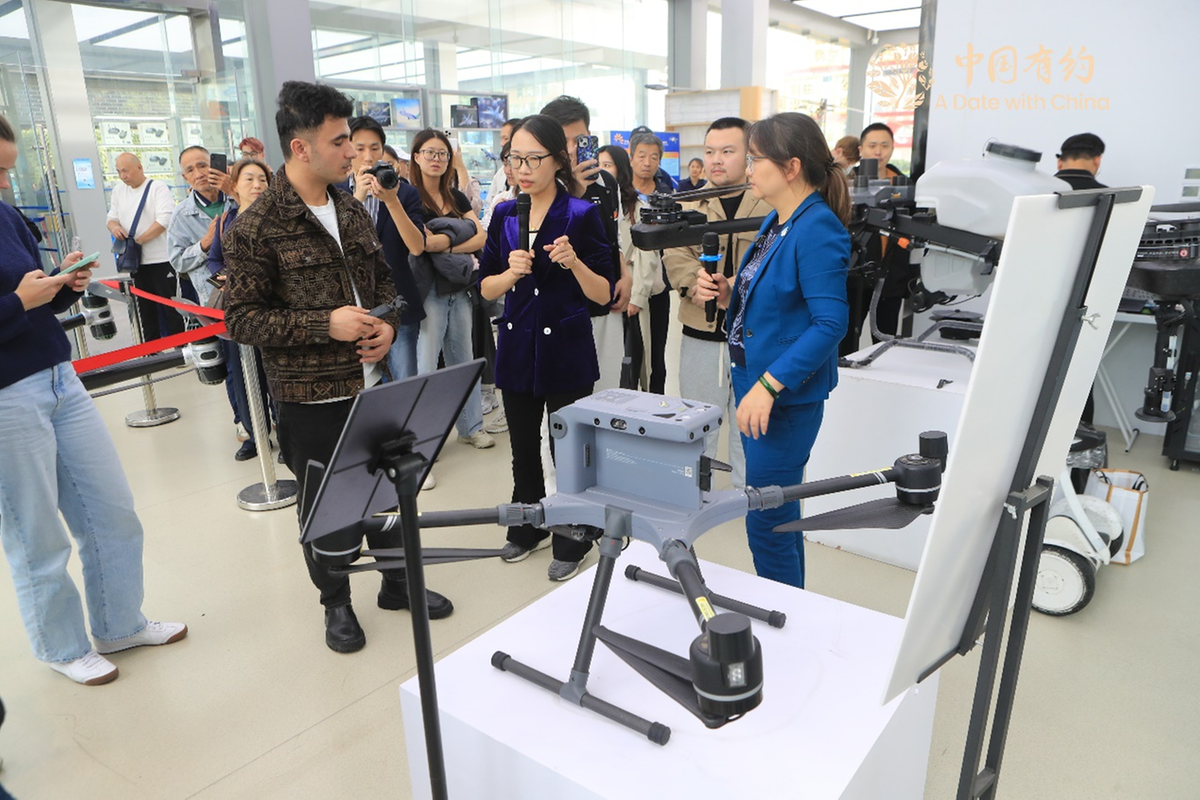
One of the highlights of the trip was Shenzhen's booming low-altitude economy. The delegation kicked off their adventure at "Futian Wings" in Futian district's Huaqiangbei, where drones were showcased as part of a new era in daily life. From kid-friendly "drone football" toys sparking young imaginations to intelligent drones tackling real-world tasks like high-rise cleaning, firefighting and urban planning, the exhibits highlighted how technology seamlessly integrates with practical applications.

"There are many application scenarios for low-altitude flight," Lai Lixia, a Luohu district official noted at the Wutong Pavilion. "Luohu was the first to launch medical drone deliveries, and we are also merging it with cultural tourism and even consumer camping—turning the skies into a new frontier for growth."
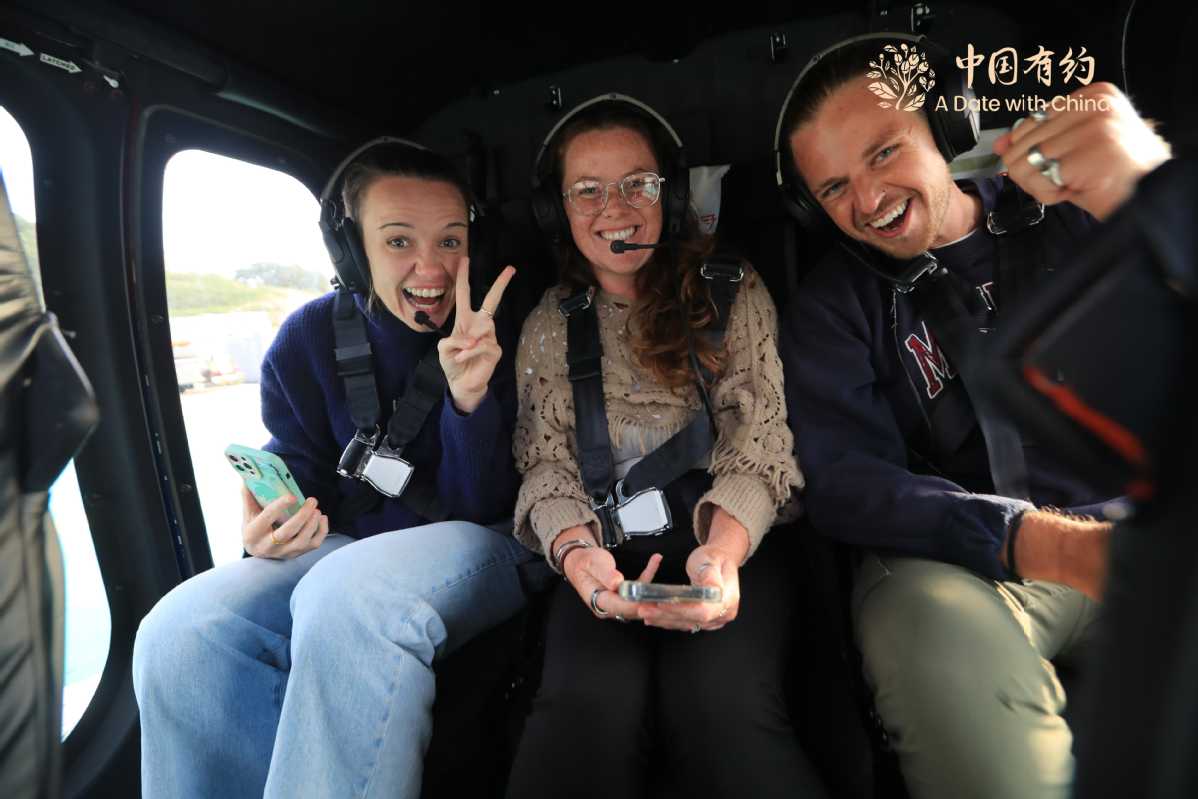
The thrill escalated at the Heli-eastern base, where journalists and bloggers boarded "air taxis" for a bird's-eye view of Yantian Port, Dameisha Beach, Shatoujiao's coastal charm, and the southern slopes of Wutong Mountain. "It was an incredible experience, and my mouth was hanging open," gushed South African blogger Lizzy. "The low-altitude helicopter really makes life so much easier."
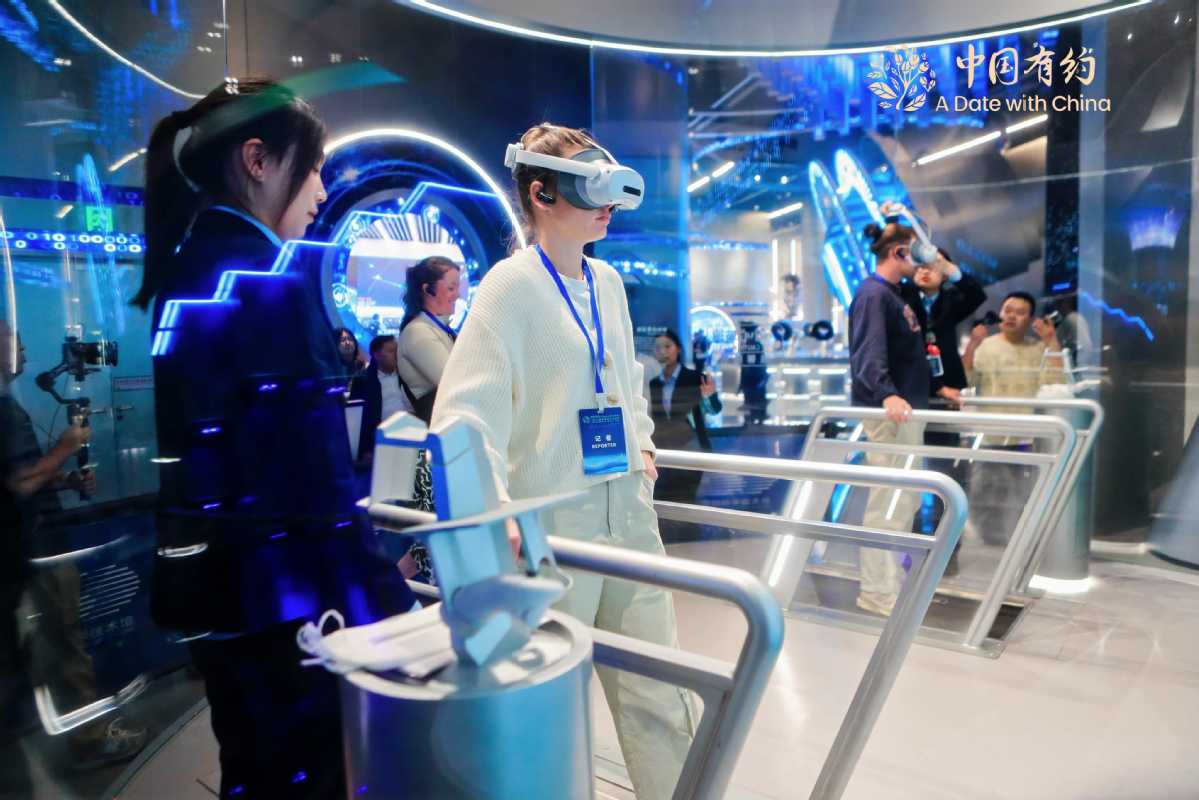
The Shenzhen Science & Technology Museum offered more playful tech interactions where foreign media and vloggers played table tennis with robotic arms, competed in AI-powered football matches, sipped coffee brewed by robots, enjoyed latte art created by robotic baristas, and even danced with robotic partners.
"It really feels like you're stepping into some kind of futuristic world," marveled British content creator Jason Lightfoot, a Chinese son-in-law. "My son would love exploring here, and I'll definitely return with my whole family."
Afghan blogger Hashem, after sparring with a robotic arm, joked, "I knew the Chinese excel at ping-pong, but can China's robots? Turns out, they're just as precise and can even read human moves!"

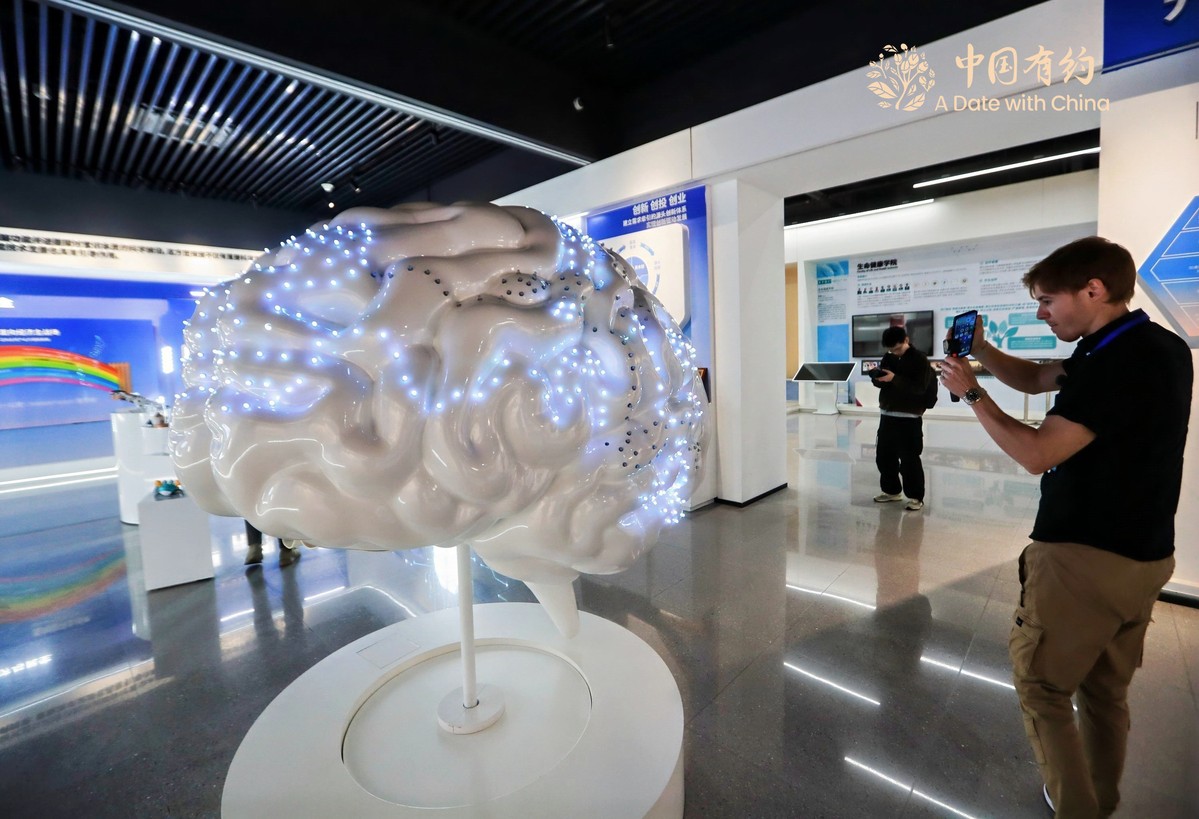
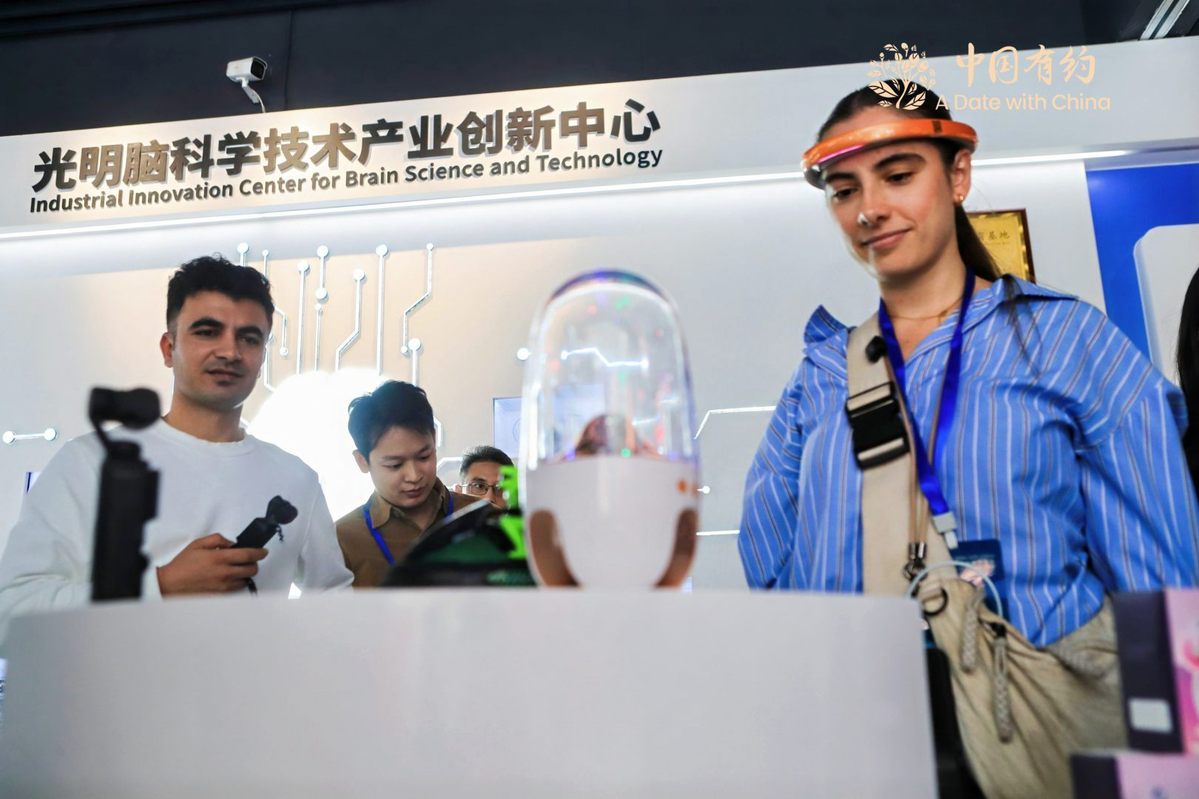
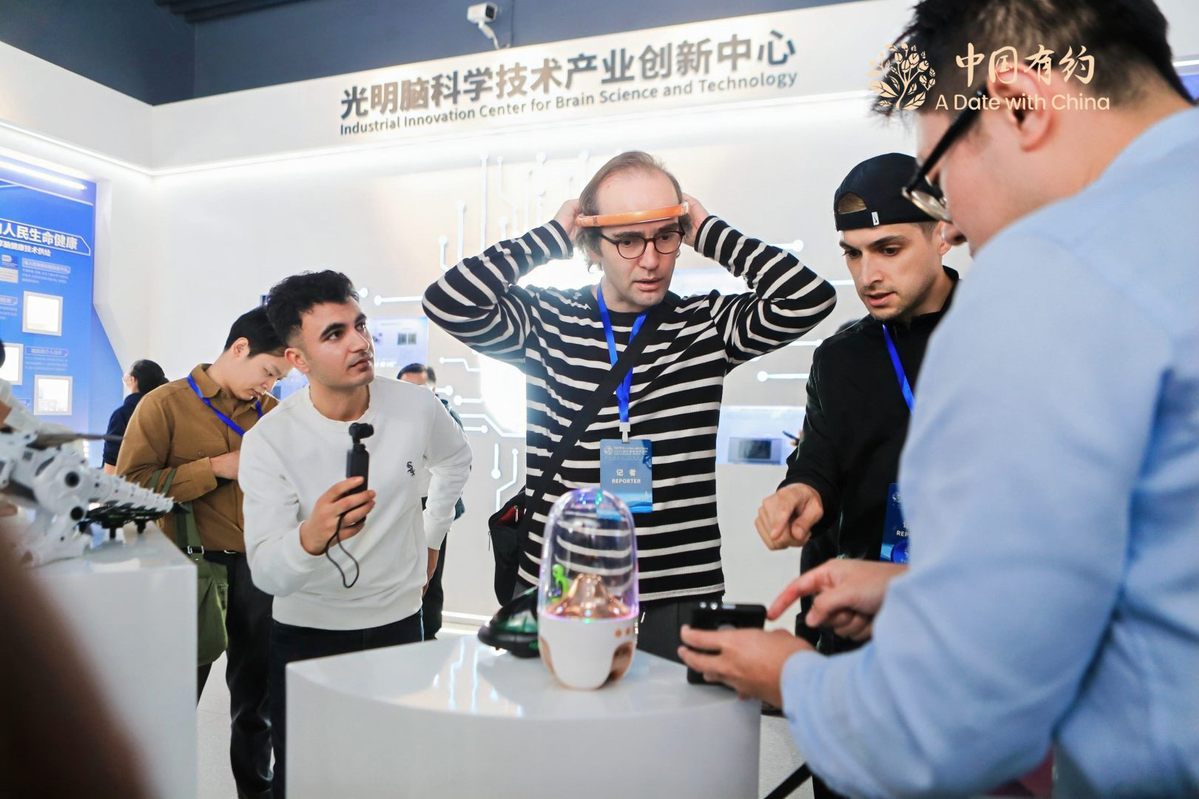
The journey also ventured into the frontiers of neuroscience at Shenzhen's Industrial Innovation Center for Brain Science and Technology in Guangming district. Focused on brain health and aging society, the center explores autism, sleep disorders, Alzheimer's, etc.
"Explore the mysteries of the brain for the wellbeing of humanity" became a touching takeaway as the delegation discovered advancements in brain-computer integration, neural mapping, and brain-inspired machine learning.

Even reading got a tech upgrade at Bao'an Library. With a tap on electronic screens, visitors can borrow books; and returning them only involves scanning a code, activating 28 "Xiaozhi" sorting robots, which swiftly whisk the books away using smart systems. Serving as a microcosm of Shenzhen's innovation, the library is not just a knowledge haven but a testament to the city's "hardcore" tech prowess.

The grand finale was at Qianhai Snow World, Asia's largest indoor ski resort, where laughter echoed among US, UK, Mexican and Afghan guests as they experienced winter sports in subtropical Shenzhen.
"With these facilities, kids here can experience snow sports and may become professionals," said Emre Aytekin of Turkiye's Anadolu Agency, noting the growing interest in winter sports and economy since the 2022 Beijing Winter Olympics.
Over the course of three days, Shenzhen proved that the future isn't just imagined—it's lived, played and explored. For the international media, it was a vivid reminder: innovation thrives brightest when paired with curiosity and delight.


In Shenzhen, a vibrant and warm city in South China, lies Asia's largest indoor ski resort. The 2025 "A Date with China" international media tour visited Qianhai Snow World, where a Turkish journalist praised the facilities for nurturing children's potential in professional skiing. Since the 2022 Beijing Winter Olympics, winter sports and ice and snow economy have been thriving. Watch global friends discover the thrill of snow — right in the heart of a subtropical city!

During the 2025 "A Date with China" international media tour, journalists, experts and influencers from around the world explored Shenzhen's low-altitude economy, travelling through Luohu, Futian and Yantian districts. They experienced the city's innovative low-altitude taxis, offering an immersive journey that showcases how this emerging sector is transforming daily travel into scenes straight out of a sci-fi film. See how Shenzhen is advancing the future of mobility in breathtaking style!

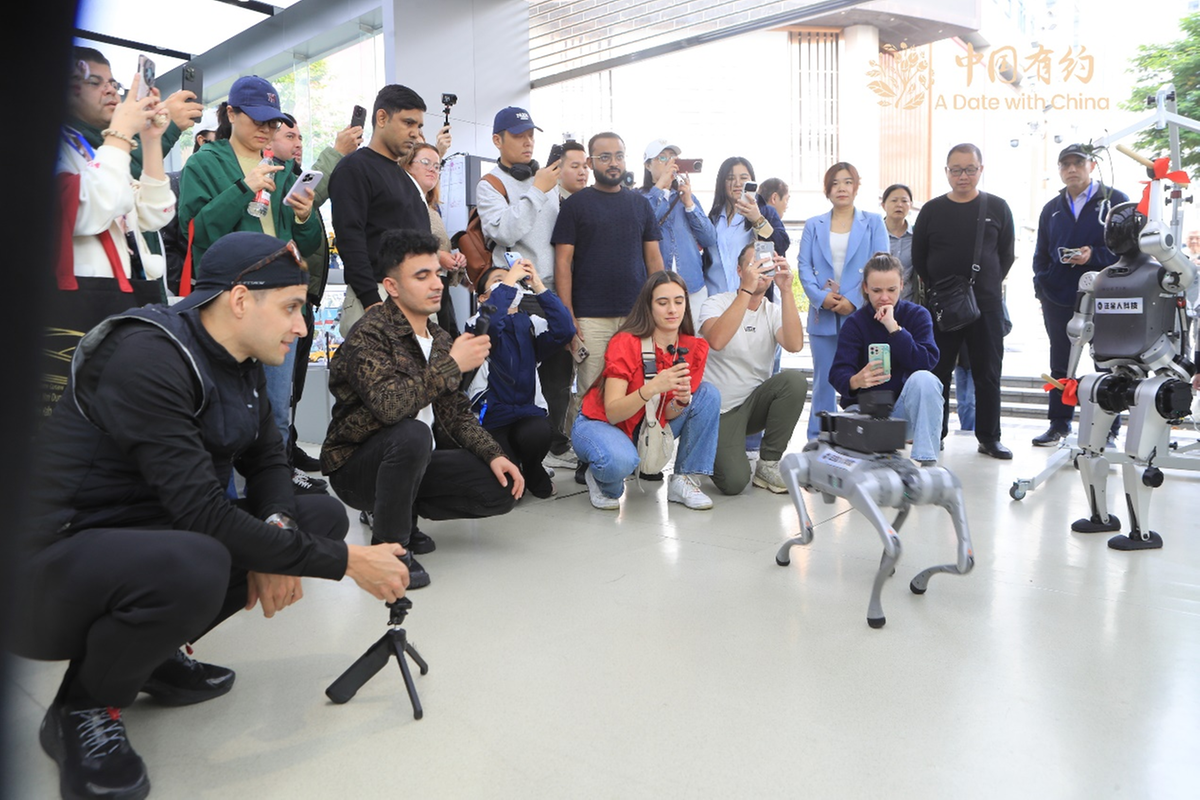
Participants on the 2025 "A date with China" international media tour visited the "Futian Wings" Pengcheng Low-altitude UAV Exhibition Center in Shenzhen, Guangdong province, on Nov 27, 2025. The three-day event, which started on Wednesday, offers a firsthand look at the city's advancements in brain science infrastructure, the low-altitude economy, applied artificial intelligence, and others.
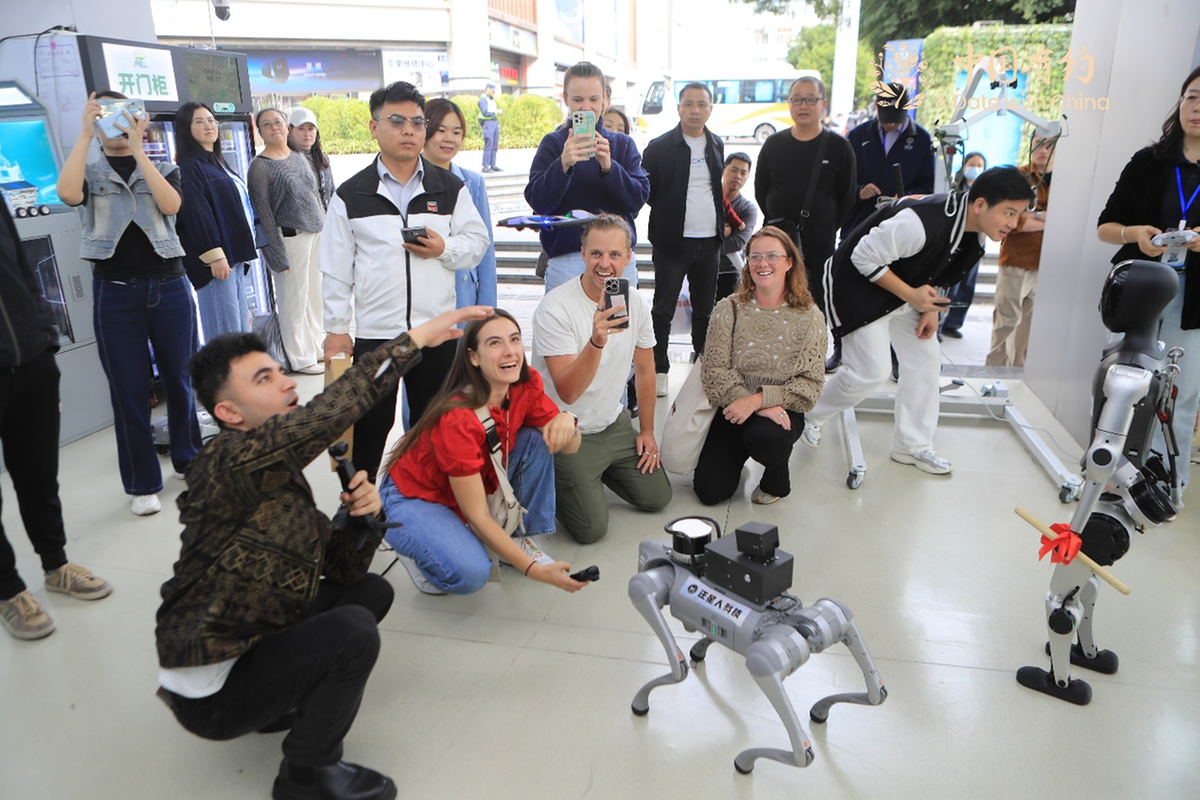
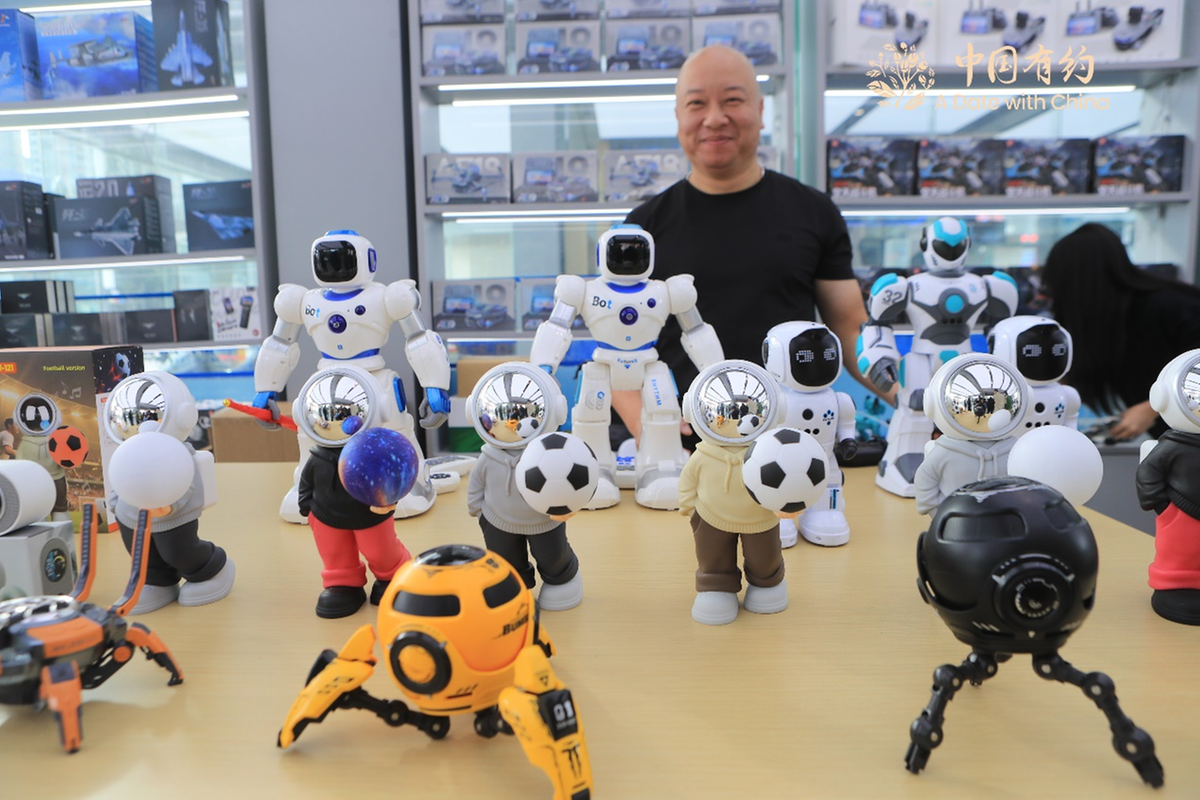



A group of international content creators recently explored the Shenzhen Science and Technology Museum, and Chinese tech blew their minds.
An Afghan vlogger was captivated by China's robots, praising them as "ping-pong pros". A British creator was so impressed that he's already planning a return trip with his family. From AI latte art to VR skyline tours, watch China's cutting-edge innovations spark joy and inspiration across the globe!

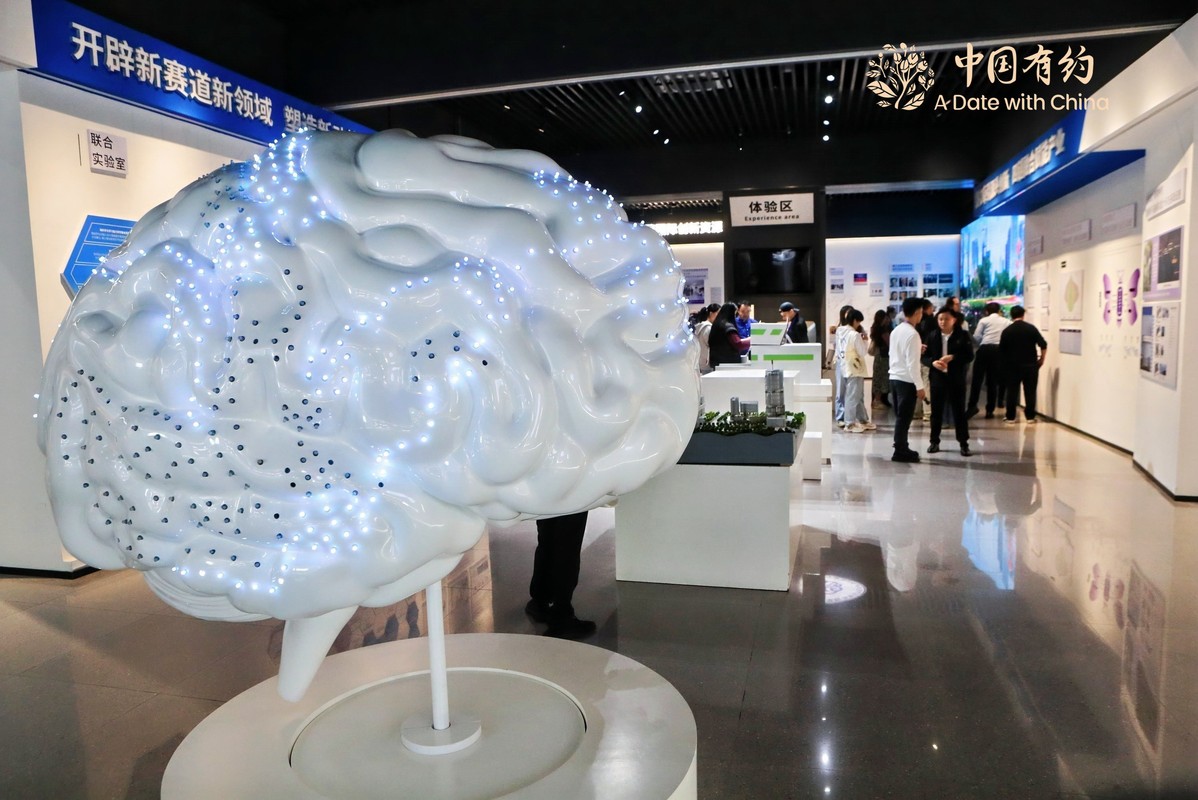
The Shenzhen Industrial Innovation Center for Brain Science and Technology, with a floor area of nearly 10,000 square meters, began operations in 2022.
Its core mission is to build a high-caliber incubation platform for future industries, spearheaded by startup services, backed by shared technology and patient capital, and distinguished by resource integration and demonstration.
To date, the center has hosted over 50 companies, successfully incubated five graduate companies and facilitated capital infusion of more than 300 million yuan ($42.37 million) into its incubates, with overall funding surpassing 1 billion yuan.



Content creators and media representatives from around the world visit a museum on polished lacquerware – where nothing is behind glass. Artists are busy at work! Meticulous outlines are filled in with impossibly small strokes, which are then polished with the patience of a saint. Not a power tool in sight. Everything is done the traditional way. The international group wrapped up their museum tour in its gallery of finished products, having a greater appreciation for the artistry behind each piece.

Join a Chinese journalist and his Brazilian peer on a Shanxi trip! They wandered through the grand Wang Family Compound, stood in awe of the thundering Hukou Waterfall, and explored the treasures of Shanxi Museum. This cross-cultural adventure blends ancient heritages with youth fun. Click the video to explore Shanxi at your fingertips!







