Changes come with greater understanding









 I was in the Benjamin Franklin State Dining Room in the US Department of State on Nov 21 to observe US Secretary of State John Kerry and Chinese Vice-Premier Liu Yandong renew the Memorandum of Understanding on the Mechanism of China-US High-Level Consultations on People-to-People Exchanges.
A local cameraman, who clearly had no idea of what the event was about, asked what they were signing. He looked puzzled when I said it was about people-to-people exchanges. "Exchange of prisoners?" he asked seriously.
"No," I said, somewhat amused. I explained that it's people-to-people exchanges in education, culture, science and technology, sports and women issues.
I don't blame him. As former secretary of state Hillary Clinton pointed out just a day earlier, such people-to-people exchanges do not make headlines, but they are certainly in the "trendlines".
The fact that 235,000 Chinese students are studying in US universities and colleges, and about 68,000 US students have gone to study in China in the past more than three years under the 100,000 Strong Initiative proposed by US President Barack Obama in 2009 has not been covered much by the news media.
However, some 10,000 people flying between China and the US on a daily basis are a strong testament to how extensive and deep those exchanges are.
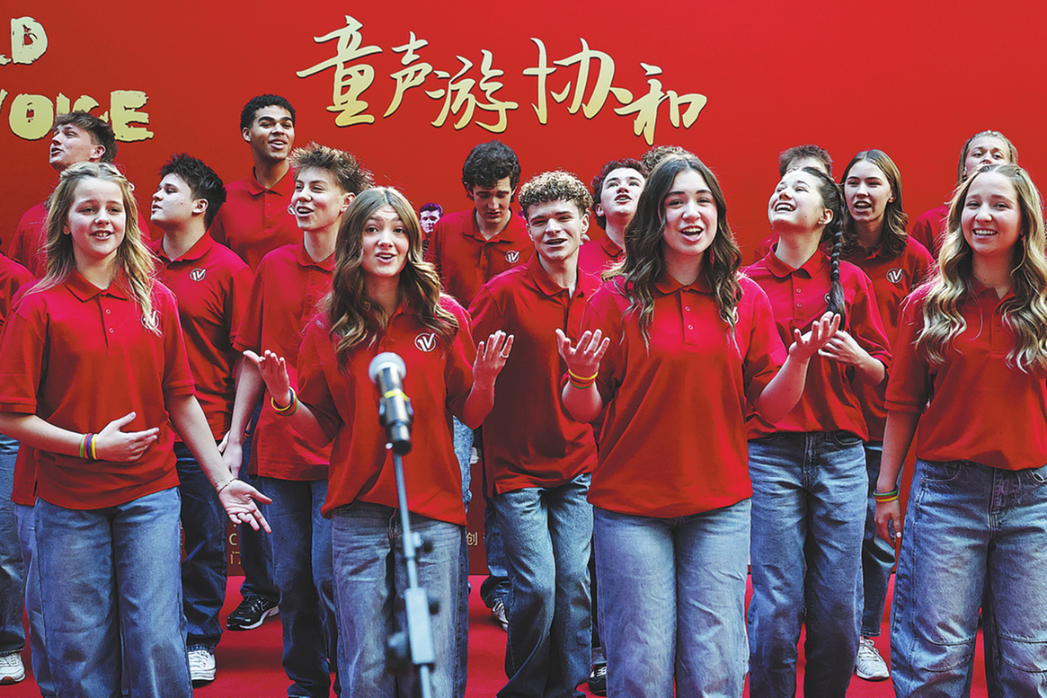
They could be Chinese artists heading toward the Kennedy Center for Performing Arts in Washington DC, or American musicians going to China on the State Department's American Music Abroad program. They could be young scientists from the two countries visiting Beijing or Washington for the Young Scientist Forum. They could be Chinese wushu delegations on a tour in US cities or Americans going to Wudang Mountain and Shaolin Temple to learn Chinese martial arts.
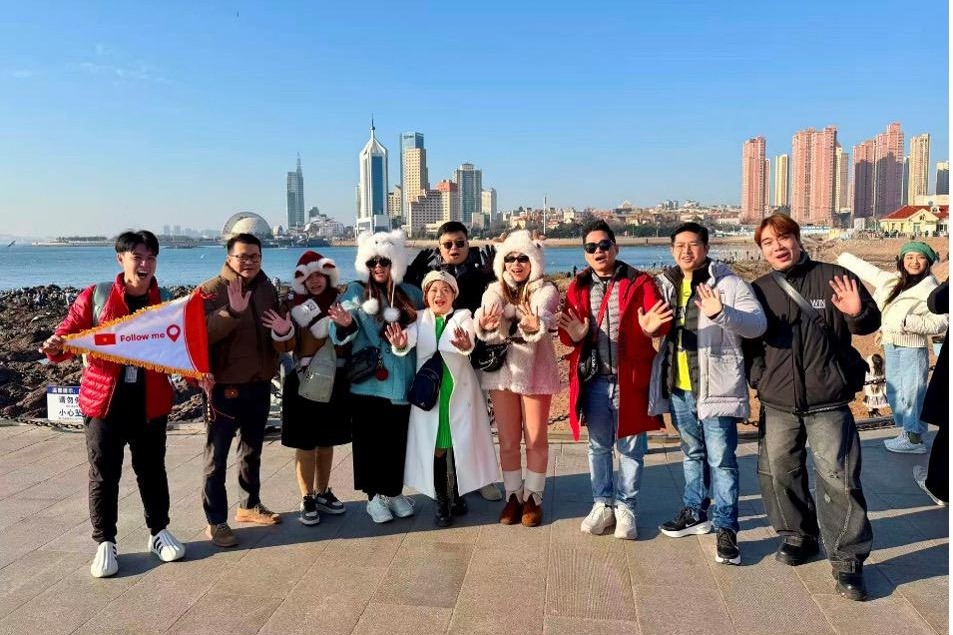
They could be students, professors, businesspeople, diplomats and tourists. The number is growing in almost every category. These are the exciting fields, where you see only friendship and cooperation and no conflict and animosity.
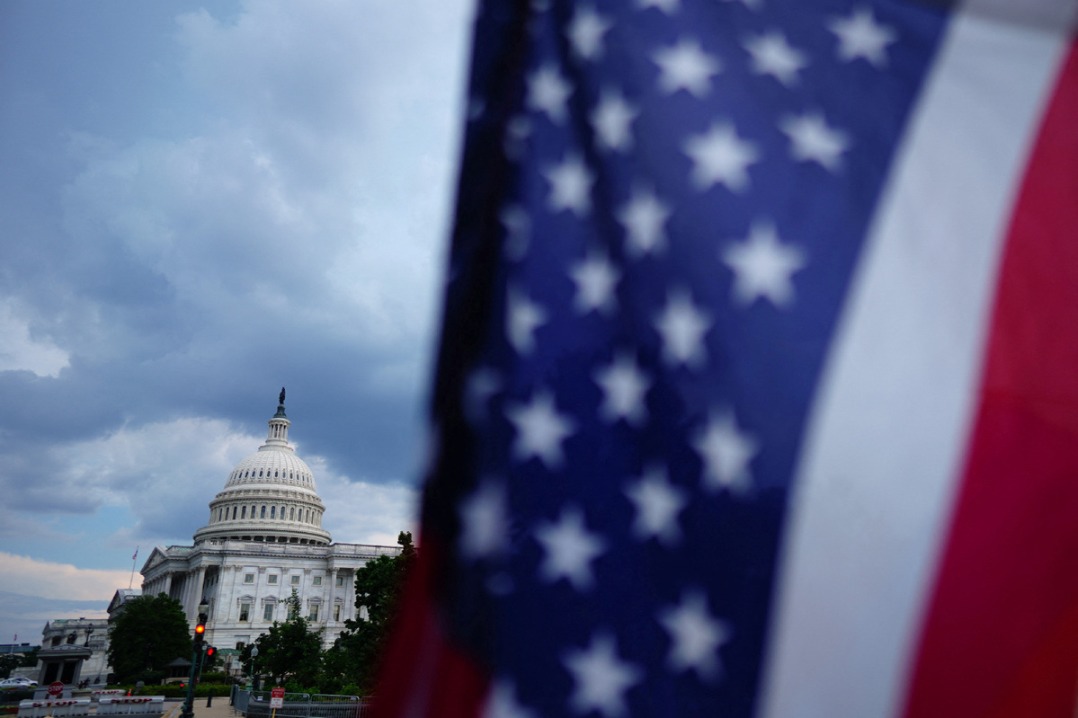
But my mood totally changed as I attended a seminar on US foreign policy challenges in Washington this Tuesday. Several pundits were exaggerating the Chinese military threat, as if China were the country that has 11 aircraft carriers and military bases across the globe and spent half of the world's defense budget. Throughout the speech, some apparently saw China as a potential adversary, if not already one.
Various polls also suggest that quite a few people in China and the US still view each other's country as a potential adversary.
Sadly, this is true despite the exploding bilateral trade, the expanding people-to-people exchanges as well as the more high-level dialogues in the past years. Bilateral military exchanges, which have long lagged behind other dimensions such as the economy and trade, have also begun to gather steam lately.
US Vice-President Joe Biden will visit Beijing next week. White House officials expressed that while Biden will seek clarification from the Chinese side on the recently announced East China Sea Air Defense Identification Zone, the trip is not for one issue, but a broad agenda of bilateral, regional and global matters. That is a sign of maturity if we recall the bilateral relationship has often been subject to turbulence due to one single dispute.
China and the US are still learning to better manage their differences, but a lot of the differences, including some at military and strategic levels, do seem to arise from a lack of understanding of each other's culture, traditions and history.
That is why so many people are trying to foster people-to-people exchanges to build a solid base for the relationship. As I chatted a week ago with Stephen Schwarzeman and John Thornton, two successful businessmen who now devote much time and money to such exchanges, I have more confidence that the tensions between China and the US can be substantially defused with more people-to-people exchanges.
That of course would also be true for China and Japan, or any two countries.
The author, based in Washington, is deputy editor of China Daily USA. chenweihua@chinadailyusa.com
(China Daily 11/29/2013 page8)