Shanghai may set example for anti-graft drive









The Shanghai government issued rules on Monday banning spouses and the children of city leaders and senior officials from running businesses. The move is aimed to help uproot official corruption, and it has been described by some as the "toughest ever rules" in this regard.
For years, senior officials have abused their power to benefit their family members through their businesses despite central government rules forbidding such activities.
There is no doubt that Shanghai has a mess to clean up. In the fall last year, a central government investigation team found strong public grievances about senior city officials' family members engaging in businesses that exploited their guanxi (connections). But Shanghai may very well not be the worst case in the country.
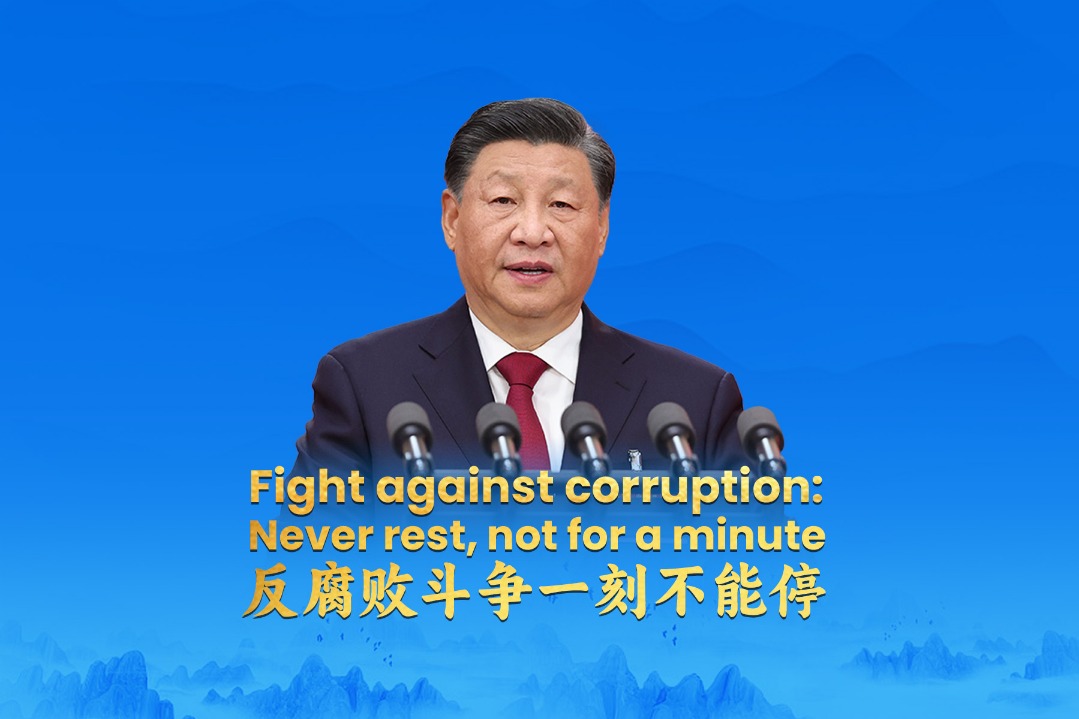
With the nation's anti-corruption campaign gaining huge momentum under President Xi Jinping, Shanghai has been tasked with demonstrating to other provinces and cities that the rules announced on Monday have real teeth and will bite.
The ban under the regulation issued by the Party's Shanghai committee applies to officials at and above vice-bureau level in city government departments, district and county governments, courts, procuratorates and State-owned enterprises.
The rules require officials to report on the jobs of their spouses and children and publicize such information inside the Party. Officials whose family members are already running businesses must ask these members to end their involvement with the business or they themselves should resign from their posts. Those who fail to comply will be punished.
These so-called toughest ever rules should be warmly applauded. However, the challenge ahead for Shanghai is to prove that they will be enforced effectively, and not be added to the pile of documents to which only lip service has been paid over the past decades.
To do this, the city government could start a scorecard system to inform the public of the detailed and timely progress made on this front every month, every quarter and every year.
Closing loopholes not stipulated in the rules is essential because the abuse of power by public servants can take various forms, such as through their cousins, nephews and nieces and friends, not necessary their own spouses and children.
To put power in cage as President Xi has called for, it is more important to ensure that there is no abuse of power, instead of just looking at the activities of officials and their family members.
For example, some of the officials' family members might dodge the new rules by switching to a behind-the-scene role, using others as their front.
Also, how about the vast number of section-level officials that are not covered by the new rules. For Shanghai, many of these officials wield important power in approving business deals and have ample rent-seeking opportunities, sometimes more than their bosses at the bureau-level.
While the new rules promise to review 20 percent of the reports filed by officials regarding the information of their family members, it could be raised to 50 percent so that fewer officials will take any chances.
If Shanghai is serious about the endeavor, it could also become the nation's pilot in disclosing the assets of its leading public servants, something vital to fighting official corruption. So far there is no central and local government rules in this regard despite incessant public calls for such a system in the last few decades.
All these require a far more powerful checks-and-balance system to put power in cage.
No one is saying that the anti-corruption campaign would be easy, it hasn't been and it isn't. But failing to effectively enforce the rules and turn the tide risks the rekindled public confidence in cleaner governance.
The author is deputy editor of China Daily USA. chenweihua@chinadailyusa.com