Island strives for balanced development









Influx of visitors proves Gulangyu's attractions but focus now turns to protecting its proud heritage
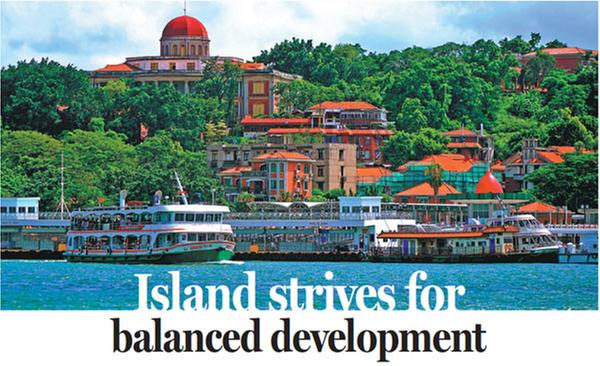
The summer's burning heat does not appear to dent the enthusiasm of travelers to Gulangyu Island, also known as Kulangsu in the local dialect in Fujian province, since the island was listed as a UNESCO World Cultural Heritage site.
To better protect the 1.88-square-kilometer islet to the east of downtown Xiamen, the local government set a ceiling of 50,000 visitors per day in a bid to give travelers a better experience and add more cultural elements.
About 10,000 people are permanent residents on the island, meaning that about 40,000 visitors are allowed onto the island each day, said Wang Weishan, deputy director of the Management Committee of Gulangyu Island and Wanshi Mountain.
"We will not take this opportunity to raise the ticket price. Instead, we'll have reasonable control over the number of visitors, considering the need to better protect the island.
"We'll also improve the quality of their visits with more cultural elements," Wang said.
That was in line with President Xi Jinping's call to build a special brand of Gulangyu Island by protecting the natural environment, renovating historic buildings and improving infrastructure and public services.
As early as 1985, Xi presided over the compiling of a 15-year economic and social development plan for the coastal city when he was Xiamen's vice-mayor. Tourism development for Gulangyu Island was one of the key sections in the city's plan.
In 1987, the city government established a special team to issue a development plan that suited the island, where dozens of decades-old and Western-style buildings are still standing after being transformed from consulates into schools and hospitals.
Four years later, the overall plan for Gulangyu Island and Wanshi Mountain was approved by the State Council. The plan set a paradigm for the current monitoring system and started to balance tourism development and cultural and ecological protection.
From 1985 to 2013, Xiamen issued more than 30 regulations and residential covenants to protect 931 historic buildings and gardens, in addition to 183 cultural protection sites that were recognized by the local and central governments.
Xiamen has decided to set up a new cultural heritage protection committee, an upgrade of the current management committee, which will enjoy more autonomous power in decision-making, Wang said.
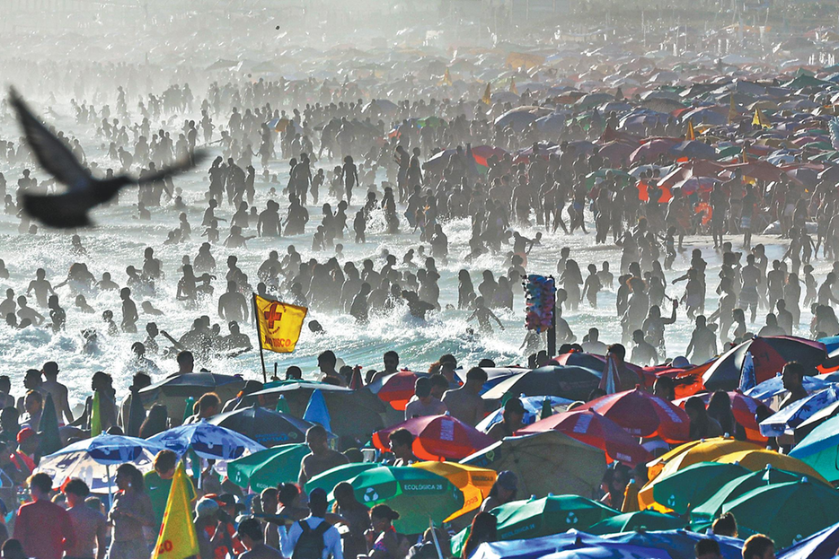
The island gained popularity in the 1980s, and the past three decades witnessed an increasing number of visitors, with a record high of as many as 128,000 people in one day.
In Oct 2014, the city government of Xiamen decided to set a limit of 65,000 people on the island per day.
Before that, the island was extremely crowded in peak seasons, March to October. Streets were jammed with visitors walking from one scenic site to another. Meanwhile, trash disposal became another problem because the island had no recycling facilities and all trash had to be carried to other places.
From June 30, the number was further reduced to 50,000 each day. The island was voted a world heritage site in July.
Local authorities said the new ceiling has contributed to enriched tourism resources and improved experiences.
To achieve the goal, a monitoring system has been put in place to keep an eye on nine areas, including visitors, heritage sites and the local environment. For example, a list of old trees has been created.
On Sept 15 last year, Typhoon Meranti landed in Xiamen and damaged a large number of trees on the island. The management committee organized experts and rescuers to save them while restoring damaged buildings.
Residents also joined in the reconstruction to save scenic spots and communities, which astonished UNESCO experts during their field trips to the island.
Gulangyu Island being listed as a world cultural heritage site should be the most profound cultural event in Xiamen this year, said Huang Qiang, the city's executive vice-mayor.
Huang said limits on the number of visitors had reduced tourism revenues. However, protection of cultural heritage and the quality of services have become top priorities for the city, instead of simply the income, he said.
"We are striving to make a balance between protection and development to achieve sustainable development," he said.
Meanwhile, the vice-mayor said business operations on the island will be controlled as well.
"There used to be a lot of businesses running on the island to provide services such as accommodation and food. We cannot let the number of businesses increase anymore. New businesses will replace old ones. By doing so, a cleaner and more friendly environment can be made for locals and visitors," Huang said.
Lyu Zhou, a professor at the School of architecture at Tsinghua University, said the value of Gulangyu Island lies in its communities with local and foreign cultures intertwined with each other.
There is a long way ahead to forge sustainable development by promoting the island's cultural diversity based on socioeconomic traditions, Lyu said.
That process will surprise local residents and the rest of the world, he added.
In addition, music and arts are rooted in the island's culture, creating potential to develop relevant cultural industries, Huang said. The island has the country's largest piano and music organ museum.
In order to diversify the local culture on the island, Xiamen recently introduced exhibitions from the Palace Museum, mostly artifacts made in other countries.
In May, the Gulangyu Island Gallery of Foreign Artifacts from the Palace Museum was opened in a building that used to be a medical and nursing school in order to display 219 sets of such cultural relics.
Xiamen was one of five ports opened to foreign countries in the 1840s after the government of the Qing Dynasty (1644-1911) lost the First Opium War. A number of buildings were constructed for diplomats from countries including the UK and Germany.
The gallery was the first trial by the Palace Museum to work with local governments to display cultural relics outside Beijing. It is also one of the key elements in Gulangyu Island becoming a world cultural heritage site. Exhibitions were from countries such as the United Kingdom, France, Germany and Japan, mostly from the 18th and the 19th centuries.
The gallery's director, Ren Wanping, said relics on display will be rotated. For example, textile items will be changed every three months. Most of the exhibitions are fragile and hard to transport, making it more difficult to move the artifacts from Beijing to Xiamen.
The Palace Museum followed operational rules and worked with local police to get them on the island, Ren said.
"The Forbidden City has little space to exhibit all these beautiful artifacts. Our gallery displays foreign-made ones to show different cultures from many countries. Gulangyu Island has been a place where Chinese and foreign cultures have met and converged," said Wan Xiufeng, director of the exhibition department in the gallery.
Wan said visitors can see items in diverse categories such as porcelain, lacquer painting, calligraphy, textiles and technical equipment. Many of them are displayed for the first time, he said.
"People may have an impression that China was cut off from the outside world in the Qing Dynasty, but our country had much more frequent cultural exchanges with other countries than the stereotype. Through these exhibitions, we can see how different cultures from the East and the West met in our country," Wan said.