US not done yet with protectionism









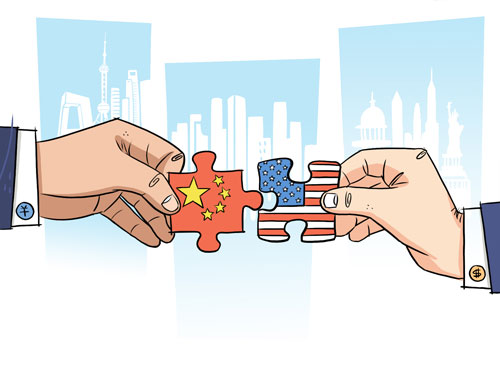
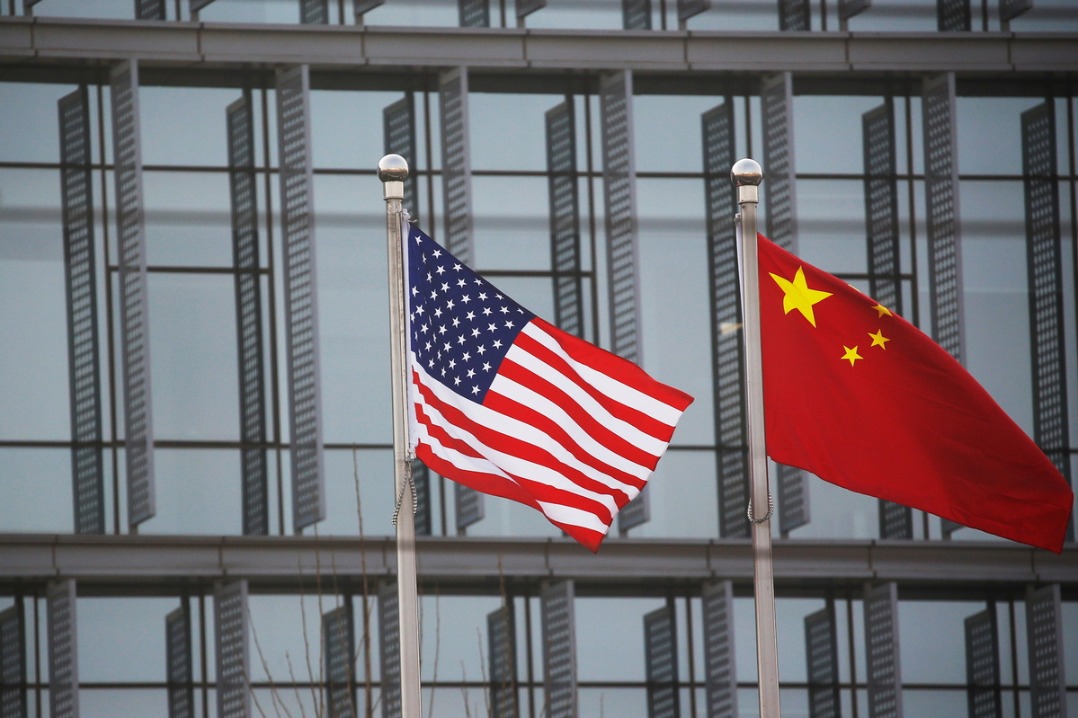
The US' trade conflict with China is underpinned by deep-rooted thinking based on US President Donald Trump's "America first" policy. However, protectionism and isolationism are not the creation of Trump, but the product of a search for solutions to a host of structural problems that have been continuously intensifying: the hollowing out of the US economy, the flow of manufacturing overseas, an ever-increasing income gap in society, and the inability to break the habit of using government debt to increase fiscal spending are just some of the examples.
Trump's answer to these problems was to withdraw from the Trans-Pacific Partnership agreement, because it "hurts the interests of the American people", renegotiate the North American Free Trade Agreement and US-Republic of Korea Free Trade Agreement, and sign bilateral trade agreements with all countries that are willing to develop trade relations with the US "on the basis of fairness and reciprocity".
The US president has railed against the World Trade Organization and other multilateral institutions, which he claims hurt US interests. He also has abandoned the WTO conflict resolution mechanism, choosing instead to use national security as an excuse to impose sanctions on and take other coercive measures against supposed unfair market practices hurting US interests.
The logic behind this is that, by using various coercive economic measures, other countries can be forced to actively reduce their trade surplus with the US. This is especially the case for countries with large surpluses like Germany, China, Japan and the ROK. In this way, greater market space for US agricultural and energy products, and automobiles can be created and the trade deficit neutralized.
By emphasizing the rules of origin, capitalizing on the raising of environmental and labor standards in other countries, and handing out tax cuts to US companies, Trump seeks to boost the international competitiveness of US manufacturing units and workers, and attract more companies to set up base in, or return to, the US, thereby fulfilling his election promise of creating more jobs for Americans.
China a scapegoat in US blame game
These goals are the main reasons behind Trump's unilateral and protectionist moves. First, China is second only to Germany in having the largest balance of payments surplus with the US. And this is one of the areas where Trump wants change. This also explains why Trumps dislikes Germany, is opposed to the European Union, and has fallen out with US allies such as Japan, the ROK, Canada and Mexico.
Second, for the US, China is the primary national security concern. The Trump administration's national security strategy has already made this clear. That is to say, a trade conflict with China is not merely about the economy, but also about dealing with what the US perceives as its greatest threat in the 21st century.
It is not just about realizing a balance in trade, but also, and more importantly, about pointing out and criticizing the problems with China relating to international economic rules, such as its so-called subsidizing of State-owned enterprises, forced technology transfers and practice of predatory economics through the Belt and Road Initiative. In reality, the trade war is a reflection of the US' worry about China leading the international economy while its own ability to lead is weakening.
Third, Trump's character traits as a risk-taker and dealmaker, seen in his threats to extract a high price from those who don't submit to his demands and his conflation of economic and security issues, mean he is more willing to use hard-line measures such as imposing high tariffs to squeeze out economic benefits for the US. Such measures have not just been used against China, but also against US allies. That Trump does not give two hoots to the recognized need for both sides to cooperate when it comes to China is clearly evident. In Trump's eyes, "America first" takes precedent over all other countries, including US allies.
China should balance economic, strategic interests
All of this makes it clear that while the US' trade actions against China is underpinned by inherent structural reasons, it is also influenced by the values and personality of Trump. The US already is making noises that it is not satisfied with the interim trade agreement it has reached with China. The first reason for this dissatisfaction is the limited production capacity of the US, which will make it hard to meet China's wish to reduce the trade deficit solely through the purchase of American goods.
Second, the US is more concerned about issues such as State-owned enterprises, technology transfers, State-driven innovation, and the Belt and Road Initiative, which it sees as a vehicle for exporting production capacity and debt-these are issues which have yet to be touched on, much less solved. The Belt and Road Initiative, in particular, is really a core issue in terms of competition and national strength between the two sides.
For China, the areas where it can afford to make concessions center mainly on the purchase of US goods and energy. The action against ZTE Corporation is just the first step of the US to express its dissatisfaction with China's SOEs and an attempt to regulate and mold their operations. Going forward, not only will Trump want China to keep on buying US goods, he will also employ both hard and soft tactics to force it to make concessions and changes in terms of its economic system.
From China's perspective, it is very important to clearly identify the essence of Trump's foreign economic policy and to recognize the limits of that policy and the likelihood of a backlash from the international community. In a bid to achieve radical change on the international stage, Trump has started by targeting the international industrial chain created through globalization. These actions affect the interests of the whole world, so a strong response from US allies such as the EU, Japan and Canada can be expected.
Besides, trying to solve the structural problems in China-US trade by buying more US goods is not going to be enough to satisfy Washington. In the future, Beijing is probably going to face increased pressure to make structural changes, and ultimately a resolution will likely be achievable only through deeper reform and opening-up.
More importantly, China needs to strike a balance between its economic and strategic interests, in order to prevent an excessive strategic response to the Belt and Road Initiative from the US.
The author is chief of US foreign policy studies at the Institutes of Contemporary International Relations.