Trade war will harm all global players









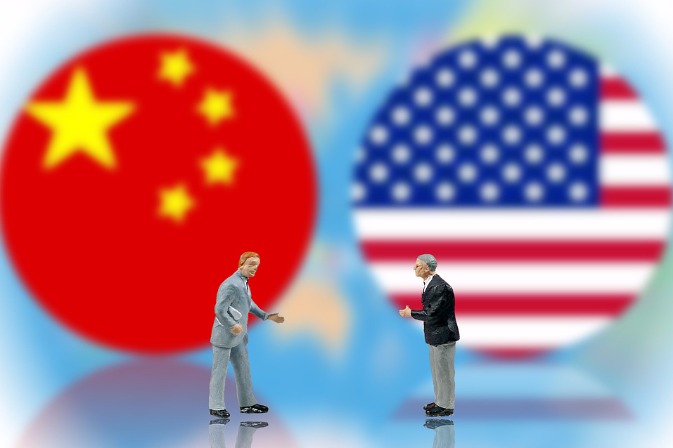
Since the beginning of this year, trade frictions between China and the United States have significantly escalated. And with additional US tariffs on $34 billion worth of Chinese goods taking effect on Friday, the US has now launched a full-blown trade war against China.
In his effort to win the US midterm election, President Donald Trump continues to take protectionist measures, which are aimed at destroying the rules-based multilateralism mechanism and replacing it with power-based unilateralism and bilateralism.
Ever since Trump signed a memorandum of understanding on trade with China in late March, trade frictions between the two sides have increased without showing any signs of easing despite several rounds of talks that have followed.
China is well prepared to deal with the additional tariffs, and has taken "qualitative and quantitative" countermeasures against the US.
As the world's two largest economies, the US and China combined account for nearly 40 percent of global economic aggregates and nearly one-fourth of global exports of goods. A trade war between the two is thus bound to affect the global economic recovery. Indeed, the intensifying trade frictions between the US and China, the European Union, Canada, Brazil, Japan and other economies have decelerated the growth of some economies, such as the eurozone, since the second quarter of this year.
It is thus clear the trade war launched by the US will deal a heavy blow to the global economy, which will be unbearable economically-and perhaps politically-for many countries. And given its political system, the US may not be able to bear the pressure from voters at home and the international community.
To realize its China containment policy, the US is using the trade war and offering economic sops to get its trade partners on its side. However, such practices are against the general trend of globalization and not sustainable, for a trade war will harm not only Chinese enterprises, but also China-based multinational companies.
The current global value chain has been reconstructed, and globalization has broken national barriers, integrating the industrial systems of all countries. Which means not all the goods exported by China are "made in China"; many of them are "made in the world" products.
According to a report on Sino-US trade relations published by the Ministry of Commerce last year, nearly 60 percent of China's trade surplus in goods comes from foreign-funded companies and 61 percent from processing trade.
It is common knowledge that a large percentage of the goods American citizens buy are manufactured by US companies in China. In this process, China has only earned a small amount of processing fees, while developed economies such as the US, the EU and Japan have benefited greatly from supplying designs, parts and components, and from marketing.
Therefore, the trade war launched by the US will seriously harm the interests of developed countries' enterprises operating in China, and their appeals will inevitably prompt their respective governments to put more pressure on the US to change its protectionist ways.
There is no winner in a trade war, as a trade war can only lead to lose-lose results. Any behavior detrimental to others but not conducive to oneself either is difficult to sustain for long. Experience shows that talks and dialogue are the best way to solve trade disputes.
And there is still time for the US to hold talks with China and resolve its disputes by finding amiable ways to reduce its trade deficit with China and settle the intellectual property rights issue so as to seek win-win results and avoid the worst-case scenario.
The author is executive director of Hengfeng Bank's research institute and a senior researcher at the Chongyang Institute for Financial Studies, Renmin University of China.