Starmer visit pragmatic step in right direction










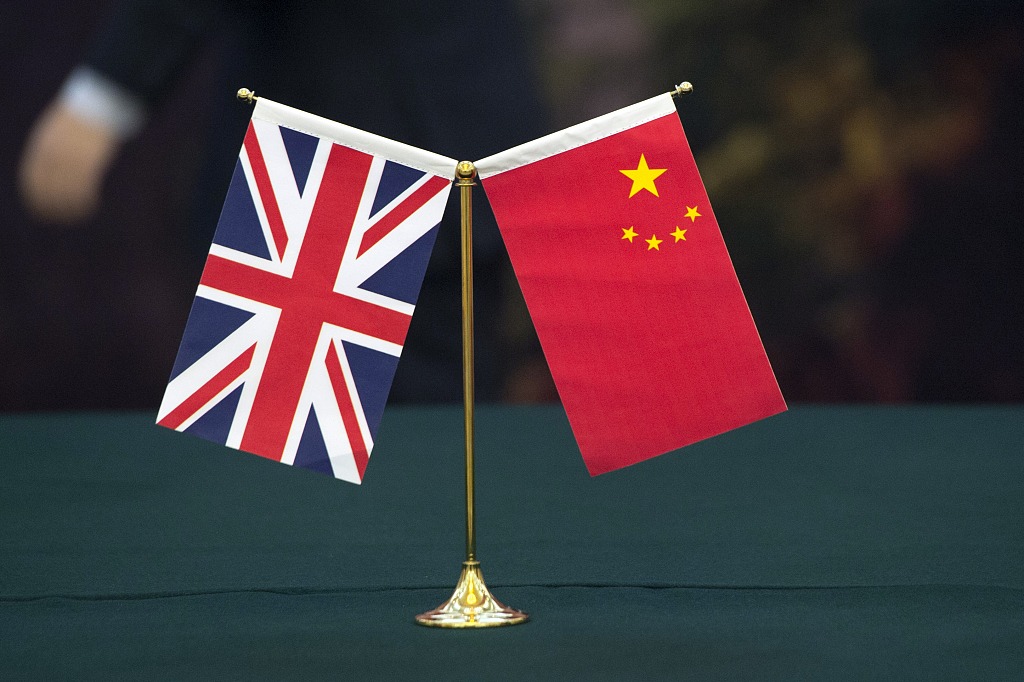
United Kingdom Prime Minister Keir Starmer's visit to China is not just a routine diplomatic gesture, but a politically consequential move in a less forgiving international environment. Enabled in part by the UK's recent approval of the new Chinese embassy in London, the visit is the first by a British prime minister since Theresa May in 2018.
The trip reflects a deliberate choice by both governments to arrest a period of drift and tension and to reintroduce high-level dialogue at a time when geopolitical fragmentation, economic decoupling, and strategic mistrust are becoming structural features of the global system. In this sense, it matters not only for China-UK relations but also for how major economies navigate rivalry without resorting to disengagement.
For China-UK relations, that would be a turning point after years of uncertainty. Since the late 2010s, ties have been strained by disagreements over technology, security, human rights and Hong Kong, compounded by shifting domestic politics in the UK. The appointment of Peter Wilson — a diplomat and sinologist — as the new UK ambassador in Beijing in August 2025 laid the foundation for a fresh start in bilateral ties.
While neither side is likely to abandon its core positions, Starmer's visit signals recognition that prolonged disengagement is unsustainable. For Beijing, hosting a new UK prime minister offers a chance to reset the relationship's tone, emphasizing pragmatism and dialogue. For London, it reflects an effort to pursue a more stable and realistic China policy — one that manages risks while preserving channels for cooperation. The potential for engagement is significant, especially as Chinese companies lead key sectors of the global economy.
On issues such as climate change, multilateralism and global governance, the UK is closer to China than to the current United States administration, creating scope for coordinated action. Both countries are permanent members of the United Nations Security Council and recognized nuclear powers, giving additional weight to possible collaboration on global challenges.
There are parallels with the successful visit of Canadian Prime Minister Mark Carney to Beijing. Canada, like the UK, had strained relations with China, marked by political disputes, public mistrust and economic friction. Carney's trip may not have erased those differences, but it showed that high-level engagement, grounded in realism, can stabilize ties and reopen space for cooperation. The analogy is not perfect — China-UK relations are historically deeper and more entangled with global finance and security — but the broader lesson is clear: dialogue, when carefully framed, can arrest downward spirals without requiring political convergence.
Economically, Starmer's visit underscores enduring mutual interests. China is the UK's third-largest trading partner, while British firms continue to pursue opportunities in China's consumer market, green transition, life sciences and advanced manufacturing — sectors where collaboration can have global ripple effects. Exchanges in education further deepen these connections, building long-term networks that facilitate cross-border innovation and investment.
By traveling with a delegation of business leaders, Starmer signals that economic engagement remains a core pillar of the relationship and that the UK is a key gateway for Chinese companies seeking global expansion. For China, the visit affirms its openness to foreign investment amid geopolitical uncertainty. This focus on predictability is especially salient as China enters its 15th Five-Year Plan (2026-30), a phase emphasizing policy clarity and long-term signaling to both domestic and international partners.
The visit's broader significance lies in its timing. The international system is increasingly fragmented, with rival blocs, weaponized interdependence and weakened multilateral institutions. In this context, engagement between major economies with differing political systems carries symbolic weight. Starmer's trip, like Carney's, shows that middle powers retain agency: they can engage China while remaining aligned with allies.
This is not a return to "golden eras" or uncritical engagement. It reflects sober diplomacy suited to a complex world — one that accepts disagreement as structural but treats communication as essential. Regular dialogue, even if limited, helps manage competition and reduce the risk of miscalculation.
Starmer's visit matters not because it will resolve deep-seated differences, but because it recognizes a shared reality: in a fragmented world, disengagement carries its own dangers. By reopening channels of communication at the highest level, the trip underscores that diplomacy remains vital for managing rivalry, sustaining economic ties, and finding solutions to shared global challenges.
John Quelch is executive vice-chancellor of Duke Kunshan University and David Gosset, a sinologist, is the founder of the China-Europe-America Global Initiative.
The views don't necessarily reflect those of China Daily.
If you have a specific expertise, or would like to share your thought about our stories, then send us your writings at opinion@chinadaily.com.cn, and comment@chinadaily.com.cn.