A trade war based on US ignorance









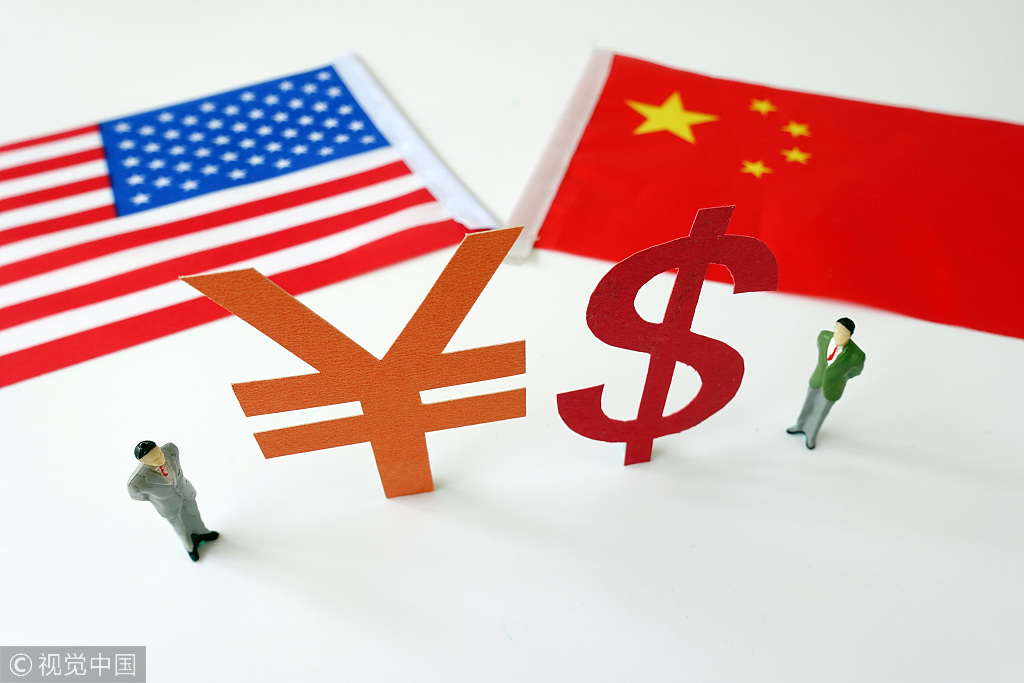
Like slowly moving tectonic plates, in which at first there is no perceptible movement, only to be followed later by a jarring earthquake, the ground is finally shifting in the trade war between the United States and China.
This trade war is not just about trade, which would be easy to fix, but about the geopolitical and economic rise of China. The Chinese offer to purchase more US agricultural products was an example of how progress could have been made in resolving a pure trade deficit issue, if that was the case.
The US, under the present leadership team, feels threatened by the ever-evolving position of China and especially the stellar rise in Chinese self-sufficiency with regard to new technologies, the so-called Fourth Industrial Revolution. It was all fine when China was "the factory of the world", producing goods also for US companies and benefiting millions of US citizens with low-cost consumer goods, but the Chinese high-tech planning has really caught the attention of the White House. The plan seems to have riled the US administration because it aims to integrate the latest technologies to create a much more efficient industrial base, and most notably the aim to become less dependent on foreign technology.
It must be remembered that the close advisers to US President Donald Trump include Peter Navarro (69), the most extreme advocate of an aggressive stance towards China, (and author of Death by China), and Larry Kudlow (71), best known for his previous life as a television host on economic matters which he often got wrong. Many of the acknowledged and experienced China experts have either left the State Department, or are being ignored, creating a unique situation in which there seems to be no balanced and objective strategic China discussion in the White House.
The approach of the Trump administration therefore is simplistic, purely transactional, and reveals a serious lack of understanding of both modern-day China, and of the significant benefits that global trade-and China's accession to the World Trade Organization-has brought to the US.
Carrot-and-stick ploy to reverse China's progress
In a nutshell, the US approach is as follows: attempt the carrot-and-stick approach with trade tariffs as the stick, and ZTE as the carrot, in order to reverse China's progress in automation and the development and acquisition of new technologies.
There are some serious deficiencies in this approach.
Firstly, the "Made in China 2025" cited by the US critics is a consolidation of things that were already happening on the ground. Companies were, and are, evolving and exploring efficiencies to keep on growing in a rapidly changing environment. The last-mover advantage enables many newer Chinese companies to be more flexible, and take advantage of the latest technologies at lower cost, in a way that many Western companies burdened by their legacies cannot. The point is that even without official government plans, many elements of the plan would have happened anyway.
Secondly, demographics plays an important role in the Chinese strategy. The old "factory of the world" role was made possible by migrant workers moving to the Pearl River Delta and other areas. This approach will no longer be possible in the future as the seemingly endless pool of migrant workers will decrease due to the aging society, as well as the economic development in the poor interior provinces thereby reducing the need to migrate. Chinese companies have a need to explore the latest technologies in robotics and artificial intelligence, as their potential labor force shrinks sharply in a generation.
Thirdly, the envisaged efficiencies have a positive impact on the environment. As production companies embrace new technologies, their production processes become greener and cleaner and less labor intensive. New automation technology both reduces the amounts of materials wasted, and minimizes the energy used. A cleaner, greener China is now a top priority of the Chinese government, and hence the focus on acquiring and developing the latest technologies. It is also of the utmost importance for China's environmental focus and obligations under the Paris Agreement.
US strategy to contain China will backfire
For the reasons mentioned above, China will not, and cannot, move away from its aim to develop the latest technologies and become a world-class player. The trade war therefore already begins on a false premise that the Chinese strategy will change. Furthermore, Trump's "hot and cold" approach to ZTE has underlined one thing for the Chinese government: that China must reduce its dependence on foreign companies, so as not to have key areas of its industry be at the mercy of a foreign government. This key strategic insight runs exactly contrary to what the US wishes, but such unintended consequence happens when a new policy is not rigorously examined before implementation.
The Chinese government has indicated that it will counter US import tariffs in a proportionate manner and will use the auspices of the World Trade Organization to get them reversed. Every subsequent US tariff will have a counterpart on the Chinese side. This is the most reasonable response.
China's counter-tariffs will obviously hurt US companies exporting to China, and hopefully that will bring some common sense back into the White House. Political pressure from the US companies impacted should play a role in working towards an end to this trade war, especially as we come closer to the mid-term elections in November.
When there are differences between nations, they should resort to existing mechanisms which were created specifically for such eventualities. And they have proven their effectiveness time and time again. Unfortunately, the US administration will not realize the futility of its current approach in dealing with China before November.
The author is founding partner of Polarwide Ltd., a financial and strategic advisory firm. He served as chairman of the Dutch Chamber of Commerce in Hong Kong between 2014 and 2017. He contributed this article to China Watch, a think-tank platform powered by China Daily.