



Roland Berger: China needs global champions to export influence









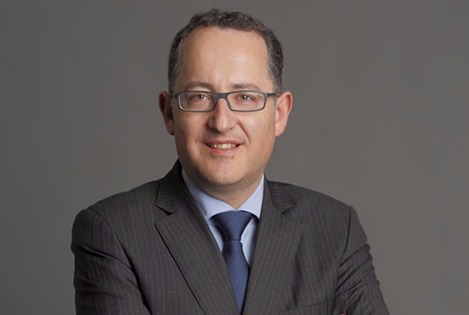
Please use three words to describe China's changes in the past 40 years.
Daring: because it was daring in the late 1970s to plan the transformation of the Chinese society and economy, to invent socialism with Chinese characteristics and create the unique combination of a strong State and vibrant market segments with intense competition, within a planned economy. Today, this remains daring.
Determination: because very few countries have succeeded in delivering the expectations of long-term planning in the same fashion as China. I first lived in China 25 years ago, working then in the nuclear sector. Some infrastructure planned in the energy or transportation sectors back then have materialized today.
Ambition: because one of the key drivers behind China's growth, and more importantly the transformation of the economy and society, is the immense ambition underlying and served by powerful financing. Innovation and scientific research will also combine with this ambition, to generate further progress.
What are the biggest achievements in China since the introduction of the reform and opening-up policy 40 years ago?
The Chinese approach to reform is quite unique and very differentiated from other socialist economies, such as the former Soviet Union and certain European countries. The reforms that have been carried out are quite mainstream: opening to free enterprise, liberalized pricing, opening to trade and foreign investment, strengthened property rights, etc. Another aspect that makes Chinese reform and opening-up special is the fact that it has successfully leveraged the opening to international trade and foreign investment to yield growth and wealth for the country, and therefore feed further transformation.
What's the biggest challenge China faces today and how can the country overcome it?
While China, as an economy, is the No 1 exporter in the world and the No 2 economy by GDP, it still has too few global champions as compared to other powerful global economies.
Yet, China remains the factory of the world and is omnipresent in the supply chains of many consumer and industrial products in the world, as the recent trade tensions have reminded everyone.
So, where are the Chinese global champions? They exist by size, but most of these companies are still short of a global footprint, and even more importantly, lack a structuring influence on global markets: by their brands, by their products and by their services.
However, there is so much creativity, business model ingenuity and innovation across so many sectors: new energy vehicles, new mobility, new retail, mobile payment, new materials. One of the key challenges of the Chinese economy going forward will be to take this innovation to the world and reach a fair share of influence through global champions.
The restructuring of the old production industries will be another key challenge for the Chinese economy and reform going forward.
How has your company benefited from the reform and opening-up policy?
Roland Berger first entered China more than 30 years ago, shortly after the inception of the reform and opening-up policy. The purpose then was simple: support the transformation of Chinese society and Chinese companies, by bringing the best of German and European experiences.
In particular, Roland Berger was able to share its experience of restructuring old production and manufacturing companies across Europe, and later transforming the restructuring of East Germany after reunification into a formidable source of economic growth momentum. This was made possible through a holistic transformation approach, combining financial measures (balance sheet and debt restructuring, divestments) with the advent of new business models around advanced, and high-added-value industrial goods (chemicals, machine tools, parts).
This experience was very relevant to the Chinese economic reform and Roland Berger therefore benefitted from having the right approaches and knowledge, through the reform process.
Could China's experiences and practices be used to solve global problems?
The 19th National Congress of the Communist Party of China emphasized for the first time China's role in an integrated global context and put forth the concept of a "Chinese solution" to global challenges. This Chinese solution should be a strong China contribution to problem resolution.
China's role in the fight against climate change was critical in reaching a positive conclusion of the Paris agreement in 2016.
The Belt and Road Initiative is another example of how China can funnel foreign aid to a variety of countries, with a particular emphasis on building infrastructure that will further enable trade and services to develop. In doing so, China is also sharing its own domestic experience in unlocking wealth and entrepreneurial stamina through infrastructure development.
China's exercise of more responsibilities globally has to be fully integrated in global governance. Its reaction to the trade tensions with the United States, by systematically taking the dispute to the World Trade Organization, while taking proportionate response measures, is a pledge to the relevance of this global governance. However, it has to transform, and China, along with the European Union, can play a big role in pushing reform.
How do you view China's role in the world today?
China is not only the second economy in the world: It is soon to be the first. Seventeen years after joining the WTO, China is deeply integrated into the world economy.
After benefitting significantly from the first wave of globalization and becoming the factory of the world, China is now starting a new influential trend, by growing its domestic market, uplifting quality and environmental requirements, and boosting the sophistication of products and services, both on industrial and consumer sides.
More opportunities, including a level playing field for global companies, are developing in China for those who can adapt to this new trend. Outbound Chinese investments, although selectively authorized in the past, will also transform the country's economic influence.
Apart from economic development, what progress in other fields have you witnessed in China in the past 40 years?
Innovation taking place close to consumers is what is most striking, as it is visible in everyday life, as well as in the business world. Chinese innovation is unique because it demonstrates a stunning business ingenuity: There is no everyday problem that cannot be addressed and solved by an app and a very pragmatic combination of technologies.
This is how mobile payment, peer-to-peer credit, bicycle and car-sharing, groceries or restaurant delivery and photographic enhancement are reaching their client base, and sometimes working, or otherwise being replaced by the next innovation at a fast pace.
While this consumer-driven innovation is amazing and has yet to be exported abroad, there is more to come. China has been massively investing in scientific research, across multiple fields, and is expected to outgrow the US, currently the biggest spender, by 2025.
What is striking in China is not the spending, but the ambition underlying it, which is closely related to applications in space exploration and exploitation, in neurological science and in artificial intelligence, in genetic research and healthcare. Not only will we see China emerge as a scientific superpower within 10 years, but major future discoveries will be Chinese and will be closer to real-life applications.
What is the most unforgettable experience you have had in China?
My most unforgettable experience in China has to do with living in China. I came to China 25 years ago for the first time, and spent three years working in the energy sector. This was a different China, but I am very lucky that I was given the opportunity to experience an earlier stage of reform, in the Shenzhen Special Economic Zone, and measure the gap with today's China, after 40 years of reform.
I was happy to come back to live permanently three and a half years ago, this time with my family. This is a lifetime experience to live here and to see how well the family is integrating.
The unforgettable experience is in this case seeing my two daughters, one 5 years old and the other 7 years old, going to a Chinese school and learning the Chinese language very quickly. These two are fully integrated and ready to tackle, enjoy and benefit from the next wave of China's reform.
CV
Name: Denis Depoux
Age: 47
Nationality: France
Career:
February 2018 onwards: Managing partner of China and deputy head of Asia, Roland Berger
2015-18: Deputy head of Asia, Roland Berger
2001-15: Partner, Roland Berger France
1993-2001: Various roles in consulting and energy companies
Education:
Master's degree, Sciences Po Paris
Post-graduate research degree in sociology of organizations, Sciences Po Paris
Family:
Married, living in Shanghai with his wife and two daughters
Languages:
French, English and Chinese (fluent in spoken communication)



















