
<tt id="6hsgl"><pre id="6hsgl"><pre id="6hsgl"></pre></pre></tt>
          <nav id="6hsgl"><th id="6hsgl"></th></nav>
          国产免费网站看v片元遮挡,一亚洲一区二区中文字幕,波多野结衣一区二区免费视频,天天色综网,久久综合给合久久狠狠狠,男人的天堂av一二三区,午夜福利看片在线观看,亚洲中文字幕在线无码一区二区
          Kenneth M. Quinn
          President of the World Food Prize Foundation
          BORN:

          1942 in New York City

          EDUCATION:

          BA, political science, Loras College, Iowa

          MA, political science, Marquette University, Wisconsin

          PhD, international relations, University of Maryland

          CAREER:

          1967-99: Diplomat, US State Department

          1996-99: US ambassador to Cambodia

          2000-present: President, World Food Prize Foundation

          HONORS:

          2014: Iowa Medal

          The Iowa diplomat with 'two interesting stories'
          Over a 30-year career, the World Food Prize Foundation head met both President Xi Jinping and his father Xi Zhongxun - encounters that inspired a work of art
          Zhao Huanxin in Washington
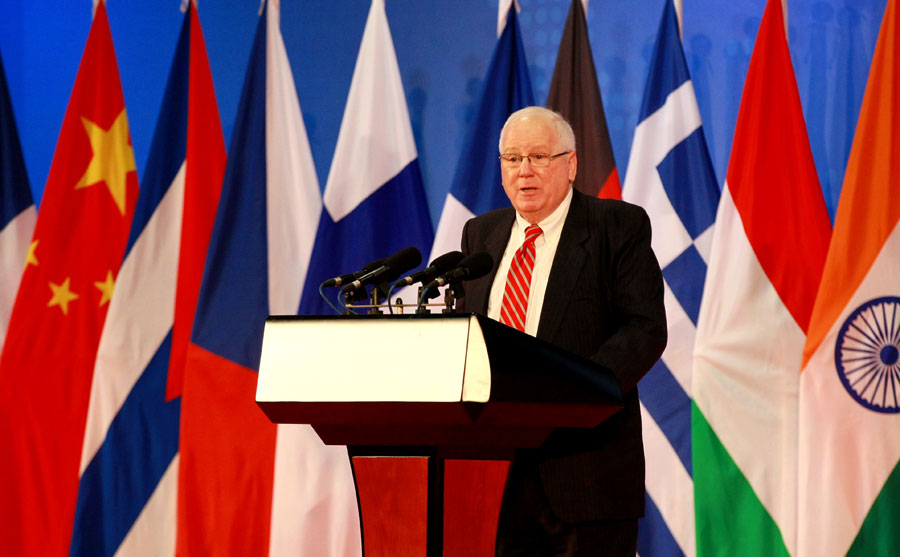
          Kenneth M. Quinn delivers a speech at the International Think-Tank Symposium, which was themed "The 19th CPC National Congress: Implications for China and the World", in Beijing on Nov 16 last year. [Provided to China Daily]

          Kenneth M. Quinn has many memories from his career as a US diplomat, but two in particular stand out: The time he met Xi Zhongxun, the governor of Guangdong province, in 1980, and decades later when he met his son, President Xi Jinping.

          The encounters were so special that Quinn commissioned a painting to remember them, titled Two Interesting Stories. Today, copies of the art work hang in the Iowa Gallery's Hall of Laureates and the United States embassy in Beijing.

          Quinn, now 76 and president of the foundation behind the World Food Prize, often referred to as the Nobel Prize in food and agriculture, has seen firsthand the transformation China has undergone in the past four decades.

          In 1977, while working for the US State Department, Quinn was assigned to the office of Robert Ray, then governor of Iowa. Two years later, he accompanied Ray on a trip to China as part of a delegation of US governors, which came a few months after Deng Xiaoping's historic trip the other way.

          To reciprocate, a delegation of Chinese governors traveled to Iowa in 1980, led by Xi Zhongxun, who in addition to his role in Guangdong was also vice-chairman of the Standing Committee of the National People's Congress, the country's top legislature.

          Quinn had not had the chance to meet Xi Zhongxun during the visit to southern China, but he had the "great honor" of greeting the Chinese governors when they arrived at the airport in Des Moines, the state capital.

          The three-day visit featured a packed schedule, and Quinn accompanied the delegation to see Iowa's agricultural infrastructure, including family farms, agribusiness companies and innovative research projects at Iowa State University.

          During a stop at the Amana Colonies, a collection of settlements founded in 1854 to house about 800 immigrants from Germany, the governors learned that the original residents jointly owned all the land and the food it produced.

          "I distinctly recall that Governor Xi seemed riveted as he and the other delegates heard how the decision had been taken in the 1930s to divide up the Amana commune into individual farms, with each family controlling its own parcel of land and keeping all of the crops they produced," Quinn wrote in a Des Moines Register article last year.

          Though the economic production structure at Amana has changed, the political culture and sense of community has been retained, he said, adding that the delegates asked more questions at Amana than at any other stop.

          China has lifted at least 700 million people out of poverty over the past four decades, and has significantly improved the lives of millions more.

          For Quinn, a key ingredient has been the transformation of the country's agricultural sector, which he said reflected what the Guangdong governor saw on that trip to Iowa.

          "What is most intriguing about Xi Zhongxun's visit to Iowa is its connection to the vision he developed for the reform of Chinese agriculture and its subsequent dramatic and explosive growth," Quinn wrote in an article for Iowa History Journal in October.

          In actual fact, China's rural land reform had started in Xiaogang village, Anhui province, when 18 villagers in 1978 signed a secret pact to divide communally owned farmland into family plots, which allowed them to retain the produce left over after giving a percentage of their harvest to the government. The system was rolled out nationwide in 1984.

          Quinn later learned from Chinese friends that in 1985, when Xi Jinping, then a county official in Hebei province, was preparing for a fact-finding trip with colleagues to the US, he had consulted his father, who suggested they visit Iowa to see its agricultural development. The delegation followed that advice.


          1 2 Next   >>|
          Kenneth M. Quinn
          President of the World Food Prize Foundation
          BORN:

          1942 in New York City

          EDUCATION:

          BA, political science, Loras College, Iowa

          MA, political science, Marquette University, Wisconsin

          PhD, international relations, University of Maryland

          CAREER:

          1967-99: Diplomat, US State Department

          1996-99: US ambassador to Cambodia

          2000-present: President, World Food Prize Foundation

          HONORS:

          2014: Iowa Medal

          The Iowa diplomat with 'two interesting stories'

          Over a 30-year career, the World Food Prize Foundation head met both President Xi Jinping and his father Xi Zhongxun - encounters that inspired a work of art
          Zhao Huanxin in Washington
          Kenneth M. Quinn delivers a speech at the International Think-Tank Symposium, which was themed "The 19th CPC National Congress: Implications for China and the World", in Beijing on Nov 16 last year. [Provided to China Daily]

          Kenneth M. Quinn has many memories from his career as a US diplomat, but two in particular stand out: The time he met Xi Zhongxun, the governor of Guangdong province, in 1980, and decades later when he met his son, President Xi Jinping.

          The encounters were so special that Quinn commissioned a painting to remember them, titled Two Interesting Stories. Today, copies of the art work hang in the Iowa Gallery's Hall of Laureates and the United States embassy in Beijing.

          Quinn, now 76 and president of the foundation behind the World Food Prize, often referred to as the Nobel Prize in food and agriculture, has seen firsthand the transformation China has undergone in the past four decades.

          In 1977, while working for the US State Department, Quinn was assigned to the office of Robert Ray, then governor of Iowa. Two years later, he accompanied Ray on a trip to China as part of a delegation of US governors, which came a few months after Deng Xiaoping's historic trip the other way.

          To reciprocate, a delegation of Chinese governors traveled to Iowa in 1980, led by Xi Zhongxun, who in addition to his role in Guangdong was also vice-chairman of the Standing Committee of the National People's Congress, the country's top legislature.

          Quinn had not had the chance to meet Xi Zhongxun during the visit to southern China, but he had the "great honor" of greeting the Chinese governors when they arrived at the airport in Des Moines, the state capital.

          The three-day visit featured a packed schedule, and Quinn accompanied the delegation to see Iowa's agricultural infrastructure, including family farms, agribusiness companies and innovative research projects at Iowa State University.

          During a stop at the Amana Colonies, a collection of settlements founded in 1854 to house about 800 immigrants from Germany, the governors learned that the original residents jointly owned all the land and the food it produced.

          "I distinctly recall that Governor Xi seemed riveted as he and the other delegates heard how the decision had been taken in the 1930s to divide up the Amana commune into individual farms, with each family controlling its own parcel of land and keeping all of the crops they produced," Quinn wrote in a Des Moines Register article last year.

          Though the economic production structure at Amana has changed, the political culture and sense of community has been retained, he said, adding that the delegates asked more questions at Amana than at any other stop.

          China has lifted at least 700 million people out of poverty over the past four decades, and has significantly improved the lives of millions more.

          For Quinn, a key ingredient has been the transformation of the country's agricultural sector, which he said reflected what the Guangdong governor saw on that trip to Iowa.

          "What is most intriguing about Xi Zhongxun's visit to Iowa is its connection to the vision he developed for the reform of Chinese agriculture and its subsequent dramatic and explosive growth," Quinn wrote in an article for Iowa History Journal in October.

          In actual fact, China's rural land reform had started in Xiaogang village, Anhui province, when 18 villagers in 1978 signed a secret pact to divide communally owned farmland into family plots, which allowed them to retain the produce left over after giving a percentage of their harvest to the government. The system was rolled out nationwide in 1984.

          Quinn later learned from Chinese friends that in 1985, when Xi Jinping, then a county official in Hebei province, was preparing for a fact-finding trip with colleagues to the US, he had consulted his father, who suggested they visit Iowa to see its agricultural development. The delegation followed that advice.

          主站蜘蛛池模板: 韩国福利视频一区二区三区| 国产精品亚洲综合久久小说| 亚洲精品tv久久久久久久久久| 暖暖 在线 日本 免费 中文| 久久国产乱子伦精品免费乳及| 国产精品 第一页第二页| 97精品伊人久久久大香线蕉| 韩国午夜福利片在线观看| 亚洲男女内射在线播放| 久久99热全是成人精品亚洲欧美精品 | 国产丰满麻豆videossexhd| 精品国产精品中文字幕| 老司机导航亚洲精品导航 | 国产精品久久久久久亚洲色| 伊人天天久大香线蕉av色| 亚洲一本之道高清乱码| 久久精品不卡一区二区| 久久久久久亚洲精品| 亚洲老妇女亚洲老熟女久| 妖精视频yjsp毛片永久| 啊别插了视频高清在线观看| 亚洲一区二区三区在线观看精品中文| 亚洲日本韩在线观看| 亚洲av高清一区二区三| 98精品全国免费观看视频| 久久综合激情网| 女同久久一区二区三区| 在线免费播放av观看| 巨胸美乳无码人妻视频漫画| 美女精品黄色淫秽片网站| 国产精品中文字幕在线| 亚洲自偷自拍熟女另类| 精品国产午夜福利在线观看| 国产三级精品片| 视频一区视频二区在线视频| 国产精品一区二区av片| 国产精品女人毛片在线看| 亚洲一区成人在线视频| 亚洲国产精品综合福利专区| 羞羞影院午夜男女爽爽免费视频| 亚洲成片在线观看12345|