US has not changed its basic stance on Huawei









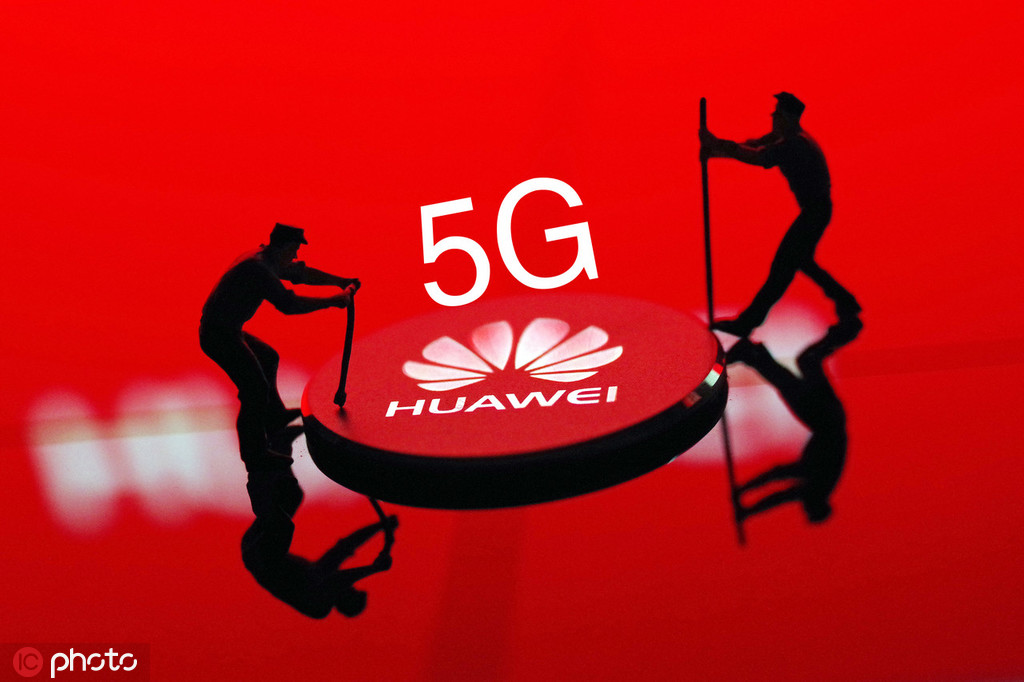
The United States may approve licenses for American companies to resume new sales to Huawei, the world's largest telecommunications equipment maker, in as little as two weeks, which suggests the recent efforts of the two countries to ease restrictions on the Chinese company could move forward quickly.
After the meeting between Chinese President Xi Jinping and his US counterpart Donald Trump on the sidelines of the G20 Summit in Osaka last month, the US administration relaxed export restrictions on Huawei.
If Washington allows US companies to trade in products unrelated to national security with Huawei, it would ease the pressure the Chinese company has been under since being added to the US' Entity List, which identifies entities believed to be involved, or to pose a significant risk of being or becoming involved, in activities contrary to the US' national security or foreign policy interests.
Recently, US Commerce Secretary Wilbur Ross said licenses will be issued where there is no threat to the US' national security. This move could be seen as part of a policy to ease the difficulties many US companies are facing after being banned from selling components to Huawei. The "blacklisting" of Huawei has had serious implications for companies both in China and the US, not least because of the telecom industry's integrated production chain. And probably that's why the US administration granted a three-month reprieve when it added Huawei to the blacklist.
Indeed, US companies stopped selling US-made goods to Huawei, but they soon began shipping non-US-made goods to the Chinese company after carefully studying the clauses of the trade ban. More important, if the US does not lift the ban, some American companies may move their production units overseas, which would be contrary to the US administration's promise of bringing production and jobs back to the country.
Besides, the relaxation does not necessarily signify a change in the US' basic stance on Huawei or an end to Sino-US technological confrontation. To begin with, Huawei has not been removed from the Entity List. That the US administration has allowed American companies to sell only those products that according to its perception pose no threat to US national security shows it still regards Huawei as a company working for the Chinese government, rather than a private company which has the Chinese government as one of its customers.
But removing an enterprise from the Entity List is a complicated process, which requires a unanimous vote of the End-User Review Committee, which comprises the Department of Commerce as chair, and the departments of state, defense and energy and other agencies. Which means Huawei could remain on the list for some time.
The US may have relaxed restrictions on Huawei, but that alone is not enough for the Chinese company to develop its overseas markets. So Huawei can continue to purchase chips and other tech products from US companies to make mobile phones but cannot sell those mobile phones in the US.
Also, the US' decision to keep Huawei on the Entity List until the conclusion of the Sino-US trade negotiations will lead to considerable uncertainty. And the US presidential election next year could complicate matters further, as the American public opinion about China, and the attitudes of the Democratic and the Republican parties could influence the final outcome.
The US has relaxed the restrictions on Huawei as a negotiation strategy without changing its China policy. Since the information and communication technology sectors of the two countries are still intertwined thanks to economic globalization, Huawei and China's high-tech industry have become bargaining chips in Sino-US trade negotiations.
Chinese companies should therefore make greater efforts to intensify research and development in technology, particularly in high-tech and core technologies, so they can better tackle eventualities and ultimately become self-sufficient.
The author is an associate professor at the Institute of International Relations, Communication University of China. The views don't necessarily represent those of China Daily.