Advancing healthy aging in US, China









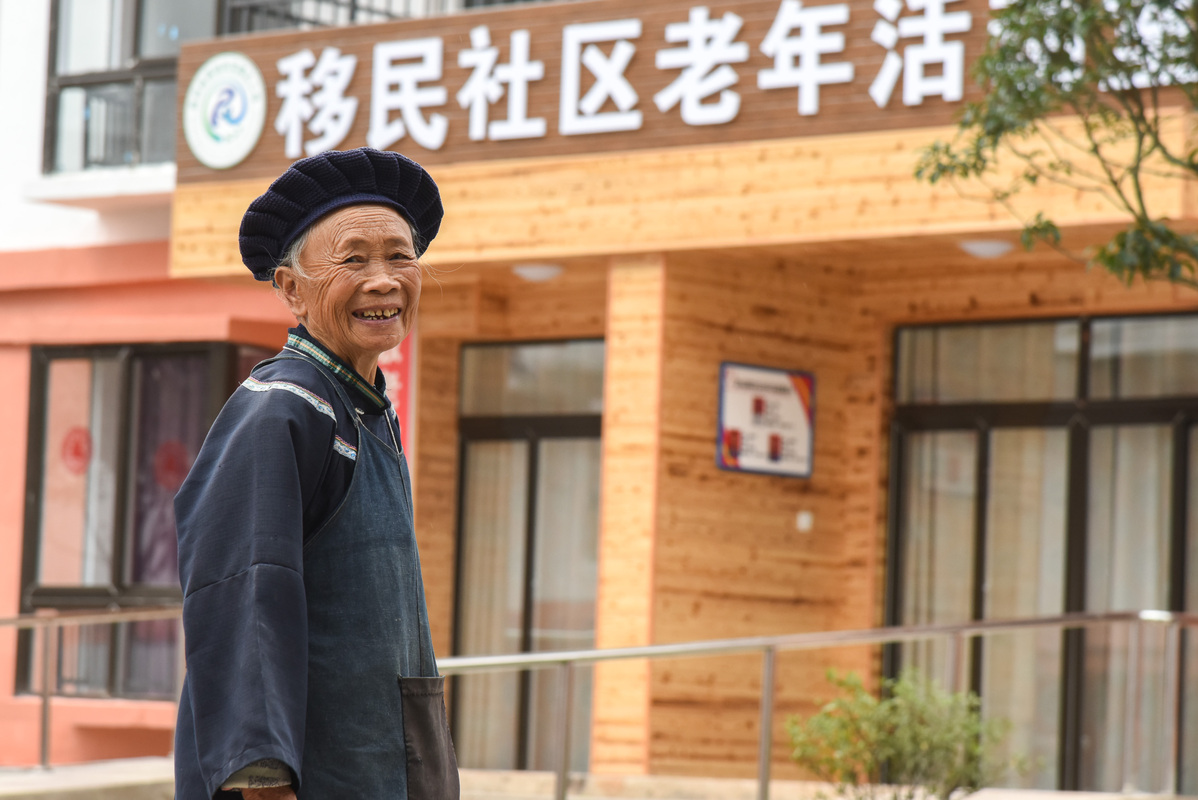
Despite various differences, China and the US can collaborate to respond to a world that is aging rapidly and coping with chronic diseases, according to experts.
In China and the US, the world's most-populous and third-populous countries, respectively, public officials are actively experimenting with ways of engaging the private sector to tackle challenges surrounding elderly care.
The two countries share the same policy efforts — public-private collaboration — because both have public needs that far outstrip public capabilities and both are "pragmatically eclectic" in how they proceed, said Karen Eggleston, deputy director of the Asia-Pacific Research Center at Stanford University.
Eggleston, who leads the center's Innovation for Healthy Aging project, has partnered with Chinese institutions, including the Chinese Center for Disease Control and Prevention, Zhejiang Provincial Center for Disease Control and Prevention as well as health economists at Peking University and Peking Union Medical College, to identify and analyze productive public-private partnerships advancing healthy aging solutions.
It's important to promote healthy aging not only because it saves money for society, but also because it makes longer working lives possible and supports dignity of the elderly who have contributed to the society, said Eggleston.
Globally, the population's aging trend is inevitable due to declining fertility rates and improved survival rates, according to a population report of the United Nations. The report projects the world's population aged 80 years or over to increase more than threefold between 2017 and 2050, rising from 137 million to 425 million.
China's population is aging rapidly. It has increased from 3.76 percent to 8.40 percent since 2010, and the country's total population will begin to show a negative growth around 2028, according to a report by the Institute of Population and Labor Economics published early 2019.
The US is also aging. A recent report by the US Census Bureau indicates that the number of people over 65 is projected to reach 78 million by 2030, surpassing the projected number of children under 18 for the first time.
China already has experienced demographic transition to relatively low mortality and low fertility, as a result of two generations of family planning policies as well as socioeconomic development and urbanization.
How well China manages demographic challenges will have a profound impact on what the country will be like and what it can and will do in the decades ahead, Eggleston said. "Investments in healthy aging will be critical if China is to meet public expectations for fuller, longer lives."
The Gonghe senior apartments in Beijing's Chaoyang district might be a model for other nations that are facing the burden of population aging to address the challenges, according to Alan Trager, founder and president of PPP Initiative Ltd.
In the case of the Gonghe nursing home, the local government donated the land and building, and a non-profit organization operates the facility.
Aging is a multi-sector issue that increases demand for healthcare, and other services for long-term care, so a public-private partnership plays a major role in developing integrated solutions to the challenges of population-aging, said Trager.
The challenge of an aging population is exacerbated by the rising prevalence of chronic diseases, which account for the highest burden among the elderly, according to Eggleston.
"Additional investments to control chronic disease could enhance the working capabilities and quality of life of China's elderly," she said.
Because hypertension and cancer are two of the most common chronic diseases, her project also analyzes the value of hypertension control in China, using data from the China Health and Nutrition Survey, the China Health and Retirement Longitudinal Study and detailed patient-level data from partner institutions.
The data focuses on roles and incentives of public and private providers, patients and insurers in controlling hypertension in China.