Strong research key to fighting epidemics









Science and technology are considered a significant and effective tool in the fight against viruses and epidemics. Since the beginning of this year, China has been fighting the novel coronavirus outbreak which, apart from threatening human health and lives, has had a huge impact on the Chinese economy as well as the global economy.
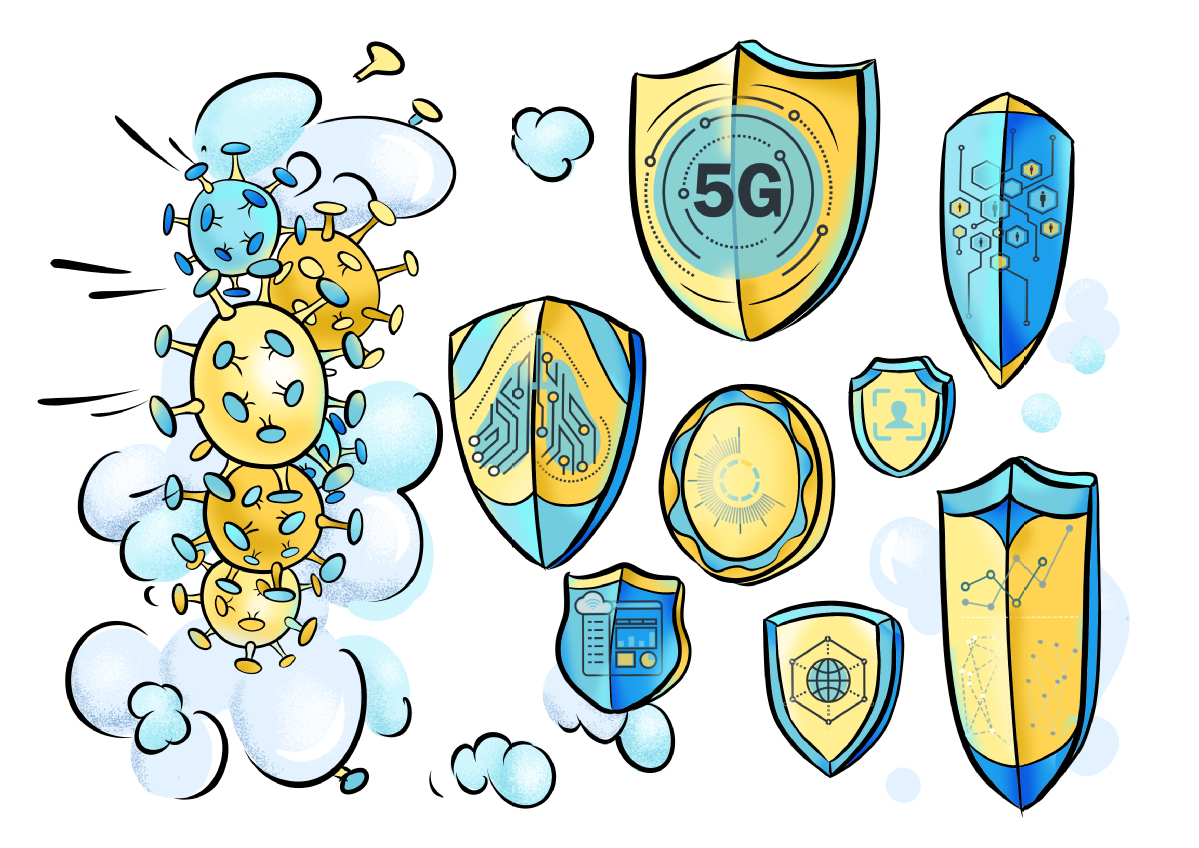
In order to contain the outbreak, China has extensively employed various kinds of advanced technologies including big data, cloud computing, 5G technology, and high-tech products such as drones.
To control the virus, it has been conducting thorough research with the active help of virologists and epidemiologists to properly treat COVID-19 patients and develop a vaccine. The country's science and technology departments have constituted medical research task forces to specially focus on the clinical treatment of and medication for COVID-19 patients.
Thanks to the close cooperation and coordination among teams from different scientific fields, China has managed to largely contain the spread of the virus.
In particular, Chinese researchers isolated the novel coronavirus strains in February and reported the outcome to the World Health Organization, laying a solid foundation for further diagnosis of the disease and research into an effective vaccine. Also, after Chinese scientists completed the genome sequencing of the novel coronavirus, many Chinese scientific and technological companies produced nucleic acid detection kits to conduct tests on people suspected to be infected by the virus.
On the front line of the battle against the epidemic, advanced technologies such as 5G technology, artificial intelligence (AI), cloud computing and big data have played an important role in controlling and preventing the spread of the disease.
The use of 5G technology and cloud platform has facilitated smooth televised communication on diagnosis and treatment of the disease. In addition, AI has been used in multiple fields such as medical imaging, healthcare management and adjuvant therapy, and the employment of healthcare service robots has helped mitigate cross-infection risks among health workers. Plus, the application of big data has enabled the precise recording of the moving perimeter and trail of people, boosting contact tracing of suspected cases.
Yet, despite all these achievements, several aspects of research still need to be improved. First, since the research mechanism in healthcare security in China is fragmented to a certain extent, there is a need to strengthen research into strategic scientific and healthcare security fields, especially because public healthcare education is dependent on, and researchers and research teams are affiliated to universities, research institutes, hospitals or enterprises, despite the impressive progress in combating the outbreak.
Second, there is also an urgent need to further cultivate scientific and technological knowledge so as to better treat COVID-19 patients. Unlike the relatively fast development of general medicine research, which can be quickly translated into production of drugs and therefore profits, basic medical research is a time-and high-cost-consuming process that is laden with uncertainties, which could render the outcomes only partly effective or, worse, totally useless. Consequently, in times of disease outbreaks, inadequate basic medical research often becomes a stumbling block to the development of new drugs and vaccines.
Third, the traditional scientific research assessment system is fraught with problems such as over-focus on publication of papers, which don't really contribute to the clinical treatment of patients infected with new viruses or bacteria during epidemics.
Therefore, science and technology institutes and research organizations should focus more on innovative research methods in healthcare, especially epidemic containment.
To begin with, they should establish public healthcare emergency systems focused on disease prevention and control. Also, it is imperative to formulate a plan, strengthen epidemic alarm mechanisms, and establish sound communication between fundamental research and clinical application to be prepared to combat an epidemic.
Science and technology institutions should initiate interdisciplinary studies incorporating fields such as life sciences, biotechnology, healthcare and medical equipment manufacturing to help build a national laboratory and research center. They should also increase investment in healthcare and strengthen the epidemic containment and public healthcare systems.
Besides, it is important to boost interdisciplinary research with the application of emerging and advanced technologies. Microbiology and medical research should play an even more significant role in controlling and preventing the spread of infectious diseases, and devising treatments for patients infected by such diseases.
Furthermore, greater emphasis should be laid on facilitating international exchanges, and cooperation with the WHO and other countries in medical research and disease prevention and control, and fighting disease outbreaks in other countries and regions, so as to strengthen the role of China in global public health governance.
The author is a researcher at the Institutes of Science and Development, Chinese Academy of Sciences. The views don't necessarily represent those of China Daily.