



COVID-19 pandemic exposes painful truth in US: Who's the most vulnerable?









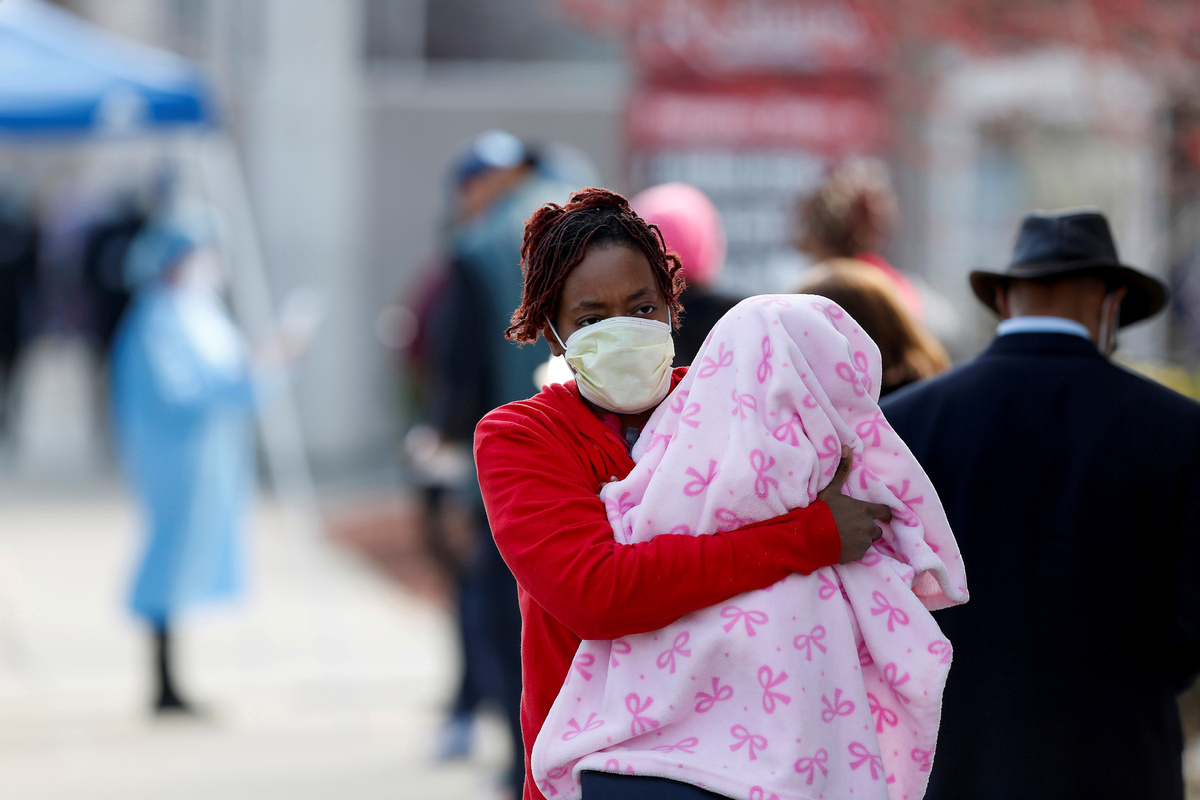
Since the COVID-19 epidemic broke out in a large scale in the United States, the highly infectious virus has dealt a blow to almost every corner of society and business.
As more data becomes available, a painful truth has revealed: the elderly and ethnic minorities are more vulnerable to COVID-19 than other groups of people in the country.
And in business, the hardest-hit companies are carmakers, airlines, oil companies and small businesses already on the brink of bankruptcy.
VULNERABLE ELDERLY
At least 27,700 residents and workers have died from the novel coronavirus at nursing homes and other long-term care facilities for the elderly in the United States, according to a New York Times database. The virus so far has infected more than 150,000 at some 7,700 facilities.
Nursing home populations are at a high risk of being infected by -- and dying from -- the coronavirus, according to the US Centers for Disease Control and Prevention.
An article carried by The Washington Post said America simply doesn't care about its old people.
The lives of seniors across America were lost not only because they were especially susceptible but because older lives are devalued, the article read.
It mentioned the government's slow response, disconnect between law and practice, neglect, shortage of protective equipment, and the sharing rooms with people having COVID-19 symptoms as factors behind the high mortality at nursing homes.
Another grim reality is the high death rate of ethnic minorities, who are more likely to live in viral hotspots. Furthermore, minorities are at higher risk of losing their jobs.
As of May 7, 16,329 African Americans are known to have died from COVID-19, according to an analysis from the American Public Media Research Lab.
In other words, African Americans who make up about 13 percent of the US population, accounted for 27 percent of known COVID-19 deaths.
In contrast, about 60 percent of the US population is white, but make up 49 percent of known COVID-19 deaths. Hispanics or Latinos are about 18 percent of the population, and 17 percent of deaths. Americans of Asian descent make up about 6 percent of the population and 5 percent of deaths.
HUGE LOSSES
US economic activities in the first quarter contracted at an annual rate of 4.8 percent amid the COVID-19 impact, the biggest decline since the Great Recession, the US Commerce Department reported.
Widespread "stay-at-home" orders, lockdowns, restrictions led to "rapid changes in demand," as businesses and schools switched to remote work or canceled operations, and consumers canceled, restricted, or redirected their spending, the bureau noted.
Personal income decreased 2.0 percent in March according to estimates released by the department's Bureau of Economic Analysis. Disposable personal income (DPI) also fell by 2.0 percent.
The pandemic brought US auto production to a standstill and cost automakers billions.
Ford tallied 2-billion-dollar losses in the first quarter, and expects pandemic-related losses will be even larger in the second quarter.
Fiat Chrysler burned through about 5.5 billion dollars in the first quarter. General Motors managed to report a 294-million-dollar profit and a cash burn of only 903 million dollars for the quarter.
As for the US airlines, analysts surveyed by Refinitiv expect airline earnings to drop more than 200 percent for the first quarter.
United has already warned investors that its first-quarter net loss will come to 2.1 billion dollars, while its operating loss will be 1 billion dollars.
Last week, the Treasury Department said it had approved a COVID-19 rescue package for the airline industry in the amount of 25 billion dollars.
Due to the plunging oil prices, the S&P 500's energy sector has lost more than 40 percent of its value this year.
Noble Energy (NBL), Halliburton (HAL), Marathon Oil (MRO) and Occidental (OXY) have all lost more than two-thirds of their value. Even Dow member ExxonMobil (XOM) is down 38 percent.
In the service sector, hotels and restaurants were bloodied by the epidemic.
In its latest data for the week of April 12-18, the Arizona Office of Tourism found Phoenix hotels and resorts had an occupancy rate of 23.5 percent, compared with 67 percent over the same time period of 2019.
The National Restaurant Association estimates the restaurant industry lost 80 billion dollars through April, and could lose 240 billion dollars by the end of the year.
RECORD UNEMPLOYMENT
New data showed that US employers cut a staggering 20.5 million jobs in April, erasing a decade of job gains since the global financial crisis and pushing the unemployment rate to a record 14.7 percent, marking the highest level of unemployment since the Great Depression.
US Treasury Secretary Steven Mnuchin said the unemployment numbers are probably "going to get worse before they get better," acknowledging that the current jobless rate may have already hit 25 percent.
The US economy is going to experience "a very, very bad second quarter," but the nation is focusing on reopening the economy, so a rebound is expected in the third quarter, Mnuchin said.
Data showed that Hispanics and African Americans have been hit the hardest in the job crisis.
The unemployment rate in April jumped to 18.9 percent for Hispanics, 16.7 percent for African Americans, 14.5 percent for Asians and 14.2 percent for whites.
Research by the University of California at Berkeley found minorities in the state of California are facing more health and economic risks in the COVID-19 pandemic, with less freedom to work from home and more anxiety over financial difficulties.
The study was based on a poll by the Institute of Governmental Studies of UC Berkeley in conjunction with the California Institute of Health Equity and Access, which surveyed 8,800 voters statewide online in English and Spanish between April 16 and April 20.





