



Tsai should stop impairing national security









To safeguard national interests by making full use of China's sovereignty, the National People's Congress, the country's top legislature, passed a decision on May 28 authorizing its Standing Committee to introduce legislation to plug the national security loophole in the Hong Kong Special Administrative Region. This is a major move to pave the way for the central government to better implement the "one country, two systems" principle in the SAR.
The legislation is aimed at restoring order in Hong Kong based on the country's Constitution and Basic Law of the SAR, ensuring the effectiveness of "one country, two systems", and promoting the city's long-term prosperity and stability.
The "one country, two systems" principle, originally proposed by the Chinese mainland to resolve the Taiwan question by facilitating peaceful reunification, was first applied to the Hong Kong and Macao special administrative regions. The policy is an amazing innovation of the Chinese government to safeguard national interests and realize national reunification in a peaceful way.
The "one country, two systems" framework is specially designed to ensure the Hong Kong and Macao SARs maintain their prosperity and stability after returning to the motherland. It is important here to highlight that "one country" is the precondition of "two systems".
Yet the introduction of the amendment to the extradition law in Hong Kong in June last year, which has since been withdrawn, triggered unprecedented turbulence in Hong Kong leading to widespread violence and bloody riots. The interference of external forces and Taiwan separatists has significantly encouraged Hong Kong secessionists to go on the rampage in order to divide the country, and as such, it poses a grave threat to "one country, two systems" and national security.
No country will stand by in the face of external forces trying to undermine its national security. In accordance with the Constitution, the Chinese government is legally obliged to improve the "one country, two systems" framework, help establish a sound legal system and enforcement mechanisms for Hong Kong to safeguard national security, and prevent and crack down on terrorist activities and foreign interference. And any action that the Chinese government takes in this regard is fully in the interest of the State, all Chinese people and Hong Kong city.
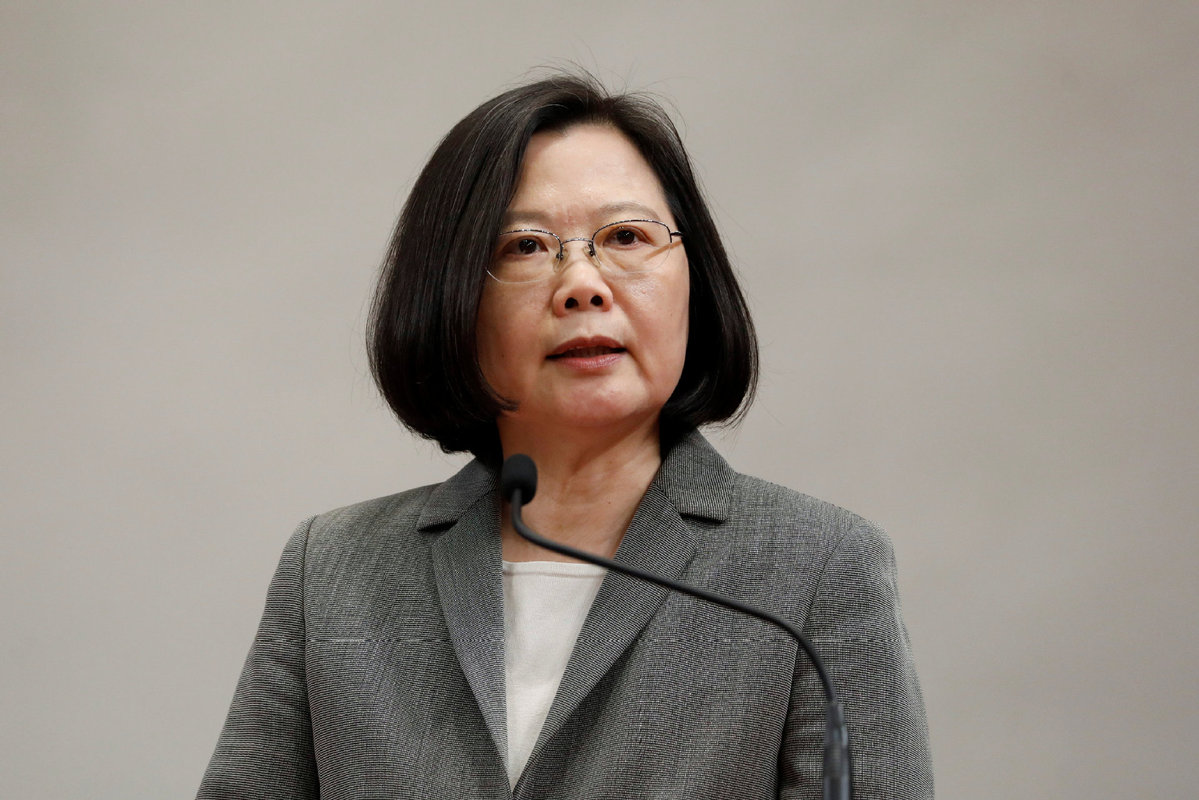
The Taiwan authorities were closely monitoring the situation in Hong Kong and biding their time to take advantage of the riots in the city. Taiwan leader Tsai Ing-wen, in particular, has been minutely following the developments in Hong Kong, and at the first opportunity, she said "Taiwan supports Hong Kong".
On May 24, she threatened to invoke "Article 60 of the island's laws and regulations regarding Hong Kong and Macao affairs" by suspending the "application of all or part of the provisions of the act" and end the preferential treatment to the city if the NPC passes the law.
But, as the NPC decision shows, Tsai is too lightweight to make any difference to the mainland's decision.
Since the violent demonstrations began against the amendment to the extradition law last year, Taiwan's ruling Democratic Progressive Party and the Tsai administration have turned a blind eye to the mayhem committed by the radicals in Hong Kong.
Instead, the "pro-independence" Taiwan administration, following the United States' line, has offered many of the Hong Kong rioters "asylum" to take advantage of the chaos in the city in a bid to use it as a political leverage against Beijing. Taiwan and Washington, in fact, have been continually fuelling the fires in Hong Kong and covertly and overtly encouraging the demonstrators to unleash violence, even commit terrorist acts.
After the top legislature passed the decision, the Tsai authorities released a "humanitarian aid action plan" sympathizing with and supporting the Hong Kong separatists.
However, many Taiwan residents are worried that Hong Kong radicals, if allowed to enter the island, might disturb the public order and intensify competition in the local job market. Besides, according to local law, people who are likely to commit crime, endanger public safety or disrupt the public order are barred from entering Taiwan.
So when some people proposed to amend "Article 18 of the laws and regulations regarding Hong Kong and Macao" to allow Hong Kong residents to stay in Taiwan, Su Tseng-chang, chief of the island's executive body, put it bluntly: "it's unnecessary to revise the law".
The Tsai administration is weighing the costs and benefits of her political tricks, as the law revision to allow Hong Kong separatists to enter the island will undoubtedly have an adverse impact on Taiwan's socioeconomic development.
In the Sino-US strategic competition, Tsai has chosen to serve as Washington's pawn and is already creating trouble for the mainland by following Washington's line on Hong Kong. Since the violent protests started in the SAR last year, secessionists from both Hong Kong and Taiwan, in collusion with Washington, have targeted Beijing.
In particular, after the NPC decision on national security legislation, the Tsai authorities have intensified their devilish cooperation with the US and are openly supporting Hong Kong separatists at the cost of causing more harm to cross-Straits ties.
External interference, separatism and terrorism are main factors threatening national security and undermining "one country, two systems", and they should be stopped at all costs. Also, the Taiwan secessionists and their pro-independence activities are the biggest threat to the peaceful development of cross-Straits relations.
The national security legislation, however, will provide legal grounds to end the Taiwan administration's collusion with the Hong Kong separatists and prevent Tsai from smearing the "one country, two systems" principle and promoting "Taiwan independence".
Thanks to "one country, two systems",Hong Kong will be an integral part of the rejuvenation of the Chinese nation. It is the established policy of the Chinese government to implement "one country, two systems" in Hong Kong in order to help the city maintain political and social stability, consolidate the rule of law and sustain its open and inclusive environment.
More important, there cannot be any change to the principle as it ensures Hong Kong will continue to enjoy its status as an international financial and logistics hub, and share the fruits of the mainland's economic growth.
Safeguarding national security can never compromise Hong Kong's high degree of autonomy. In fact, it will strengthen it. As such, under the framework of "one country, two systems",Hong Kong will keep moving forward.
The author is an associate researcher at the Institute of Taiwan Studies, Chinese Academy of Social Sciences. The views don't necessarily represent those of China Daily.





