



'Travel bubbles' eyed to revive economies









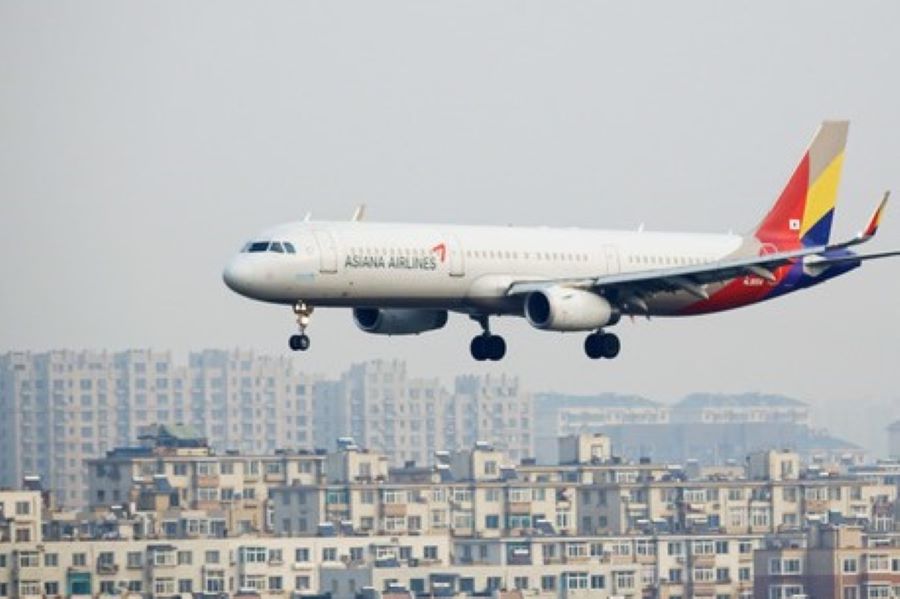
Governments in the Asia-Pacific region are exploring the creation of "travel bubbles" to spur essential business travel and help revive economies hit hard by COVID-19.
Starting Monday, people from Singapore and six Chinese municipalities and provinces can make essential business or official trips without having to go through the required 14-day quarantine period.
The Singapore-China fast lane agreement-which includes Shanghai, Tianjin, Chongqing and the provinces of Guangdong, Jiangsu and Zhejiang-is in line with Singapore's plan to gradually reopen its borders to conduct essential business travel but "with the necessary safeguards in place to ensure public health considerations are addressed". Singapore's Ministry of Foreign Affairs started to work out details with China's related departments on Wednesday.
Travelers must undergo testing before departure and obtain a health certificate showing that they tested negative for the novel coronavirus. They are required to submit an itinerary, and are barred from taking public transportation. They also have to undergo a swab test after landing and remain in isolation for two days.
Singapore is the second country in the region to develop such a travel fast track with China. On May 1, Republic of Korea and China opened a tightly controlled corridor between selected cities, including Seoul and Shanghai. Travelers are required to be tested and undergo two days of quarantine upon arrival. Samsung Vice-Chairman Lee Jaeyong used this procedure in mid-May to visit the company's factory in Xi'an, Shaanxi province.
Other Asia-Pacific countries are likewise planning to introduce systems that will fast-track business travel procedures without endangering public health. Japan is planning to ease entry restrictions for travelers from Thailand, Vietnam, Australia and New Zealand.
Industry leaders in Australia and New Zealand are lobbying for a fast-track travel arrangement, which will allow people to move freely between the two nations. Thai Prime Minister Prayut Chan-o-cha said his government is planning to create such "travel bubbles" through bilateral agreements.
Rebecca Fatima Sta Maria, executive director of the Secretariat of the Asia-Pacific Economic Cooperation forum, said it is important to facilitate business travel as this will kick start the economy.
Sta Maria told China Daily that the fast-track travel arrangements initiated by China, Singapore and South Korea are a "good start" for the Asia-Pacific economies.
"But developing 'travel bubbles' doesn't happen overnight. Because at the end of the day, the most important thing is to ensure safety," she said, recognizing that several protocols need to be established before they are launched.
Masato Takamatsu, president of Tourism Resilience Japan, supports the establishment of such travel fast tracks. But he said that one of the challenges is developing testing and quarantine protocols agreed upon by the countries involved.
The COVID-19 outbreak, which has infected over 6.75 million people around the world, has forced countries to close borders and bar international flights. This has had devastating consequences for the travel and tourism industry.
The International Air Transport Association expects global airline passenger revenue to fall by $314 billion in 2020. Airlines in the Asia-Pacific region are expected to have the biggest revenue drop-$113 billion-with passenger demand seen declining by 50 percent.
Aileen Clemente, president and CEO of Rajah Travel Corp, one of the Philippines' biggest travel agencies, has seen firsthand the outbreak's harsh impact on the industry.
"We are greatly affected and are actually starting off the second quarter at a negative, since several (of our clients) have already requested refunds," she said.
Clemente, who has seen many ups and downs in the industry, said that the pandemic's impact is "unprecedented" because it has forced most countries to close borders.
"The COVID-19 pandemic hit the tourism industry severely due to the closing of borders, halting of transportation, and stay-at-home policies to contain the spread of the virus," said John Paolo Rivera, associate director at the Manila-based Dr. Andrew Tan Center for Tourism of the Asian Institute of Management.
The world's travel and tourism sector has been rocked in the past by the global financial crisis in 2008 and the Sept 11, 2001, terror attacks in the United States. But Rivera said the enforcement of social distancing rules due to COVID-19 has "made existing business models of tourism collapse".
"Tourism hinges on experience and on personal interaction," he said, but this is discouraged as the world continues to grapple with COVID-19.
Deutsche Bank said in a report in May that it usually takes two to three years for passenger numbers to return to pre-crisis levels. The Frankfurt-based investment bank said the coronavirus outbreak will mean long-term changes for business travel, and perhaps more caution in bookings.
Rivera said that global tourism will bounce back. But while the industry has always been resilient, those in it will have to rethink their strategies and adapt to the "new normal".
"Not anymore is travel just for the experience. It will also be important to ensure safety. And due to social distancing, it is inevitable that travel costs will increase-in prices of accommodation, transportation and fees for tour operators," he said.



















