The BRI in Pakistan: From energy crisis to economic boom









College of Economics and Management, Nanjing Agricultural University, China
The Belt and Road Initiative is a project that stretches from Asia to Africa and Europe. It is historically guided, long-run focused, carefully planned and strategic megaproject envisioned boosting connectivity between the regional and global markets. The China-Pakistan Economic Corridor is one the flagship projects, and estimated funding is $87 billion. It was launched in 2015, and 32 out of 122 projects have been completed, and many are close to completion.
Since the inception of CPEC, energy sector infrastructure has had a massive transformation. Improved power generation and transmission offer growing and desirable prospects that are fostering broader agricultural and industrial development. Previously, the country suffered from severe energy shortfalls causing 6-12 hours of load shedding, affecting both domestic and commercial users. These prolonged outages added to the plight of the economy of Pakistan and triggered a fall in exports, the drop of the rupee against the dollar, inflation and balance of payment crises.
Therefore, following the well-designed doctrine of shared benefits and collaboration, China primarily focused on filling the rift in the energy sector and resolved the mounting energy crises. Under CPEC, most energy projects have been completed; approximately 5,350 out of 11,500 megawatts of proposed power generation have been added to the national grid. Such a significant injection has provided a lifeline to the energy-hit textile industry and, therefore, instituted avenues for new start-ups.
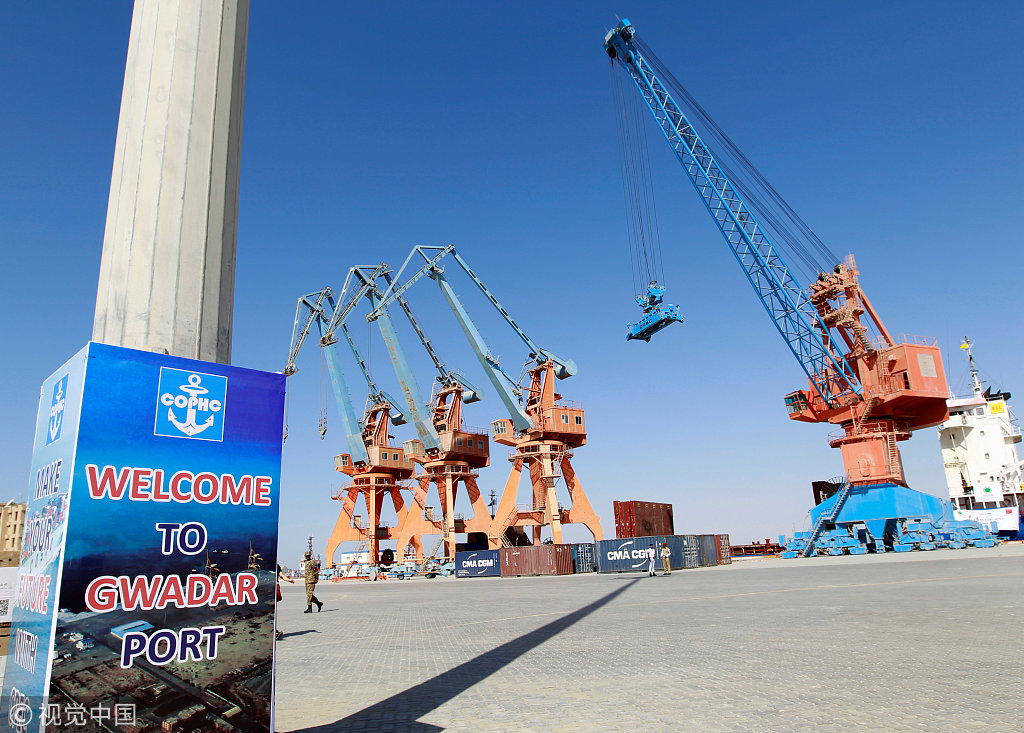
Accordingly, completion of Special Economic Zones – like Gwadar SEZ – boosts industrialization, helping turn the province into a regional manufacturing hub. Gwadar SEZ and Gwadar free trade zone has great potential for the development of petrochemicals, manufacturing, and large-scale industries which can contribute to harnessing the potential of Balochistan province. Gwadar Industrial Estate has become the most prominent industrial estate in Balochistan – over 1,000 acres in the first phase. Likewise, it is also providing ample opportunities for agro-based industries marking the confluence of South, Central and West Asia.
The early success of the transport projects – almost 1,544 kilometers of road are operational with 1,456 km under construction – have improved the linkage and connectivity between nodes within the country. The accomplishment of Lahore orange line – Pakistan's first-ever metro train – established under CPEC has the capacity of carrying a quarter-million passengers a day in the second-largest city of the country. Commuters, however, are quite happy with cheap, air-conditioned, fast and gleaming trains festooned with Pakistani and Chinese flags. Similarly, the ground-breaking of the ML-1 railway project – upgrading and dualizing the 1872 km railway cost $6.8 billion – is a glimpse of the second phase of CPEC, which will transform the mass transit system of Pakistan.
The second phase of CPEC entails broader trajectory for socio-economic development, industrialization, the blue economy, agriculture and tourism. On the CPEC front, the second phase will reap the triumph of the early harvest of first-phase projects and foster economic activity through employment generation. Accordingly, 27 social sector development projects – including health, education, agriculture and poverty reduction – are expected to be completed soon. Notably, the signing of free trade agreement – effective January 2020 – between China and Pakistan have made 2020 a landmark year for CPEC where Pakistani commodities like cotton, leather, garments and rice gained substantial demand in Chinese markets.
Moreover, CPEC is revitalizing the tourism industry of Pakistan. Improved transport infrastructure has fueled mobility and access to northern mountainous areas, presenting thousands of tourism hotspots. Pakistan has also provided visa-on-arrival services for 55 countries to receive a significant number of tourists and showcase the brighter side of the country.
Although Pakistan has been plagued by many crises, with every coming day the economic situation is recovering and moving in the right direction with the accomplishment of the planned joint maneuvers. The suspension of the International Monetary Fund bailout program by January 2020 and, therefore improved economic activity, is the louder hallmark of the upswing in financial stability. Likewise, following IMF program suspension, the Prime Minister's decision on the decrease in electricity and gas prices for commercial users has fostered the confidence of investors and the private sector.
Further, a massive surge in cement demand to the tune of 30 percent, a jump in rupee value and an improved export situation are also vibrant indicators of economic recovery. Moreover, data released by the Securities and Exchange Commission of Pakistan show in October, 2,107 new companies have been registered in Pakistan – a 26% surge compared to last year. These facts demonstrate the country's swift V-shaped economic recuperation.
Pakistan is preparing for the 10th meeting of the Joint Cooperation Committee under the CPEC to review the progress of various ongoing and potential projects. Likewise, the country is excited to mark the year 2021 as the 70th anniversary of bilateral diplomatic relations – it will be celebrated with national zeal and zest, the foreign minister said on Oct 25.
Though historically Pakistan's growth prognosis has not been flowery, broader development along with CPEC projects help Pakistan avoid economic crises. CPEC has emerged as a sustainable corridor of opportunity, yet there is a need for institutional restructuring and aligning efforts to better harvest early gains.
Therefore, a shift in import tariff policy – from the protection of low-productivity domestic firms and revenue generation to value-added exports – is required.
Also, Pakistan needs regulatory reforms to encourage further investment from China and beyond. Institutional reforms might attract diverse and sustainable inflows of FDI and ensure the longer-term economic sustainability of CPEC, promoting inclusive growth and broader economic trajectory in Pakistan.
Ali Sher, Saman Mazhar are students from College of Economics and Management, Nanjing Agricultural University, China. Guanghua Lin is a professor at College of Economics and Management, Nanjing Agricultural University, China.
The views don't necessarily reflect those of China Daily.
If you have a specific expertise and would like to contribute to China Daily, please contact us at opinion@chinadaily.com.cn , and comment@chinadaily.com.cn