Peering beyond the rhetoric









After a volatile 12 months, hopes grow for more rational US-China relations
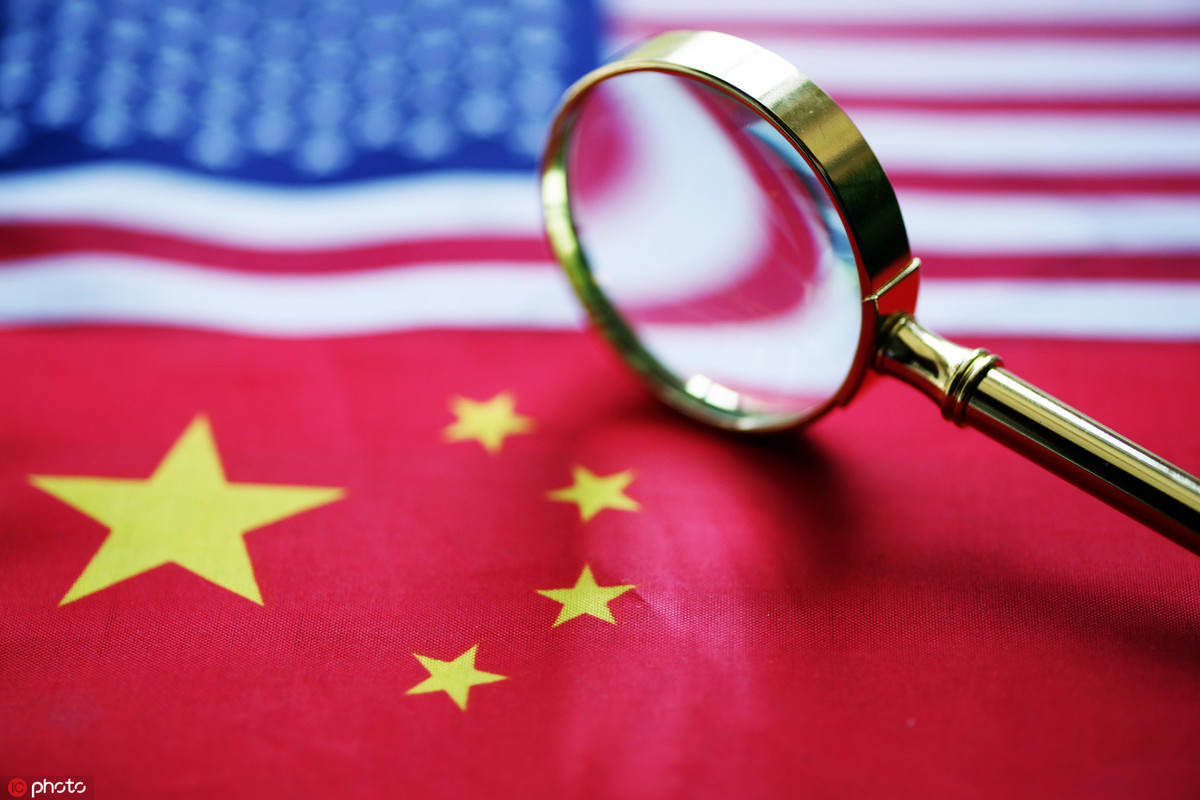
There is no simple way to sum up relations between China and the United States in 2020.
It is safe to say they have been tumultuous, fraught with inflammatory rhetoric, and laden with back-and-forth sanctions.
But the relationship also holds hope.
The "most consequential" bilateral relationship in the world seems to have reached the bottom of the valley, from where every step to be taken may lead back to the mountain top, so hoped senior China hands in Washington and beyond, as they look at 2020 in retrospect.
The year started with a promising note for Beijing and Washington with the signing of a historic Phase One trade deal on Jan 15 that capped 18 months of conflict between the world's two largest economies.
As in other presidential election years, 2020 saw candidates, incumbent Republican President Donald Trump and his challenger, former Democratic vice-president Joe Biden, use China-bashing rhetoric and actions as tactics to court support.
But with an administration bent on the view that China is a primary strategic threat-which Beijing says is an "illusion" of some US politicians-Washington has increasingly set its relations with Beijing on a contentious course.
It has been further compounded by the still-sweeping COVID-19 pandemic in the US, which Trump baselessly linked with what he termed as the "China virus", a move blasted by Beijing and criticized by many in the scientific community as racist and blame-shifting.
The year that is almost over logged the China-US relationship as strained and reduced to a level never seen before, with trade and investment held back, scientific and technological cooperation blocked, and people-to-people exchanges dampened.
The souring mood culminated with what The Atlantic magazine headlined as a "surreal speech" by US Secretary of State Mike Pompeo at the Nixon Presidential Library in late July, in which he declared decades-long US policy of engagement with China having utterly failed.
The claim was panned by many scholars.
Pompeo's speech was "highly destructive", said David M. Lampton, professor emeritus at Johns Hopkins University's School of Advanced International Studies.
"In this regard, our two countries did not join hands more than 40 years ago to change each other's internal systems. Instead, we normalized to improve our own internal circumstances and those of the world," Lampton said at a virtual gala of the US-China Policy Foundation on Dec 16.
'Pernicious claim'
J. Stapleton Roy, US ambassador to China from 1991 to 1995, said the "pernicious claim" that the US policy of engagement with China was a "dismal failure" was allegedly based on the premise that the US can successfully transform China.
"To be blunt, this is an absurd proposition, since we have been notably unable to affect such transformations in many of the smaller countries right in our own neighborhood," Roy, the founding director emeritus and a distinguished scholar at the Wilson Center's Kissinger Institute on China and the United States, said at the same online event.
Toward the end of the year, the outgoing US administration continued to impose visa and economic restrictions on Chinese officials and companies, adding dozens of Chinese enterprises to its trade blacklist out of national security and other concerns.
"That's very unusual in the US during this transition period for an outgoing president to be making major policy decisions," David Dollar, senior fellow at the John L.Thornton China Center of the Brookings Institution, told China Daily, alluding to the US Electoral College having confirmed Biden's victory in the Nov 3 election.
"We can look at some of this as perhaps acting in bad faith. I think the Biden team will take a hard look at all of these security measures, especially the ones introduced at the last minute, and maybe they'll roll back some," Dollar said at a panel discussion.
Throughout the year, there had been an incessant flow of measures seeking to decouple the two economies, in addition to rhetoric reeking of the Cold War.
The calls from political hawks, however, had been punctuated by an increase in push back from rational voices, which cautioned those policies can backfire and called for managing the competition and enhancing cooperation.
Henry Paulson, a former US Treasury secretary, warned that actions taken by the current administration out of concerns of "national security" will "do more to hurt America's credibility, leadership and economic competitiveness than halt China's progress".
Preventing legitimate Chinese companies from US capital-market listings on vague national-security grounds only makes London, Hong Kong or Tokyo more attractive.
Anna Ashton, senior director of government affairs at the US-China Business Council, said there is a growing recognition by many people that total decoupling is not a reasonable answer.
"Our relationship with China is very, very different from our relationship with the Soviet Union in the 20th century, and there will be a high price for the US to pay if we just simply completely decouple," Ashton said when asked if it is too late to reverse US disengagement with China.
For US Congressman Rick Larsen of Washington state, there are three types of people on Capitol Hill when it comes to dealing with China.
There are punishers who want to punish China with more tariffs and sanctions; de-couplers, those who want to sever the economic relationship; and salvagers who are trying to save the relationship.
Larsen, who has been to China 11 times, said he and Darin LaHood, a Republican congressman from Illinois and a co-chair of the US-China Working Group, are in the salvagers category, working to improve the relationship with competition and cooperation.
"When the US-China relationship sneezes, Washington state gets a cold," Larsen, a Democrat, said of the impact of the trade war on his constituents at an online discussion hosted by the Brookings Institution in late October. The Pacific Northwest state has had a booming agricultural export business with China over the years.
Looking forward to 2021, the two countries could expect to move their relations forward by working together on global issues despite daunting challenges ahead, some US experts said.
David Dollar of the Brookings Institute said the US is going to be getting back into multilateral agencies, and most importantly, dealing with global public goods, a process that the US inevitably needs to work with China.
"We have to work together on these issues together with other partners, but without the US and China, it's just not realistic to deal with climate change or pandemics or a global debt crisis," he said.
For Cui Tiankai, the longest-serving Chinese ambassador to the US, a new year always comes with new hope for the two countries.
"The year 2020 has been a tough year, and as we bid farewell to it, we are wishing more than ever that 2021, the year of the bull in the Chinese zodiac, would be a truly bullish year," Cui said at the virtual US-China Business Council 2020 annual gala on Dec 9.
"This is the same for China-US relations," the ambassador said.