Restoring forests provides path to well-being









Sunday was International Day of Forests, and never before has there been greater reason to focus our attention on these precious natural resources that cover a third of the Earth's land area.
We owe so much to forests.
Over the past year, forests have helped to keep people safe and healthy during the COVID-19 pandemic.
Many of us have relied on essential forest products made from paper and cardboard, including personal protective equipment and packaging for home deliveries. For others, forests have offered a space to exercise outdoors, boosting our health and spirits.
But for vulnerable people around the world, forests have been acting as vital safety nets, providing food sources and income when supply chains are disrupted.
This is in addition to the extraordinary benefits forests always provide: acting as carbon sinks, purifying our water, supplying food, fuel and medicinal plants to well over a billion people, and supporting the livelihoods of hundreds of millions more.
Nevertheless, COVID-19 has served as a wake-up call to the fact that the health of animals, of people and of the environment are interconnected.
We must recognize that deforestation and the unsustainable use of the world's forests significantly increase the risk of diseases caused by pathogens jumping from animals to humans.
Approximately 70 percent of emerging infectious diseases, and almost all recent epidemics, have originated in animals, especially wildlife.
When forests are cut down to expand cropland or pastures for grazing, and when urban demand for wild meat as a luxury item drives overexploitation, contact between humans, livestock and wildlife increases. And so does the risk of the next big pandemic.
The message is clear: Healthy forests mean healthy people.
Yet our forests remain under threat. In the past 30 years, we have lost 420 million hectares of forest through deforestation and conversion to other land use, primarily driven by agricultural expansion.
This destruction risks the health of the global population, releases climate-warming gases, threatens plants and animals with extinction, and endangers the livelihoods of people who depend on forests.
So what can we do to keep forests, and ourselves, healthy?
First, we need to halt practices that drive large-scale conversion of forests to agriculture, recognizing that it is possible to feed the growing global population without cutting down forests.
Second, we must crack down on the illegal wildlife trade, while respecting that wild animals remain an essential source of food and income for millions of indigenous peoples and local communities.
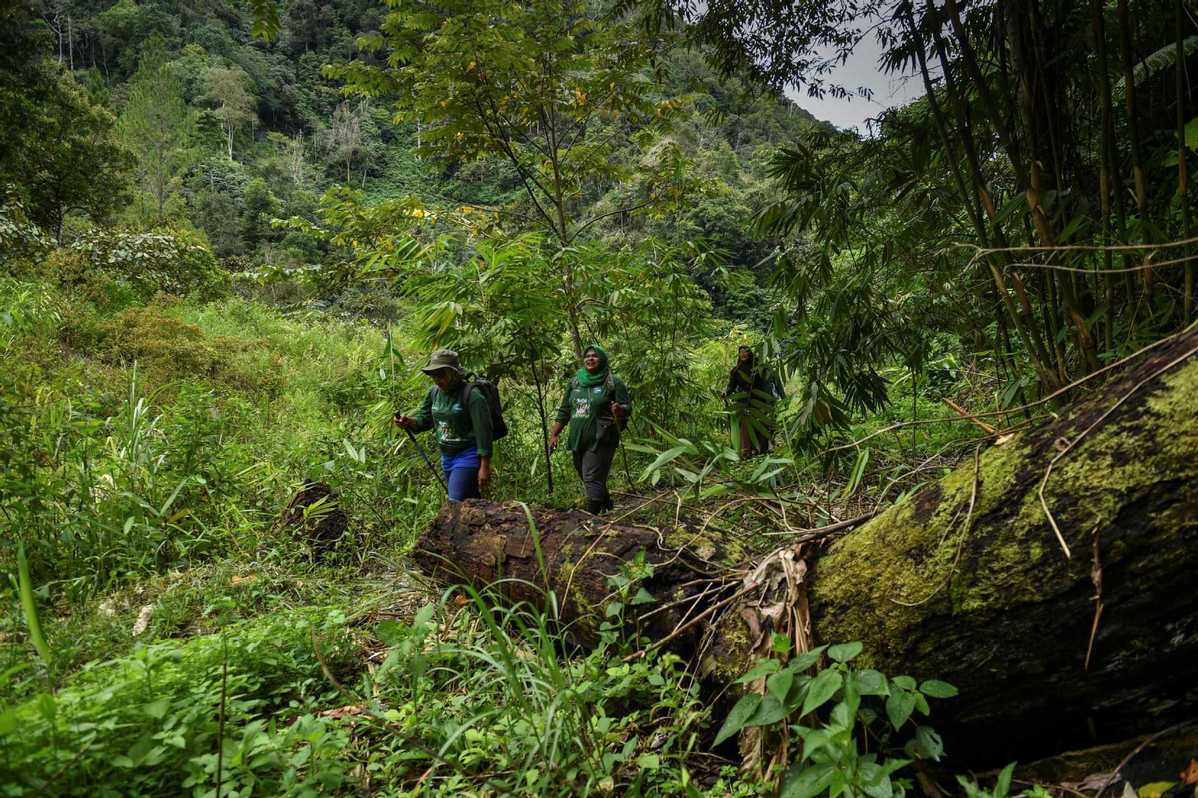
Third, we need to invest in restoring the world's degraded forests and landscapes to reestablish healthy ecosystems-the focus of this year's International Day of Forests.
Currently, around 2 billion hectares-an area twice the size of China-are degraded due to overuse, drought and unsustainable forest and land management practices.
The good news is that we can restore degraded land on a large scale.
The Great Green Wall for the Sahara and the Sahel Initiative, led by the African Union, is one example. By 2030, it aims to restore 100 million hectares across Africa's drylands with local tree species and vegetation, greening landscapes while sequestering 250 million tons of carbon and creating 10 million green jobs.
And globally, ambitious targets have already been set: The Bonn Challenge calls for the restoration of 350 million hectares by 2030, while the United Nations' Sustainable Development Goals go further still, aiming for land degradation neutrality by 2030.
So far, more than 60 countries and entities have committed to restoring over 210 million hectares of degraded land-an area almost two-thirds the size of India.
Large-scale afforestation efforts aimed at desertification control, conservation of soil and water resources and other protective purposes led to the planting of about 40 million hectares of new forests in China since 1990.
However, we need to step up the pace to meet targets and turn pledges to action.
The UN Decade on Ecosystem Restoration begins this year and is an opportunity to upscale forest restoration across hundreds of millions of hectares, healing degraded land. It also provides an opportunity for many to benefit from the green jobs and income-generating possibilities that restoration presents, helping with economic recovery from the COVID-19 pandemic.
We should also remember that every tree counts. Small-scale planting and restoration projects can have a positive impact on human health. Urban greening creates cleaner air, provides shade and benefits the mental and physical well-being of people in cities. Each of us has the opportunity to make a difference on a micro level, from backyards to community gardens.
Let International Day of Forests herald a fresh start to restore our forests and create a healthier world for all of us.
The author is deputy director-general of the Food and Agriculture Organization of the United Nations. The views do not necessarily reflect those of China Daily.