Progress opens window of opportunity to beat COVID









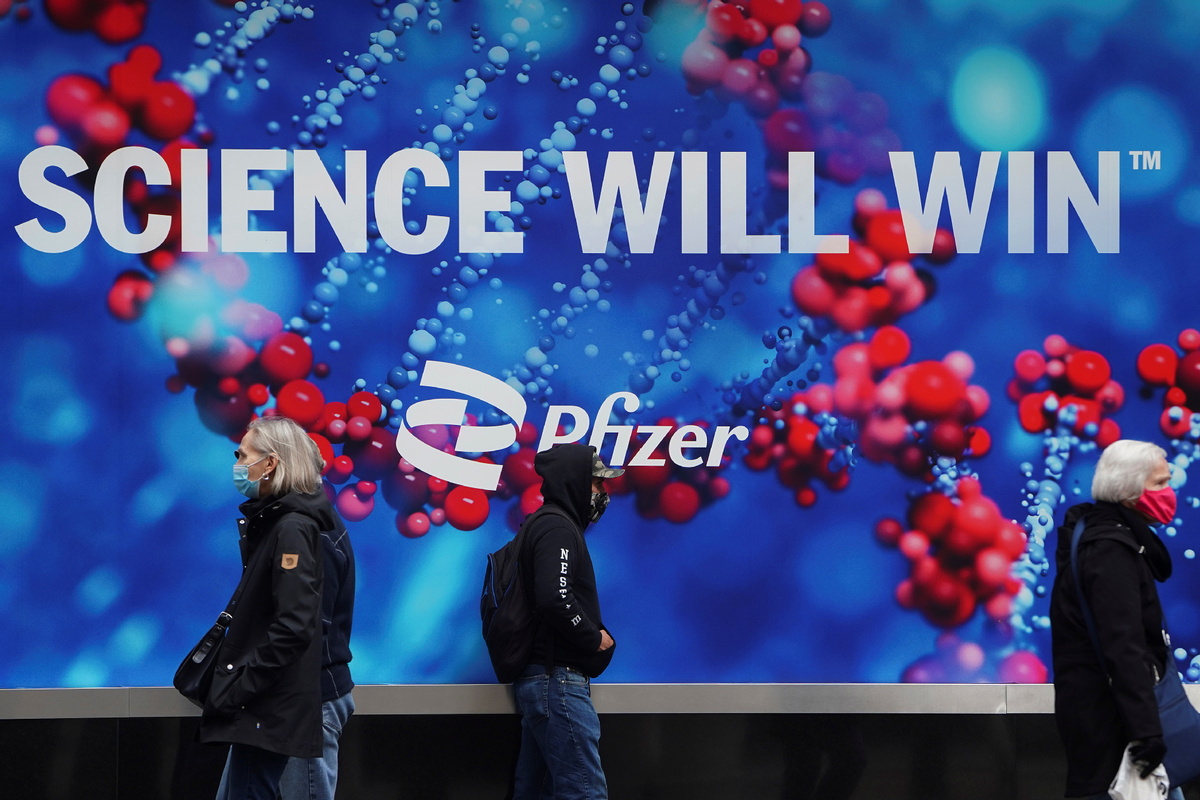
After a year of steadily increasing COVID-19 case numbers, the United States may finally be at an inflection point. The recent overall decline in the number of new infections represents an opportunity to finally eliminate the virus within US borders, and to begin to eradicate it globally.
But this window may not be open for long, given the emergence of new, more transmissible variants and a resurgence of cases in some parts of the US Midwest.
The recent declines are likely a result of seasonal population immunity (coronaviruses, in general, are seasonal contagions), vaccination and a renewed commitment to safety measures such as face masks and social distancing. If the US can maintain these practices and contain new variants, it can quickly bring new daily infections down to around 3,000, at which point local transmission could be eliminated through widespread rapid testing, contact tracing and assisted mandatory isolation.
Many will see this as a daunting task. But China, Australia, Bhutan, New Zealand, Singapore and others have used precisely this approach to keep case counts near zero and stamp out the spread of new strains. If the US could adopt the same three-pronged strategy and then help other countries do the same, a COVID-free world would be within striking distance.
The US is currently processing around 1.5 million tests per day, which is a far cry from what is needed to contain the epidemic (though it is better than its recent past performance). To make up for the shortfall, self-administered rapid tests should be made widely available free of charge at every school, workplace and public institution. The goal should be for everyone in the US to be tested at least twice per week.
Simple, inexpensive paper strip tests already exist, but have yet to be broadly commissioned by the federal government, owing perhaps to their relative insensitivity compared with the premium tests available today. But even if the tests deliver more false positives or false negatives than others, their low cost and widespread availability would allow for people to test themselves again at home.
Beyond testing, the US must finally take on the task of contact tracing and assisted mandatory isolation. Right now, people who walk into a local grocery store in the US have no way of knowing whether they have come into contact with an infected person. By contrast, the countries that have nearly eliminated the virus have deployed armies of contact tracers who can notify people of potential exposure through digital apps.
But contact tracing alone isn't enough. The US also needs to confront the politically difficult issue of quarantining the infected, without which there is almost no way to eliminate the virus completely. Of course, mandated quarantines should be made as painless as possible. Quarantining should never come with the risk of losing employment or income, or at the expense of caring for children or other family members in need.
In the countries where the virus has been largely contained, governments either provide food and lodging for monitored quarantines, or allow for home quarantines with remote monitoring and enforced check-ins. Many also provide medical kits (including thermometers and masks) and financial aid for those at risk of losing their jobs or income.
There is no good reason why a country as rich as the US cannot deploy the same strategy that a much poorer country like Bhutan has successfully implemented. The costs of doing so, according to public health experts, might seem high, but they pale compared with the alternative-a lingering epidemic that causes trillions of dollars in lost output.
The administration of US President Joe Biden has committed to creating an army of 100,000 contact tracers, community health workers and public health nurses to track exposures, encourage quarantines and expand testing. But still more is needed.
According to George Washington University's "Contact Tracing Workforce Estimator", the US would need a minimum of 353,000 contact tracers to keep up with the 14-day case count as of mid-March. Even then, contact tracing must be accompanied by an effective quarantine protocol, mandating two weeks of isolation, if not more.
This is a critical moment. With cases declining, the cost of contact tracing and assisted isolation will be high but manageable. But if any of the new highly transmissible variants take hold, infections could spiral out of control, and the current window of opportunity will close. Already, the vaccine-resistant P.1 variant, which first appeared in Brazil, has been detected in the Philippines.
Far from being a reason to ease up on containment measures, the reduction in new infections demands even more urgent action. Without widespread testing, tracing, and mandatory assisted isolation, the US will not be free of the coronavirus.
And once we have eliminated local transmission here, we must help other countries do the same. Otherwise, the virus will keep coming back, each time stronger than the last.
The author, a scientist, biotech entrepreneur and infectious disease expert, is chair and president of the global health think tank ACCESS Health International.