Oxygen shortages hit India amid 2nd wave of COVID-19









NEW DELHI - At least 11 COVID-19 patients died on Monday evening in a hospital in the southeastern Indian state of Andhra Pradesh due to oxygen shortages, local media reported Tuesday.
Sadly, this was just one of the many tragedies the South Asian country has witnessed in recent weeks following an oxygen supply breakdown amid the second wave of the pandemic nationwide.
While families and friends of the dead grieved for their beloved ones, they also raged against governments and hospital administrations over oxygen shortages amid a pandemic-induced chaotic mess, prompting them to take immediate actions to turn the tables.
On Wednesday, India's COVID-19 tally rose to 22,992,517 and the total death toll reached 249,992.
Since the second wave, a number of incidents have unfolded across Indian hospitals in wake of the shortage of essential medical supplies, especially oxygen.
On April 23, at least 26 COVID-19 patients died at a hospital in New Delhi when the oxygen supply in its intensive care units ran out completely.
Seven days later, six more died at night due to oxygen shortages in a hospital in Gurugram, a city southwest of New Delhi.
"We came to the hospital thinking doctors are there to take care of our loved ones. But then we are told oxygen is not available," said Amritha, an attendant. "Whose responsibility is it to provide the oxygen and who should we blame for the deaths that are taking place simply because hospitals are not having facilities?"
The tragedy happened again on the afternoon of May 1, as at least 12 died due to lack of medical oxygen at Batra Hospital & Medical Research Center in the capital city, including Dr R K Himthani, the hospital's head of the gastroenterology unit.
"Rest in peace Dr. R K Himthani. We lost a cheerful and smiling face today, not because of the virus but due to lack of oxygen," Himthani's colleague Dr. Tushar Mehta wrote on social media.
Experts said the bottlenecks of India's oxygen supply lie in transportation and storage.
While most oxygen producers are in eastern India, the soaring demand comes mainly from western, central and northern regions. Besides, there is a shortage of cryogenic tankers, which are necessary to transport liquid oxygen at very low temperatures to distributors. Also, many Indian hospitals do not have on-site plants to store oxygen.
In many hospitals, infected patients have to share beds or lay down on the floor in wards and corridors. And there are even more who have to lie down on stretchers or inside their own vehicles outside hospitals, gasping for breath.
Experts said doctors and paramedical staff have to take tougher decisions on who among the patients should get oxygen and who should be left out.
"The situation is really bad. We are being trained to save each and everyone without any distinction, but in the ongoing pandemic, when the hospitals are inundated and facilities are scarce, we are forced to make tough decisions," said a doctor pleading anonymity. "It is really hard, for after all we too are humans."
As oxygen shortages are hitting hospitals, attendants have been asked to get oxygen for their beloved ones on their own. As a result, social media platforms have been flooded with requests by desperate families hunting for oxygen cylinders and refills.
This has in turn stoked up a thriving unregulated black market for cylinders and concentrators, which are sold much above their usual retail prices.
Reports said an oxygen cylinder which would normally cost 82-137 U.S. dollars is now sold 10 times the price, and not many people can afford it. Besides, police have arrested a few for resorting to the black market.
"It is a chaotic situation all around. Who would have thought that people would have to carry oxygen cylinders for their ailing family members?" said Ashish Vardhan, a volunteer helping people to access oxygen cylinders and hospital beds. "This massive shortage could have been avoided had the government planned things in advance and not ignored the expert opinions about the outbreak of the second COVID-19 wave."
Volunteers of the Sikh community have set up makeshift facilities in and around New Delhi to provide free oxygen to COVID-19 patients, and also a temporary hospital with 250 beds.
"People are crying saying they have lost three family members, the fourth is dying, please help with oxygen and a bed," said Manjinder Singh Sirsa, president of the Delhi Gurdwara Management Committee. "I think, on this earth, you would never have seen this situation where people are dying and we are forced to give oxygen, or a miracle assistance."
"As hospitals are inundated and people are being turned away, so they come to us as a last resort and we provide them oxygen here," said Jasmeer Singh, a Sikh volunteer. "We too are facing storages and have to manage things with our limited stocks."
The oxygen shortages have brought states face to face with the federal government over their quota.
Last week, Allahabad High Court in the northern Indian state of Uttar Pradesh said the death of COVID-19 patients out of oxygen shortages in the cities of Lucknow and Meerut is a criminal act, "not less than a genocide" at the hands of authorities entrusted with the task to ensure the oxygen supply chain is maintained.
On Saturday, India's Supreme Court formed a 12-member task force to ensure medical oxygen is delivered throughout the country in a streamlined manner. The task force will assess and recommend the need and distribution of oxygen throughout India.
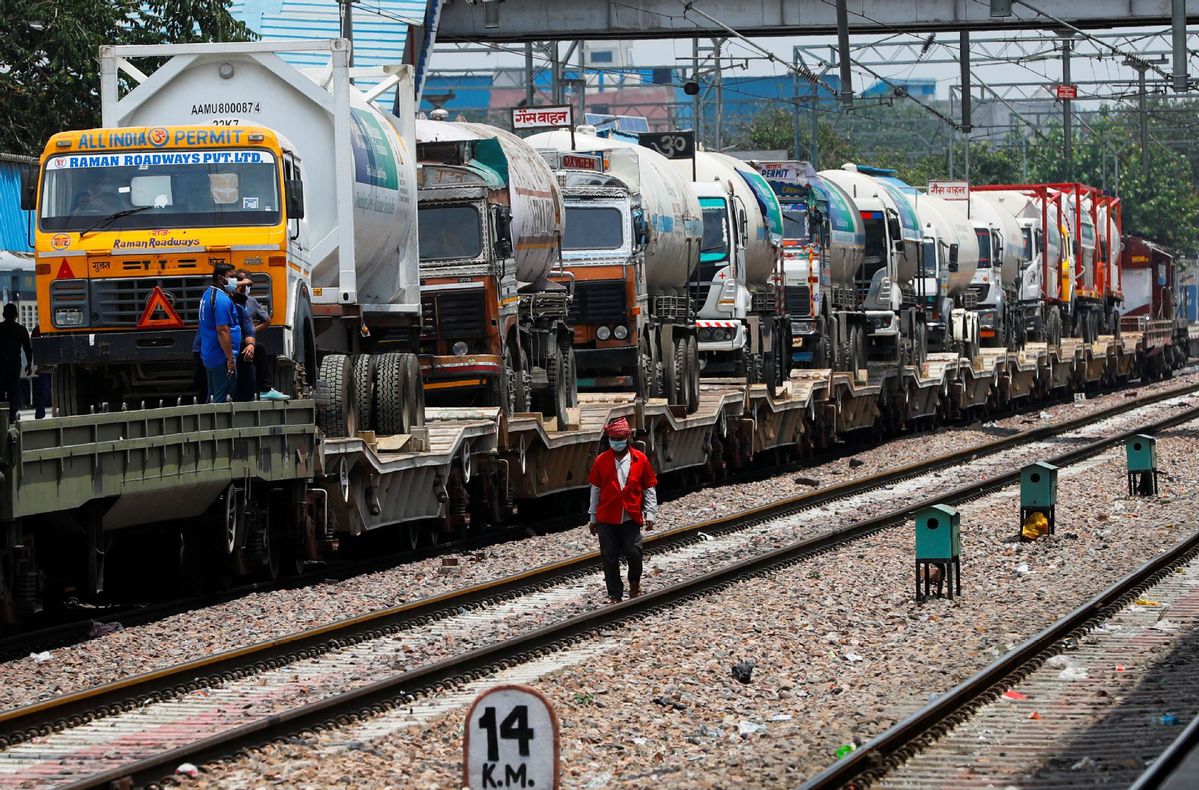
To cope up with the crisis, the federal government also started importing mobile oxygen generation plants and tankers, apart from buying portable oxygen concentrators. Oxygen is now being brought to hard-hit regions using special train services.