Tokyo's security push targeting Beijing undermines regional stability: Experts









Japan has recently courted the US and the Philippines by hyping the "China threat", stirring up regional tensions and rallying relevant countries into confrontation. Such moves risk undermining peace and stability in the Asia-Pacific and increasing the likelihood of strategic miscalculations, experts say.
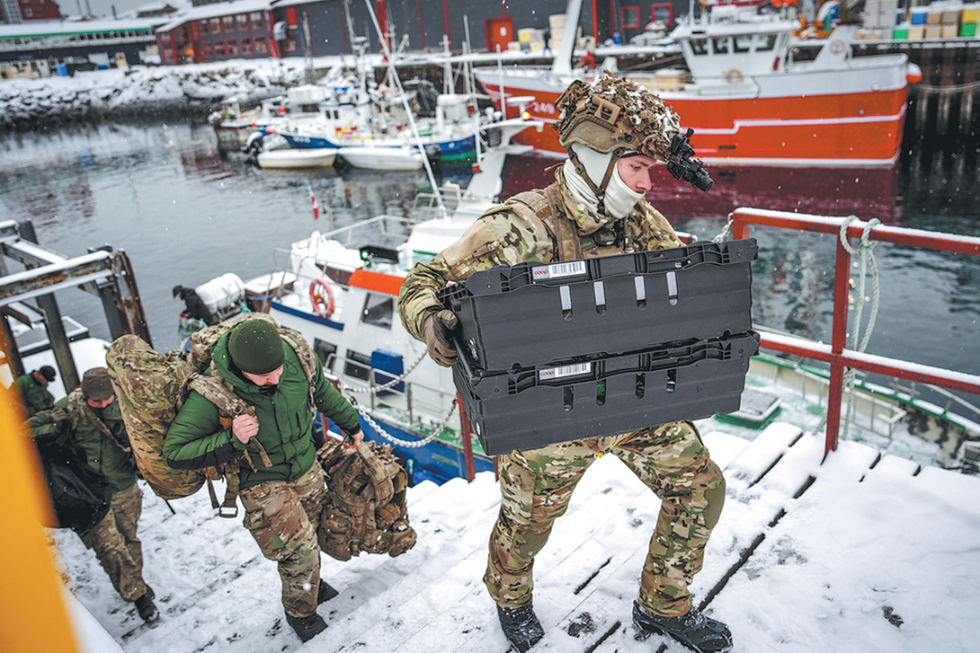
The Philippines and Japan signed a defense deal, the Acquisition and Cross-Servicing Agreement, on Thursday, which allows their armed forces to exchange supplies and services, as both sides seek to deepen security cooperation amid rising regional tensions.
Earlier, in September, the Reciprocal Access Agreement between the two of the United States' closest Asian allies came into force, allowing the deployment of forces of either country to the other's territory for joint and larger combat exercises.
Despite being framed as measures to enhance military cooperation, the two agreements are widely seen as targeting China, with Japanese and Philippine officials repeatedly playing up the "China threat" narrative during the signing ceremony.
On Jan 12, Japanese Defense Minister Shinjiro Koizumi met with the commander of the US Indo-Pacific Command and again claimed that Tokyo would step up defense cooperation with Washington in response to China's "increasingly assertive actions" and what he described as a worsening regional security environment.
Kyodo News reported that Koizumi reiterated his commitment to boosting defense spending, saying Japan would expand deterrence capabilities with the US in southwestern areas, including Okinawa.
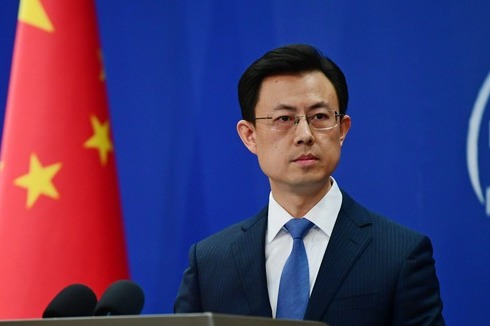
At a regular news conference on Friday, Chinese Foreign Ministry spokesman Guo Jiakun said China always believes that cooperation between countries should not target any third party or harm its interests, nor should it undermine regional peace and stability.
Despite criticism from Southeast Asian countries and the international community over the latest military and security developments in Japan, the Japanese side has shown no inclination to mend its conduct, and instead made up various pretexts to expand military buildup and export deadly weapons, further revealing Japanese right-wing forces' motive to remilitarize Japan and go back to the path of military expansion, Guo said.
"All peace-loving countries and people must firmly reject a revival of militarism and remilitarization in Japan and keep the region peaceful and stable," he said.
Bloc confrontation
Chen Hong, executive director of the Asia Pacific Studies Center at East China Normal University in Shanghai, said the signing of a defense deal and the intensifying military cooperation between Japan and the Philippines represent risky steps that fuel bloc confrontation and undermine peace and stability in the region.
The Japan-Philippines military logistics agreement carries more symbolic weight than practical defense value, Chen said. While it falls short of a formal military alliance, it institutionalizes logistical support and service exchanges between their armed forces, facilitating mutual assistance and significantly enhancing their ability to coordinate actions during times of crisis, he said.
"Such military maneuvers could trigger a chain reaction of arms races and military confrontation, significantly increasing the risk of miscalculation and unintended escalation," he said.
Minister Koizumi's emphasis on expanding Japan-US deterrence capabilities in Okinawa and the southwestern direction underscored Tokyo's heavy reliance on Washington for security, Chen said.
"By strengthening forward deployments and increasing its military presence, Japan aims to enhance its strategic weight within the US-Japan alliance. However, this 'deterrence-for-security' logic objectively intensifies Japan's security dilemma, making it more likely to be drawn into the front lines of regional conflicts," he said.
Shakeel Ahmad Ramay, CEO of the Asian Institute of Eco-civilization, Research, and Development in Pakistan, said Japan is using the "China threat" as a pretext, while its real objective is to expand military spending and revive its militaristic past.
Japan has attempted to redefine its security role by constructing a "threat narrative", Ramay said. On the one hand, it frequently packages its military expansion in terms such as a "severe security environment", a "rules-based order" and "freedom of navigation", seeking to manufacture a consensus around the "China threat".
On the other hand, he said, constrained by its own strategic capacity, Japan has increasingly encouraged, instigated and pushed the US to deepen involvement in regional affairs, while courting countries such as the Philippines to form a multilayered network of quasi-alliances.
"In essence, this approach reflects an effort to offset Japan's strategic anxiety through external forces rather than to manage differences through dialogue and cooperation," he said.
Chen said, "Repeated experience shows that stability in the Asia-Pacific does not stem from the stacking of military alliances, but from mutual respect, dialogue, consultation and shared development under the multilateral frameworks, including the Association of Southeast Asian Nations."
For regional countries, he added, maintaining strategic autonomy, rejecting bloc confrontation, and promoting security through cooperation remain the most rational choices to prevent the Asia-Pacific from sliding into a cycle of instability.
liujianqiao@chinadaily.com.cn