Hostility hurts US-China science liaison, says expert









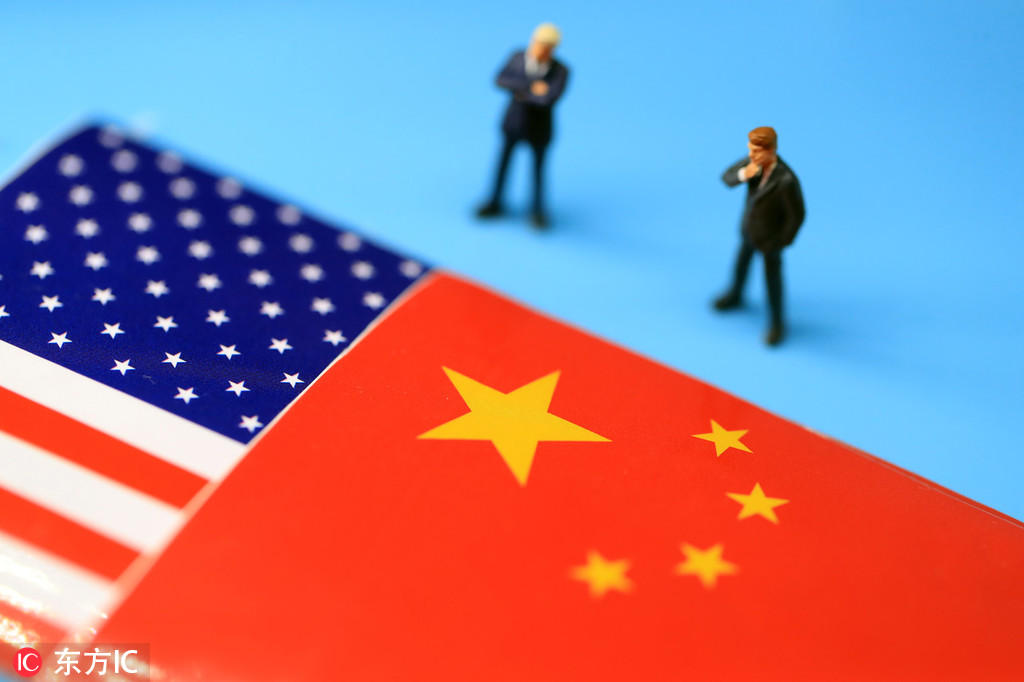
Collaboration between the US and Chinese scientists has greatly contributed to the fight against COVID-19, but a US educator says that hostility from the United States toward China will hurt such collaboration and therefore scientific achievement.
"We've seen over the last five years or so the growing hostility from the United States toward China, and it's contributing to, for instance, the closing down of scientific and academic collaborative institutions, where medicines and very important technological developments that could improve the condition of humanity have taken place," Immanuel Ness, professor and chair of political science at Brooklyn College, told China Daily.
He said that as an educator he felt "particularly concerned" that because of the growing hostilities many younger and seasoned Chinese academics are prevented from coming to the United States, which is "a very bad thing". "It doesn't contribute to greater levels of scientific achievement," he said.
"We need to engage in intellectual, cultural, scientific exchanges, and I've seen decline in these kinds of exchanges" said Ness, "that appears to be rooted in some kind of competition that is not necessary when it's possible to work collaboratively."
"If we were able to work in a collaborative fashion, it would be much greater for intellectual, academic, scientific, medical and other kinds of developments and improving the life of human beings on this planet," he said.
Keith Yamamoto, a molecular biologist at University of California, San Francisco (UCSF), said China and the US have already collaborated more on health and technology than with any other countries and in ways that appear to be mutually beneficial.
"The US and China are leading in scientific publications related to COVID-19. And despite tensions between the two governments, China and the US have been publishing proportionally even more collaborative studies after the emergency of the pandemic," said Yamamoto, also vice-chancellor for science policy and strategy at UCSF.
Around 75,000 scientific papers on COVID-19 were published in the 11 months to the end of November 2020, according to the Organization for Economic Cooperation and Development's 2021 report on science, technology and innovation. The US and China were major contributors, and the highest level of collaboration was between scientists in the US and in China, said the report.
A "lesson" from the "grassroots effort of scientists" is "if we're going to make progress on this pandemic, we're going to have to work together, and we saw this emerging in an incredible way that I think is going to be sustained," said Yamamoto.
To the maintain and expand this engagement, he called on encouraging scientific collaboration in all urgent and shared health challenges and strengthening the US participation in health biotech-related multilateral organizations and agreements such as the World Health Organization.
"Clearly, there'll be huge benefits from US-China collaboration not only in climate but also in health, energy, food and water. So the moral and ethical imperatives for making progress are urgent, and the science and technology opportunities are huge," said Yamamoto.
He also stressed the "value of openness" in scientific and academic research and said in the health and biotech area, the interactions with China should be balanced by "the realization of potential benefits, cooperation and interdependence".
"The way to face up to the competition from China is not to look for ways to hold China down or to isolate them or put a fence around their efforts," said Yamamoto.
"The US dominant position is threatened by decades of declining investment in science and technology research, development and education," he said.
The US has been "under-investing" in science, technology and STEM (science, technology, engineering, and mathematics) education, since the peak investment in science in 1964 as a response to the Soviet Union's 1957 launch of Sputnik, the world's first artificial satellite, according to Yamamoto.
"So the way to compete is not to block the activities of China or any other country, but to realize that we need to boost up our effort," he said.