Biden's 'grand' vision seems crooked










US President Joe Biden took office with a sweeping vision of building a "grand" alliance and partnership system with the aim of out-competing China, which he believes poses the gravest challenge to the United States.
For the Biden administration, US allies and partners are influence multipliers and unique assets for meeting present and future challenges, especially when it comes to dealing with China. No wonder Secretary of State Antony Blinken said, "Our combined weight is much harder for China to ignore", indicating the administration's intention to use collective strength to counterbalance China at a time when the US is facing internal weakness, due to the COVID-19 pandemic and the thorny long-term structural hurdles at home.
Since taking office, Biden has avoided dealing with China directly, on the excuse of the China policy being under review, but intensified interactions with US allies and partners on the issue. According to the Interim National Security Strategic Guidance, Washington's "democratic" alliances present a common front, have a unified vision, and hold countries such as China to account.
These alliances include NATO and partnerships with countries such as Australia, Japan and the Republic of Korea. Also, the US has vowed to double down on building partnerships across the world, especially in the Indo-Pacific region, Europe and the Western hemisphere, because "our strength is multiplied" when addressing common challenges, sharing costs and widening the circle of cooperation.
The Strategic Competition Act of 2021, introduced in the Congress, lists specific parameters for US allies and partners for jointly "handling" China, particularly in the Indo-Pacific but also in other regions. According to the bill, which enjoys rare bipartisan support, three layers of allies and partners need to be strengthened and further explored in the Indio-Pacific to check China's rise.
The first layer comprises the treaty alliances with Japan, the ROK, the Philippines, Thailand and Australia. The second is the "Quad", through which the US intends to promote "a free, open, inclusive, resilient Indo-Pacific that is characterized by democracy, rule of law and market-driven economic growth," and is "free from undue influence and coercion". And the third is the Association of Southeast Asian Nations, which is now at the crux of US competition with China.
ASEAN has become the largest trading partner of China. But being neighbors, some of the ASEAN member states have some territorial disputes with China, which the US can take advantage of, especially because the Strategic Competition Act focuses on the maritime disputes between China and some ASEAN members and urges "all parties" to cease activities that undermine stability in the region, and "demilitarize islands", which is a clear reference to China.
The US also wants to strengthen alliances and partnerships with European countries, and other "like-minded" countries around the world to "address significant diplomatic, economic and military challenges posed by the PRC" and leverage them to subdue China on the pretext of deterring "military aggression", promoting peaceful resolution of territorial disputes, fostering development, strengthening human rights, and countering "predatory economic practices".
Washington attaches a lot of importance to forums like the G7, and organizations such as the European Union and NATO, and will try to build a common front against China in the name of "strengthening the international rules-based order". The US-EU dialogue on China was relaunched in March for this purpose, and consequently China became the main topic of discussion at the G7 and NATO talks.
Communiques issued by the G7 foreign ministers have not only criticized Beijing's policy on the Hong Kong Special Administrative Region but also backed Taiwan's plea to participate in international organizations such as the World Health Organization and its highest policymaking body, the World Health Assembly.
The US is also looking for specific cooperation commitments from the G7 to combat "economic coercion" through investment based on the Western model of development that targets China's Belt and Road Initiative, secures global supply chains and blocks Chinese 5G equipment makers and service providers from entering markets. That European states such as Britain and France have increased maritime activities suggests the US' ploy might be working.
The harmful effects of the Biden administration's attempt to build a "grand" alliance can already be seen in some areas. The EU has halted the process to ratify the Comprehensive Agreement on Investment with China. Tokyo and Canberra, coerced by Washington, have hardened their attitude toward Beijing. The ROK, once cautious about being seen as a member of an anti-China camp, is now showing interest in joining the technological and supply chain cooperation under the Quad, a grouping of the US, Japan, Australia and India.
Yet it will not be easy to marginalize the second-largest economy in the international community. Although US officials seem confident of making common cause with European countries on issues such as Hong Kong and Xinjiang, and accessing China's market, they will find it much harder to get the support of other countries on high-tech issues such as 5G.
For the developing world, the US-led cohort is yet to emerge as an alternative to China in high-quality infrastructure construction because of inadequate funding, too many preconditions and lack of feasibility. And though the G7 ministers have criticized China, they have not spoken of any plan to confront Beijing. In fact, countries such as Italy and Germany are particularly concerned about the potential harm they may cause themselves by "offending Beijing".
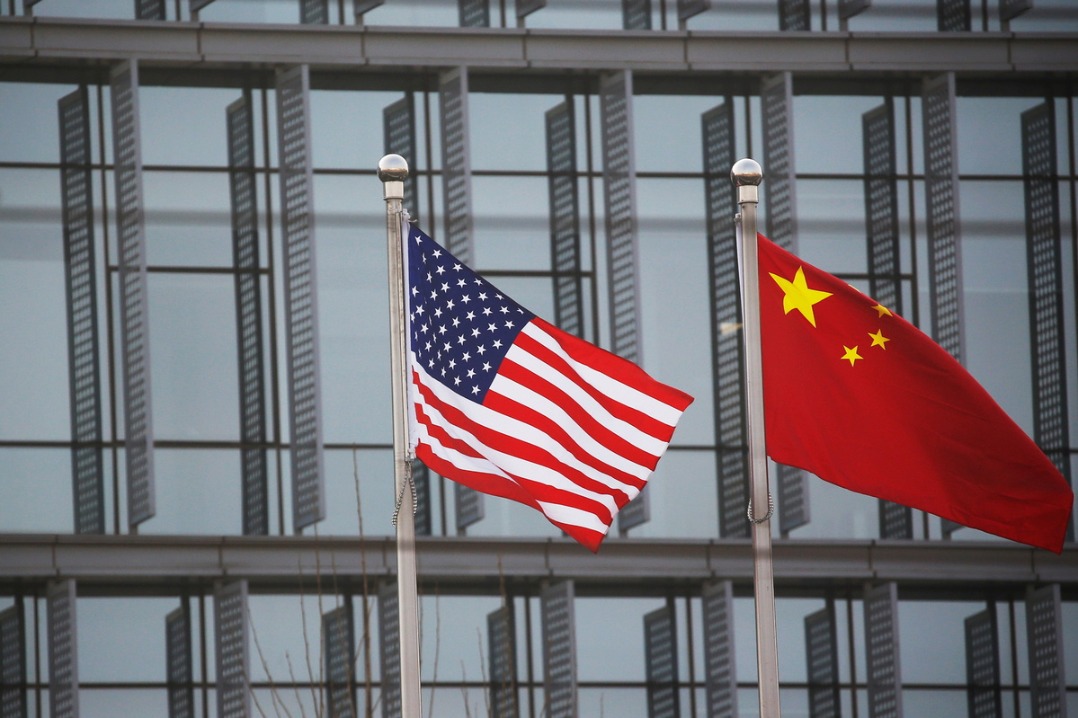
As such, no matter how intense Biden's alliance efforts may be, he has to make policies based on the common denominator, that is, China, and meaningfully engage with it and always "play by the rules". Coexistence will be the starting point of benign competition, if any, between China and the US in the future.
Source: chinausfocus.com
The views don't necessarily reflect those of China Daily.