It's crucial for Africa to manufacture more of its own vaccines









Under the theme "Expanding Africa's vaccine manufacturing for health security: Building back better, bolder and bigger," the Africa Centres for Disease Control and Prevention launched in April the Partnerships for African Vaccine Manufacturing program.
In addition, strong political commitments were made to drive the momentum of the African Union's bold vision to manufacture about 60 percent of Africa's vaccines on the continent by 2040.
Since then, several countries have made remarkable progress.
The advent of COVID-19 has put Africa's healthcare systems to the test, revealing the continent's weakest link. Africa's low capacity to engage in the task of fighting the pandemic leaves the entire African population vulnerable and at the mercy of more advanced economies.
Africa seemingly lags in efforts to participate in COVID-19 vaccine manufacturing, but the situation is clouded in uncertainty and an overregulated policy environment.
None of the continent's agencies has approved the rights to manufacture COVID-19 vaccines. Only the African Union at the moment enjoys such a privilege under short-term contracts.
So far, African countries have only partially participated in manufacturing initiatives established by other companies abroad. Pfizer and BioNTech are partnering with South Africa's Biovac Institute to engage in some final processing and packaging.
Overly restrictive policies have led to limited innovation, hampering the continent's ability to participate in such a critical affair of global interest. If the status quo remains, Africa may further weaken its potential to respond to future health challenges.
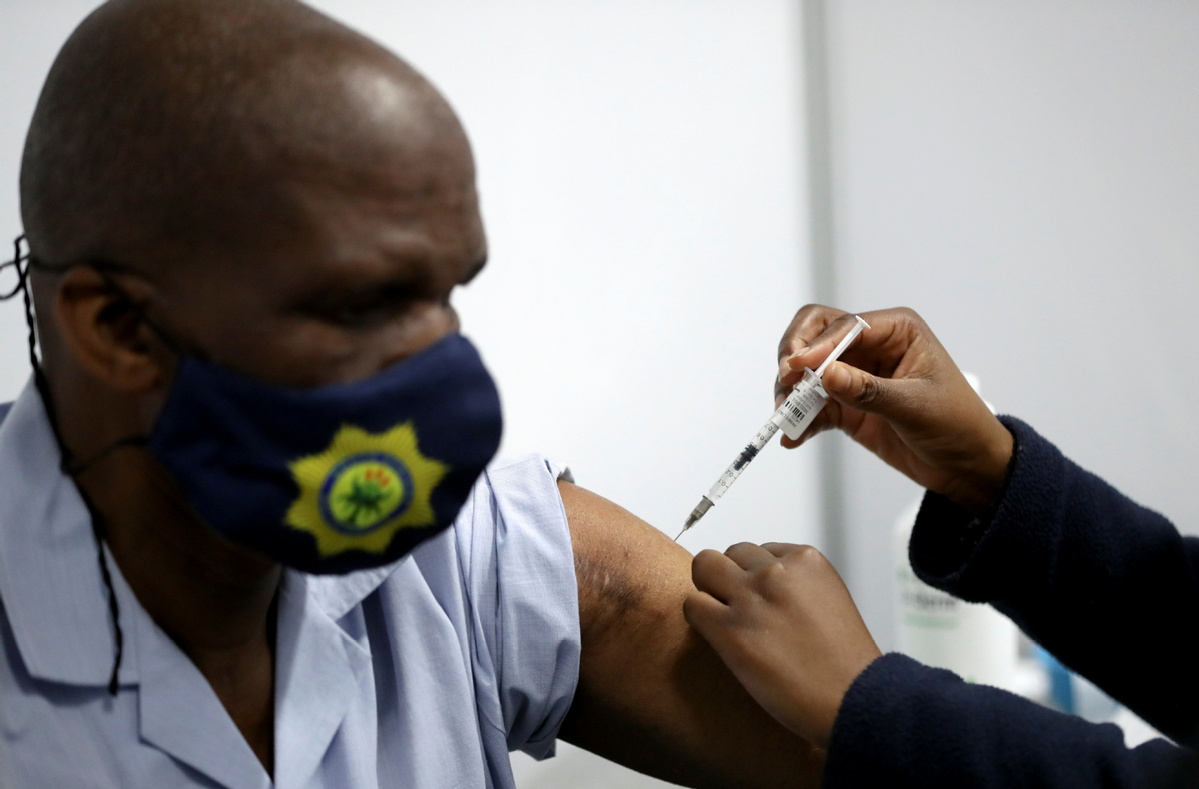
The number of people vaccinated on the continent is below average. It is reported that the world's poorest countries, mostly in Africa, had received only about 2 percent of the world's COVID-19 vaccine doses by April, with close to 90 percent of the stock secured by developed economies.
African nations therefore depend on COVAX, a global vaccine-sharing initiative that is one of the few limited avenues, with donations coming from countries such as China and India.
A commitment to enhancing local production in line with international regulations is the way to go for Africa, considering the complexities surrounding the manufacturing and distribution of vaccines.
Currently, production of vaccines to be distributed in Africa is based in just five countries: Tunisia, South Africa, Senegal, Morocco and Egypt. There are increasing calls from African leaders to bring more vaccine manufacturing closer to home.
There are evident signs of a plan to expand the vaccine manufacturing infrastructure in Africa, led by the initiatives supported by the Africa CDC. It is expected that this will raise the continent's capacity for vaccine manufacturing from the existing 1 percent to 60 percent by 2040.
The African Development Bank has pledged up to $400 million to support these initiatives, which include the establishment of five vaccine manufacturing companies and two research technology centers on the continent.
The pandemic has also intensified the push to establish the African Medicines Agency under the AU. It would provide a regulatory environment for new medicines and vaccines in an endeavor that the AU and Africa CDC estimate would cost up to $100 million.
The efforts toward attainment of the goal to establish a more competitive vaccine manufacturing sector in Africa will definitely take time, and they will require a lot of policy and technology transfer from well-established vaccine manufacturing systems.
The program will not only require long-term financing and regional cooperation, but also political goodwill from individual and regional governments.
The author is a lecturer at Kenyatta University and a senior associate at the Kenya-based Africa Policy Institute. The views do not necessarily reflect those of China Daily.