South that's clean and green










China is helping other developing nations boost their climate change actions with material and financial assistance
The accelerating pace of global climate change is posing a severe threat to the survival and development of humanity as a whole. It is in this context that the principle of "common but differentiated responsibilities", enshrined in the 1992 United Nations Framework Convention on Climate Change, is an effective means of ensuring and enabling joint action against climate change.
Addressing climate change is one of the most important agendas in global politics, given the pace at which its impact is now visible.
However, developing nations, small island developing states and the least developed countries face an increasingly difficult situation. Their fight against climate change is severely hampered by the shortage of funds, technologies, personnel and experience.
While continuing a domestic campaign to strive for cleaner air, water and soil, China is also actively participating in global climate governance by increasing foreign aid, extending the scope of foreign aid, exploring new means of providing foreign aid, and promoting South-South cooperation by joining hands with other developing countries.
For a long time now, China has been assisting other developing nations undertake climate change actions. As China's economic strength increases, it has been scaling up its contribution to global climate finance and further upgrading the intensity and scale of its climate aid.
From 2011 to 2014, China contributed 270 million yuan (around $41.79 million) to promote South-South cooperation on climate action. It has signed memorandums of understanding with 12 countries including Uganda and Burundi on the donation of materials needed to combat climate change. In September 2015, China stepped up its commitment to tackle climate change by setting up a 20 billion yuan China South-South Climate Cooperation Fund, which aims at funding low-carbon demonstration projects, climate change adaptation and mitigation projects and training in developing nations. Till the beginning of 2021, China had carried out such cooperation projects with 34 developing countries.
In 2017, while delivering a keynote speech at the opening ceremony of the first Belt and Road Forum for International Cooperation in Beijing, President Xi Jinping announced the decision to set up a big-data service platform on ecological and environmental protection. Joint construction of the platform started in 2019 with the aim of sharing ecological and environmental information. As of 2021, the platform has gathered basic information from 83 countries.
China has been actively exploring more diverse forms of climate aid, such as project cooperation, material donations, technological cooperation and personnel training. Instead of merely solving the urgent needs of recipient countries, it wants to help boost their capacity to combat climate change.
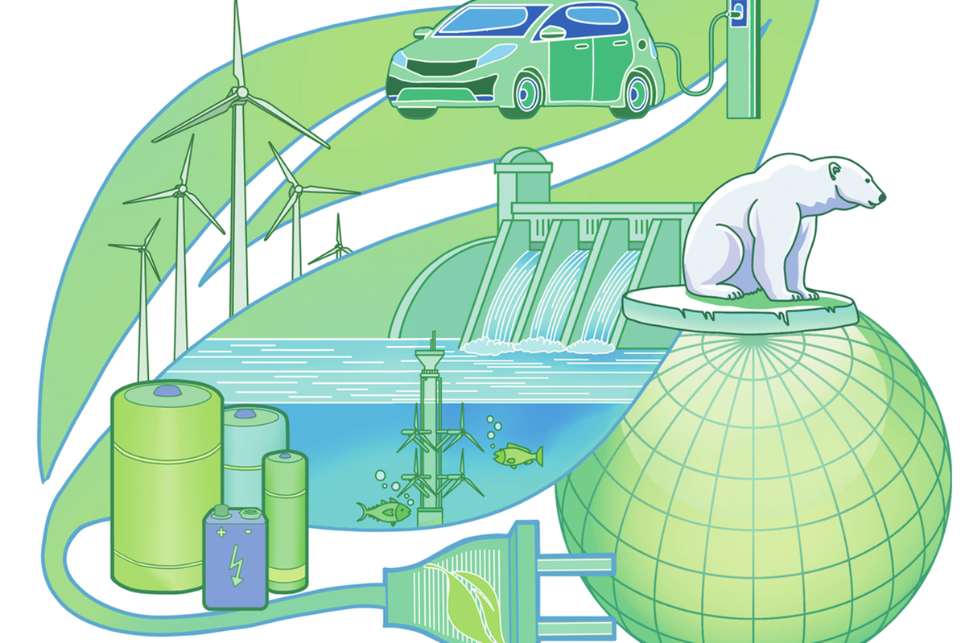
To start with, China is actively cooperating with other developing nations by providing project assistance in such areas as clean energy, environmental protection, flood and drought prevention, water resource utilization and forest sustainable development.
From 2010 to 2012, China provided assistance in the construction of 64 renewable energy development projects in 58 developing countries, including solar-energy lamps and solar photovoltaic power generating facilities. From 2013 to 2018, China assisted the construction of 13 whole sets of projects for battling climate change, including 10 wind and solar power projects, one biogas power generation project, and two small hydropower stations. Since 2020, China has signed memorandums of understanding with Laos, Cambodia, the Seychelles and other countries on cooperation in the construction of low-carbon demonstration zones to promote those countries' green, low-carbon and sustainable development.
Second, China has been providing much-needed material assistance to other developing countries. It has signed MOUs on providing those countries with energy-saving or solar-energy lamps, solar photovoltaic power and wind power generating facilities, clean-energy stoves, biogas facilities, garbage trucks and drainage and irrigation facilities among other things.
In 2019, China launched a microsatellite for Ethiopia, the African country's first satellite, in order to help it conduct climate change research and obtain remote-sensing data for agriculture, forestry, water conservation, as well as disaster prevention and mitigation.
In 2021, China donated solar photovoltaic power systems to 5,000 Cuban households and 25,000 LED lamps to help the country tackle power shortage in rural areas and fight climate change.
Third, China has been providing technical assistance to help developing nations address climate change. It has cooperated with Tunisia, Guinea, Vanuatu and Cuba in utilizing biogas, assisted in the building of hydropower stations in Cameroon, Burundi and Guinea, and cooperated with Mongolia, Lebanon, Morocco and Papua New Guinea in exploring solar energy and building wind-power stations.
Furthermore, China has provided other developing nations with technical assistance through multilateral platforms. For instance, in 2018, the China Foundation for Poverty Alleviation provided the Asian Development Bank with $1 million in technical assistance to carry out pilot schemes and promote advanced clean energy technologies in its developing member countries.
Last but not least, China has been carrying out human resource development cooperation with other developing nations to help them cultivate local professionals to address climate change and environmental protection technicians. China unreservedly shares its experience and technologies with them. From 2010 to 2012, China held 150 training workshops attended by more than 4,000 people from other developing countries on low-carbon industry development and energy policy, ecological protection, water resource management and water and land conservation, among other things. From 2013 to 2018, China held over 200 climate change and ecological protection research projects, training over 5,000 people from other developing countries.
Tackling global climate change is a common cause for the international community, which is both a long-term and arduous task. Enhancing the capacity in tackling climate change, especially that of developing countries, has become an extremely pressing task. Facing the challenges of climate change, the world today is more in need of international solidarity and cooperation than ever before.
In particular, developed countries should deliver on their climate assistance pledge made at the Copenhagen Climate Change Conference in 2009 by providing capital, technology and capacity-building support to developing countries. As an active advocate and participant of South-South cooperation and a participant and contributor in advancing global climate governance, China has been making unremitting efforts to join hands with other countries to advance global climate governance and build a community of shared future for mankind with practical actions.
The author is an assistant professor of the National Institute of International Strategy at the Chinese Academy of Social Sciences.
The author contributed this article to China Watch, a think tank powered by China Daily.
The views do not necessarily reflect those of China Daily.
Contact the editor at editor@chinawatch.cn