Banking on accelerated actions
Pandemic has provided the opportunity to transition more quickly to a sustainable development path










The international community is facing unprecedented challenges in the second half of 2021, as the COVID-19 pandemic has devastated economies and human lives around the world, hitting the poor particularly hard.
While China, Europe and the United States have seen a rapid economic recovery this year, boosted by the rollout of vaccines and large domestic stimulus packages, economic prospects seem less positive for low-income countries. Many may take years just to return to the level of income they had prior to the pandemic. Inequality, which was already high before the pandemic, could get worse.
Grappling with COVID-19 apart, this year has also reminded us-if we needed any reminder-of the growing risks of climate change. Floods in Europe and in China, forest fires and heat waves on the West Coast of America and in the Eastern Mediterranean are just some of its manifestations.
There is yet another lesson that has to be learned from the past two years-no country can confront the global challenges of today on its own. As David Malpass, president of the World Bank, said at the Venice Climate Conference in July: "Our collective responses to poverty, inequality and climate change are the defining choices of our age. We must tackle them together to make progress in reducing poverty and boosting shared prosperity." The upcoming United Nations Conferences of the Parties on Biodiversity in Kunming, southwestern China, and the climate change conference in Glasgow, Scotland, provide important opportunities to reaffirm this collective responsibility.
The World Bank is providing the maximum support possible to its clients in developing countries. From April 2020 to July 2021, it has lent close to $160 billion to support the emergency health response and the rollout of vaccines and to promote the realization of a green, resilient and inclusive recovery.
Every crisis is also an opportunity. The pandemic is a chance to accelerate actions toward a better development path, which does not trade off economic progress and environmental sustainability and which offers opportunities to all. Such a path is possible and the World Bank wants to support country-led actions in this regard.
This approach also characterizes the bank's partnership with China, which has continuously been evolving over the past 40 years. Today, nothing is more central to this partnership than supporting China as it transforms its economy toward a zero-carbon future.
President Xi Jinping's announcement about China's aim to reach carbon neutrality before 2060 has triggered the process of adjusting policies and plans to make them consistent with this goal.
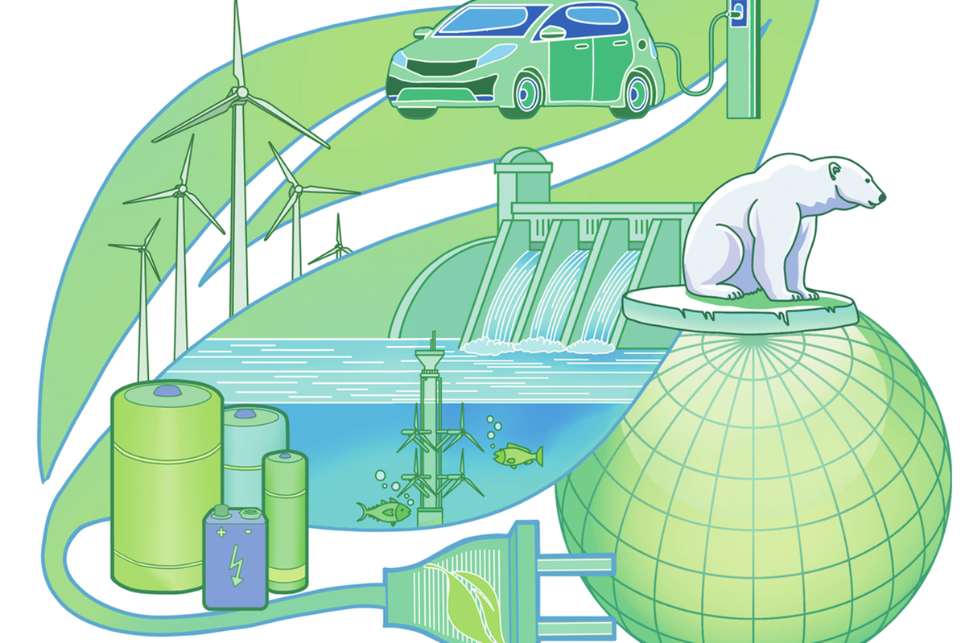
At the heart of the zero-carbon transition lies a fundamental transformation of the Chinese economy, away from heavy industry, construction and infrastructure toward greater reliance on services. This is a new challenge.
China's remarkable progress in reducing the emissions intensity of its economy over the past decade was almost entirely driven by the expansion of renewable capacity and improvements in energy efficiency in the industrial sector. Both will continue to play a role but they will not suffice to bring absolute emissions down. Instead, what will drive China's decarbonization is a greater reliance on innovation in services, in the use of data and harnessing nature-based solutions.
The required structural transformation comes at a cost. Regions will be affected very differently-the richer coastal cities may benefit, less developed interior regions will need to restructure their economies. The resulting reallocation of jobs will require governments at the national and local levels to provide support through retraining, investments in social housing and in greener and more livable cities, through improvements in the business environment to encourage the entry of new industries, and through reforms to the labor and capital markets to make it easier for resources to flow from shrinking to growing sectors.
In the face of these challenges, some may argue for going slow and taking time to adjust. But this ignores the huge opportunities the transition toward greener, resilient and inclusive growth entails. China today is a technological leader in many of the industries of the future. It has the capabilities to innovate and generate new drivers of economic growth and job creation.
China is making changes to its innovation system, so as to make it more results oriented, and is providing greater support for basic research. It should continue these efforts and keep its innovation system open to the rest of the world. Also, China has deep financial markets and high domestic savings, which can help finance the transition as climate risks and impacts are increasingly incorporated into decisions on where to allocate capital.
Additionally, to realize the opportunities that the zero-carbon transition holds, China should consider broadening its policy mix. China's climate goals provide important long-term guidance to investors and consumers, but little short-term incentive to adjust.
For that, stronger price signals and greater reliance on market-based instruments will be needed. The IMF estimates that a carbon price of $75 per ton is required globally to reach the Paris climate goals. This compares with the current trading price of $9 per ton in China's Emissions Trading System.
As we go into the 2020s, the actions governments around the world take today will determine how we collectively confront the challenges facing our age. China's success in keeping COVID-19 under control, its administrative capacity and ample macroeconomic policy space, and its technological capabilities put it in a position to lead the world in the transition to a greener and more resilient future. The World Bank stands ready to remain partners with China on this exciting and important journey.
The author is World Bank country director for China. The author contributed this article to China Watch, a think tank powered by China Daily. The views do not necessarily reflect those of China Daily.
Contact the editor at editor@chinawatch.cn