Pressure on China seen as research threat









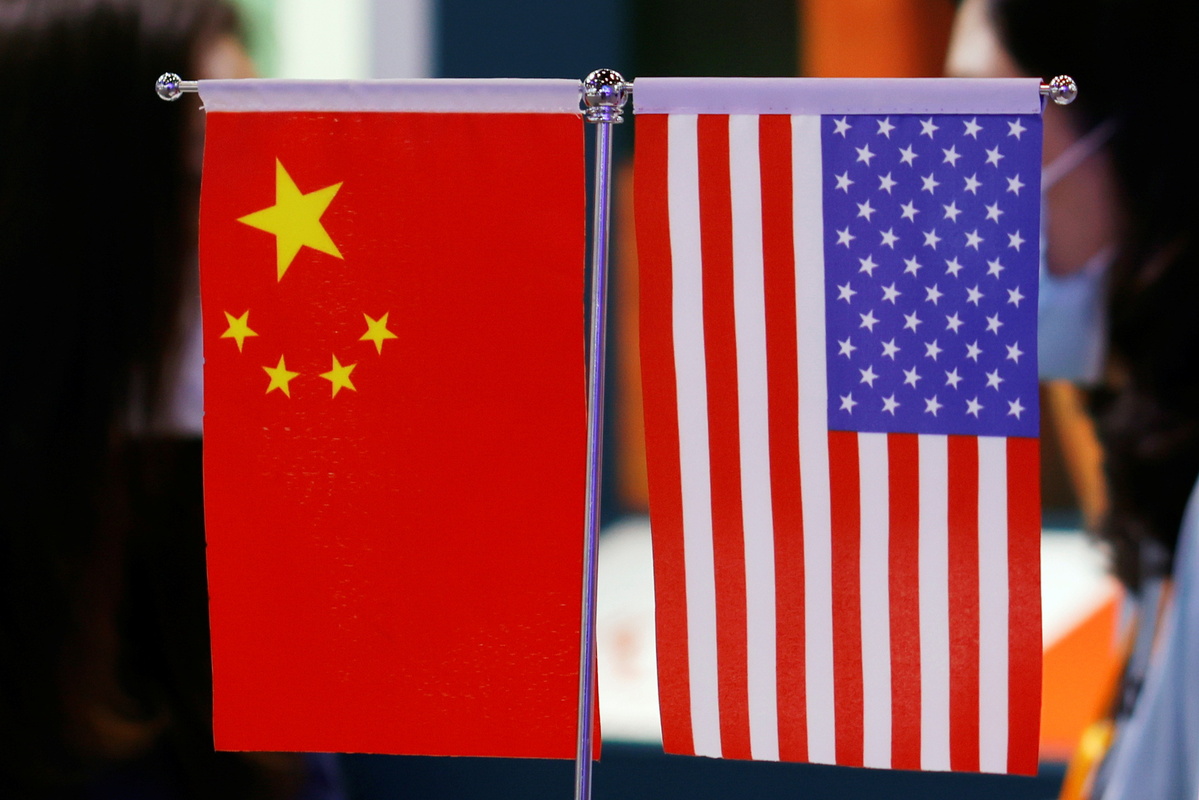
Faculty at some US research universities say openness in research has been damaged by the "China Initiative''. They are calling for an end to the program and instead are seeking greater scientific collaboration with China.
The China Initiative program was launched by the administration of former president Donald Trump in 2018 to combat alleged economic espionage. The program has resulted in dozens of prosecutions.
It has led to "the wrongful targeting and prosecution of Chinese scientists" and "has created a climate of fear and caused irreparable personal and professional harm to individuals and their families", said Stop AAPI Hate, a national coalition aimed at addressing anti-Asian discrimination, which has called on the Biden administration to end the initiative.
"I'm alarmed that Chinese and Chinese American scholars and students report feeling increased pressure and scrutiny of their academic pursuits, much of it triggered by policies in Washington," said Stanford President Marc Tessier-Lavigne, at a recent virtual conference hosted by the Committee of 100.
Stanford University has more than 1,000 students and scholars from China, and many Chinese American students and scholars, said Tessier-Lavigne.
"I'm deeply concerned about the challenges that individuals of Chinese descent face in their ability to learn, to collaborate, and to make contributions to our fundamental research enterprise. I'm also worried about the potential for a broader chilling effect on scholarship," he said.
In the last few years, scholars of Chinese descent in the US have been under scrutiny by the US government over concerns of alleged intellectual property theft, national security threats and other issues. The most widely criticized policy is the China Initiative program launched by the administration of former president Donald Trump in 2018 to combat alleged economic espionage.
Two new studies co-conducted by the Committee of 100 found racial bias toward people with Chinese names in espionage investigations, and racial profiling against scientists of Chinese descent by the US government.
The study released in September has found that people with Chinese or Asian names in the US are punished twice as severely as those with Western names for convictions involving economic espionage. It also found that a third of Asian Americans caught up in investigations may have been falsely accused.
The other study, conducted among nearly 2,000 scientists in the summer and released on Thursday, finds that scientists of Chinese descent report far greater racial profiling by the US government, increased difficulty in obtaining research funds, and more fear and anxiety than those of non-Chinese descent.
The chilling effect of the China Initiative has major consequences for US innovation, said Jenny Lee, a professor at the Center for the Study of Higher Education at the University of Arizona and the lead author of the study.
"While scholars may maintain their productivity and scientific-publication output, the China Initiative may be changing the innovative nature of scientific research, leading to perhaps fewer major breakthroughs," she said.
Lee said they also observe some scientists reporting less interest in applying for federal grants, such as the National Institutes of Health, which was repeatedly noted for overscrutinizing collaborations with China.
"The China Initiative is not only a detriment to these individual scientists, but may undermine the US scientific enterprise," said Lee.
Pericles Lewis, Yale University's vice-president and vice-provost for global strategy, said the US research ecosystem is strong because of its openness. "Many universities, including Yale, focus on fundamental research, not classified, not defense-related. The government should not excessively regulate exchanges about fundamental research," he said.
"We should remain open for academic exchange and collaborative research," said Lewis, suggesting that the government provide clear guidelines for grant applications. "Most importantly, less politicization of research," Lewis said.
"I think the faculty are worried. I think they have a reasonable set of concerns that collaboration that's perfectly legitimate might come under suspicion," he said, adding that it's "a big problem".
Peter Michelson, senior associate dean for the natural sciences at Stanford, echoed those comments, saying openness in research is "really paramount".
"I think the China Initiative has been damaging to the academic environment," he said. Collaboration with scientists and institutions in China should be encouraged, particularly in compelling areas that promote global health and well-being, such as infectious diseases, climate change, and water and air pollution, Michelson said.
"It's very important that leaders in the US scientific community and professional societies engage with their international colleagues, including in China, to discuss guidance for the conduct of fundamental research. We need to be engaged with China, not build a wall," he said.
Scholarship can be a "powerful way" to ease the geopolitical tensions between the US and China as it keeps the lines of communication open between the two countries, said Tessier-Lavigne.
The challenges of the 21st century are global problems, and finding solutions will require partnerships across disciplines and across borders, he said. "Our role is not to react in fear and close our doors, but to respond with an openness to understanding one another and to sharing ideas across borders," he added.
"Despite our political challenges, the relationships between scholars built on mutual respect, trust and a spirit of collaboration can provide the foundation for a productive path forward for the US and China," said Tessier-Lavigne. "The work our scholars produce will generate concrete benefits that can provide an important counterbalance to geopolitical tensions."