Taken to a higher level
Efforts should be made to build new-type sub-regional cooperation mechanisms so as to expand and deepen the Belt and Road cooperation










Since China launched the Belt and Road Initiative eight years ago, the initiative has garnered fruitful results and become a well-received global public good establishing a transcontinental framework for connectivity.
Against the background of the COVID-19 pandemic, China has been supporting the production resumption and economic recovery of countries involved in the initiative, and has helped sustain their industry chains and supply chains. The initiative has developed as a signature of China's pursuit of higher-level opening-up.
The initiative has made great contributions to aligning the development strategies of various countries on the bilateral level and is promoting institutional innovation in key areas, as well as a new-type globalization.
Infrastructure connectivity has been developed to optimize and upgrade trade and investment cooperation among countries involved in the Belt and Road Initiative, and to deepen people-to-people and cultural cooperation in public health, the digital economy, green development, science and technology, education, culture and arts, as well as diverse and interactive people-to-people and cultural exchanges between parliaments, political parties and non-governmental organizations.
Based on the principle of win-win cooperation, the initiative is helping participating countries build new mechanisms for regional economic cooperation. The launch of the Belt and Road Vaccine Partnership Initiative and the Belt and Road Green Development Partnership Initiative has fully demonstrated the recognition of the initiative by the global community.
According to China's Trade and Investment Cooperation under the Belt and Road Initiative 2021 report released by China's Ministry of Commerce on Aug 16, 2021, over the past eight years, China has signed 206 cooperation documents with 140 countries and 32 international organizations, covering interconnectivity, investment, trade, finance, science and technology, culture and other areas. China's total trade volume with the participating countries was more than $9.2 trillion and Chinese enterprises have directly invested over $130 billion in participating countries. In 2020, while global foreign direct investment contracted by 35 percent, Chinese investors realized direct investment of $18.6 billion in 58 countries involved in the Belt and Road Initiative, accounting for 14 percent of its total overseas investment, up 0.3 percentage points year-on-year. According to the World Bank estimates, the Belt and Road Initiative is expected to lift 7.6 million people out of absolute poverty and pull 32 million people out of moderate poverty by 2030.
While the Belt and Road Initiative has attained remarkable results, it has also encountered headwinds, most notably geopolitical competition from the United States and instability in some participating countries.
The US has augmented its presence in the Asia-Pacific region in recent years. In 2019, it launched the Blue Dot Network, an infrastructure project certification mechanism, and this year, it proposed the Built Back Better World initiative, which has been viewed as an alternative to the Belt and Road Initiative. Under the growing external interference, it is imperative to adjust the mechanisms of the Belt and Road Initiative to surmount the obstacles.
Meanwhile, many countries involved in the Belt and Road Initiative are undergoing transformation. These countries are facing frequent regime changes and political turbulences, posing great risks to the development of the initiative. The state of emergency in Myanmar and military coup d'état Guinea have put projects with Chinese investment in these two countries in peril and interrupted the cooperation between China and regional countries. Under the effects of the COVID-19 pandemic, some countries have suffered economic recession and growing social unrest, giving rise to massive protests, increased terrorism, and in some cases, even military conflicts, which have created further challenges on the Belt and Road cooperation.
Nevertheless, the Belt and Road Initiative also faces new opportunities. Currently, countries are attaching greater importance to global public health governance, while the digital economy and green economy are becoming new growth engines. Countries involved in the Belt and Road Initiative should innovate cooperation models and carry out more extensive and in-depth cooperation.
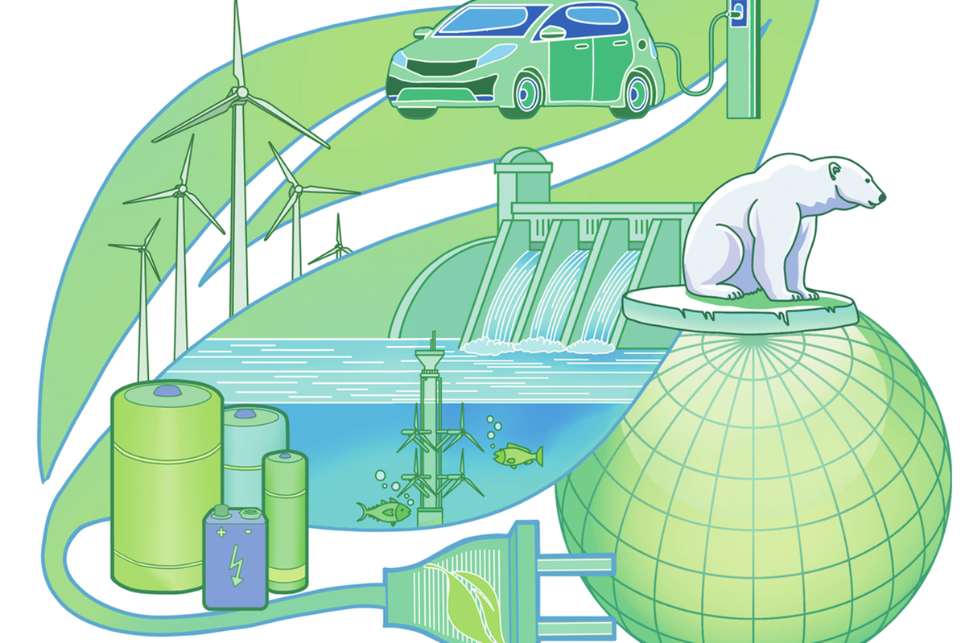
First, the fields of cooperation should be expanded. The world has entered a new era of technological innovation, and the new round of technological revolution and industrial transformation are reshaping the global economic landscape. The countries participating in the Belt and Road Initiative should push forward digital infrastructure construction and upgrade the patterns of social governance and economic development to harness the potential of information technology. As health and the green economy have become the priorities of the global agenda, they have also become the key issues concerning the economic and social stability of the Belt and Road countries. The green economy, sustainable development, healthcare, pandemic control and digital infrastructure are now the new fields of cooperation and have promising prospects.
Second, the cooperation mechanisms for the Belt and Road Initiative need to be strengthened. Based on the principle of extensive consultation, joint contribution and shared benefits, China has aligned the initiative with development plans of other countries. At present, the alignment is mainly in the form of memorandums and statements, which have no legally binding force and are prone to uncertainties. To lower the risks for Belt and Road Initiative projects, countries should improve the alignment mechanisms and turn memorandums and statements to agreements with legally binding force. At present, the Belt and Road Initiative cooperation is predominantly carried out through bilateral ties, which, although it produces quick results, has its flaws from a long-term point of view. To change this, efforts should be made to promote multilateral collaboration and build new-type sub-regional cooperation mechanisms.
Last but not least, institutional opening-up needs to be promoted. As the Belt and Road Initiative enters a new stage of higher-quality development, China should further improve its rules, management and standards, and promote the free flow of factors such as capital, technology and talent, thus facilitating the building of a dual-circulation development paradigm.
The author is an associate researcher at the China Institute of International Studies. The author contributed this article to China Watch, a think tank powered by China Daily.
The views do not necessarily reflect those of China Daily. Contact the editor at editor@chinawatch.cn