Mess made by the West
Political turmoil and humanitarian crisis in Sudan is the result of US-led interference in its internal affairs










Sudan is once again mired in political turmoil. On Oct 25, Prime Minister Abdalla Hamdok was placed under military arrest, along with his ministers. The country has declared a state of emergency, and the Sovereign Council, the country's highest authority and the transitional government, has been dissolved.
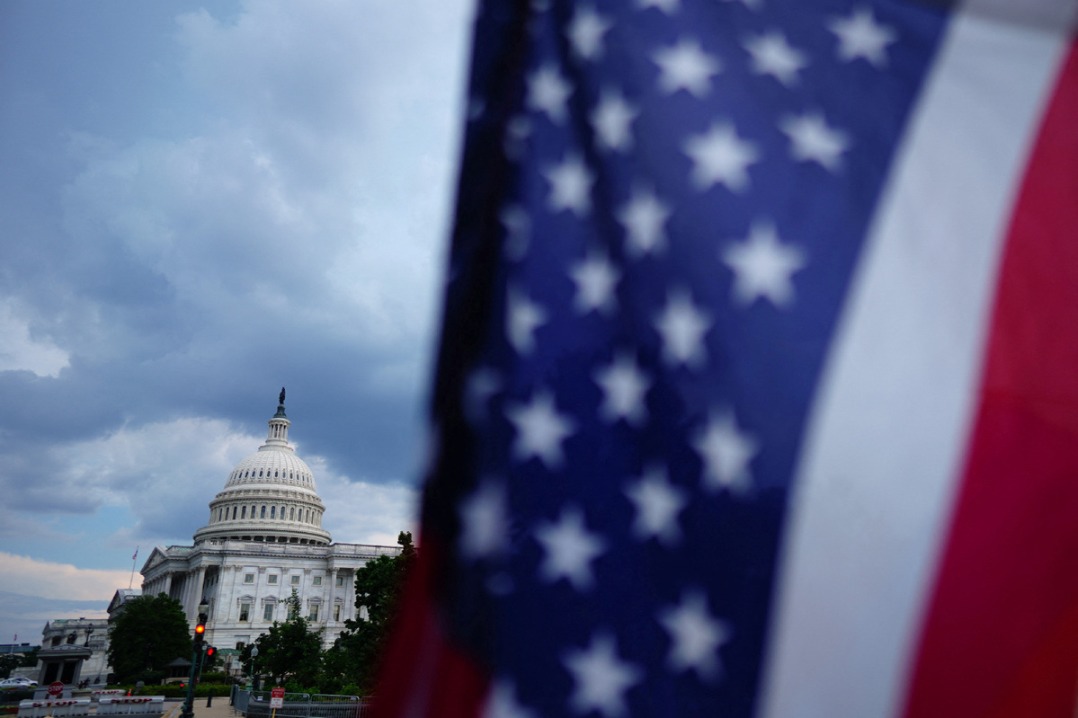
Sudan, endowed with abundant natural resources, has never got the development it deserves. Decades of colonial rule left the African country with a complicated domestic situation, of different regions, ethnic groups, tribes and religions. Taking advantage of the chaos, the United States has been heavily intervening in the country's internal affairs using all sorts of measures including foreign aid and sanctions. The US has long been supporting the opposition in Sudan, exacerbating the turmoil and unrest.
In the early 1990s, the US, in a proposal to the United Nations General Assembly, accused Sudan of violating human rights, and accordingly stopped all aid to the country other than the humanitarian aid which was transferred to be under the management of the US Agency for International Development. When the Sudanese government expressed discontent, the US even suspended the humanitarian aid to Sudan.
In 1993, led by the US, the International Monetary Fund listed Sudan as a country ineligible for IMF loans and suspended its voting rights, saying it had failed to meet its financial obligations as a member country. The US designated Sudan as "a state sponsor of terrorism" the same year. Three years later, the US started imposing comprehensive economic, trade and financial sanctions against Sudan, which lasted till October 2017. During these long-term sanctions, the US prevented Sudan from becoming Africa's representative on the UN Security Council, impeded its exporting of oil and imposed an arms embargo against Sudan.
The long-term hegemonic policies of the US and its persistent sanctions against Sudan have seriously damaged the country's economic development, resulting in the country being wracked by conflicts, civil wars and turmoil.
The problem in South Sudan and the Darfur issue are the two most frequent excuses the US cites for its arbitrary interference in Sudan's domestic affairs.
The southern part of Sudan (now South Sudan) is the main oil-producing region. It continuously challenged the central government with armed force and demanded self-governance and autonomy. The appeal was backed by the US who first imposed sanctions against Sudan under the pretext of "no progress in peace talks" and funded the anti-government residents to realize the so-called peace and democracy. In 2011, the US plotted South Sudan's independence to bring it completely under its control. Therefore, the Sudanese government lost nearly 70 percent of its oil resources, which led to its fiscal revenue nose diving and dealing a fatal blow to Sudan's economy, triggering widespread protests which eventually led to the toppling of Omar al-Bashir's three-decade rule in 2019.
Darfur in western Sudan has suffered from decades of stagnation, poverty and frequent intense conflicts between different ethnic groups. The US has been accusing the Sudanese government of violating human rights on the issue of Darfur, and on this ground, imposed prolonged sanctions against Sudan and impeded international organizations from giving assistance to it.
Right now, the major contradiction facing Sudan is a prolonged row between civilian politicians and military rulers. The two sectors, guided by the US' so-called "principle of democracy", established a transitional government after al-Bashir stepped down in 2019.
As in any other countries in a similar situation, civilian politicians and military rulers have vastly different views of governance of a country and on distribution of interests, among others. According to the original plan, the chairmanship of the transitional Sovereign Council would be handed over to the civilian politicians, but the military has been unwilling to let go of power.
In September, pro-military protesters called for dissolution of the civilian-led government, arguing that it's the civilian-led government's incompetence in governance that has led to the economic crisis. The US Special Envoy for the Horn of Africa Jeffrey Feltman visited Sudan for mediation in late October. Two days after his departure, however, the military coup took place.
Prolonged political turmoil in Sudan is a result of long-term intervention of Sudan's internal affairs by US-led Western countries under the pretext of "freedom and democracy", using such measures as "lifting sanctions "and "giving economic assistance".Against such a backdrop, Sudan can hardly get out of the predicament, and escape its severe and prolonged humanitarian disaster. The US' role therefore has been widely criticized by the international community.
According to IMF figures, 47 percent of the Sudanese population lived below the poverty line in 2019. The inflation rate of the country has been over 300 percent this year.
The international community should inject more positive energy into Sudan's political transition process, by making the political transition owned and controlled by the Sudanese people, supporting all parties to solve the issues and strengthen solidarity through dialogue and consultation, helping Sudan overcome economic and social difficulties, and beefing up humanitarian assistance to the country. Only by doing so can Sudan realize long-lasting peace and stability.
The author is an associate researcher of the Institute of West Asian and African Studies at the Chinese Academy of Social Sciences. The author contributed this article to China Watch, a think tank powered by China Daily.
The views do not necessarily reflect those of China Daily.
Contact the editor at editor@chinawatch.cn