Bold ventures
China has the wealth to make investments to strengthen the social contract, address climate change and stimulate greater economic vitality










The world's wealth has increased vastly over the past two decades-and nowhere as much as in China. Its share of global net worth was the highest among 10 countries included in "The Rise and Rise of the Global Balance Sheet" research report that explores the vitality of the global economy via its balance sheet.
The results were arrived at after borrowing a page from corporate finance and compiling a global balance sheet, to provide a fresh perspective after two decades marked by major regional financial crises and years of unusually low interest rates, ending in the COVID-19 pandemic. This balance sheet perspective complements more traditional flow-based metrics used to assess the health and resilience of the world's economy, such as GDP, and offers different insights.
It can be seen that real assets and net worth, the financial assets of households, companies and governments, and the financial assets and liabilities of financial institutions have each tripled since 2000 to about $500 trillion each, or approximately six times global GDP.
The world's net worth has risen some $350 trillion over that period. China accounts for one-third of that growth, as its economy has boomed and more and more of its citizens have moved into the middle-income group. In 2020, China's net worth stood at 8.2 times its GDP, higher in comparison to GDP and in absolute terms than that of Australia, Canada, France, Germany, Japan, Mexico, Sweden, the United Kingdom and the United States, which were the other countries studied. On a per capita basis, Chinese net worth stood at $86,000, up from $5,500 in 2000.
This is good news. However, the historic link between wealth and GDP has weakened. Net worth typically grows in sync with GDP, but since the turn of this century, the world's wealth has ballooned while GDP growth has meandered. At a global level, wealth has increased nearly 50 percent from its pre-2000 average relative to GDP, propelled by asset prices that rose faster than general inflation.
In China, GDP growth was strong, yet wealth growth was stronger still. By 2020, China's net worth had grown by a stunning 92 percent relative to GDP compared to the pre-2000 average, a reflection of asset price increases as in the rest of the world. Net capital formation made up only 28 percent of the growth in wealth in China and globally.
Real estate plays an outsized role in global wealth. It now accounts for more than two-thirds of the world's net worth, while also driving wealth growth. Across the 10 countries that were studied, real estate valuations have more than tripled on average. While real estate appears to contribute less to China's wealth-60 percent in 2020, down from 73 percent in 2000-there are significant work-in-progress buildings held as inventory among Chinese construction and real estate firms that bring the composition of the country's real assets more in line with the rest of the world. Corporate inventories grew by 0.8 times GDP over the past two decades to 1.3 times GDP in 2020.
Yet China also invested much more in other assets such as public and corporate infrastructure. Corporate infrastructure and machinery are relatively large contributors to the country's wealth, at 0.7 times and 0.4 times GDP, respectively, compared with 0.4 times and 0.3 times GDP globally, a reflection of the country's strong manufacturing sector. Intangibles are becoming a bigger share of China's net worth, too, accounting for 3 percent compared with 4 percent globally.
While there has been much discussion about the rapid expansion of debt and finance in China relative to its GDP, the balance sheet approach sheds a somewhat different light on the situation. Compared to China's vast stock of assets, debt appears more moderate. In fact, its country-wide "loan-to-value ratio", which compares debt to produced assets, is only 60 percent, in line with Germany's and well below the global average of 80 percent. Assuming inventory retains its value, loan-to-value ratios at 50 percent in the Chinese corporate sector are much lower than 130 percent among corporations in France or 60 percent among corporations in Japan. While across the 10 countries studied, every $1 of net investment was accompanied by $2 of new debt, debt accumulated in China at a more moderate pace, just $1.20 for every $1 of net investment.
The divergence of net worth and GDP in most countries may well mark a new paradigm of sustainably higher wealth relative to GDP, as some have contended. Aging demographics and a higher propensity to save may keep interest rates low for a very long time, while land in urban areas may continue to command steep premiums.
Yet the best way to preserve the levels of wealth achieved and deliver common prosperity is to direct more of the net worth into investments in the types of assets that drive productivity and economic growth, such as machinery and equipment, corporate infrastructure, and intangibles. China is already doing more of that than other countries but still has room to rebalance its economy.
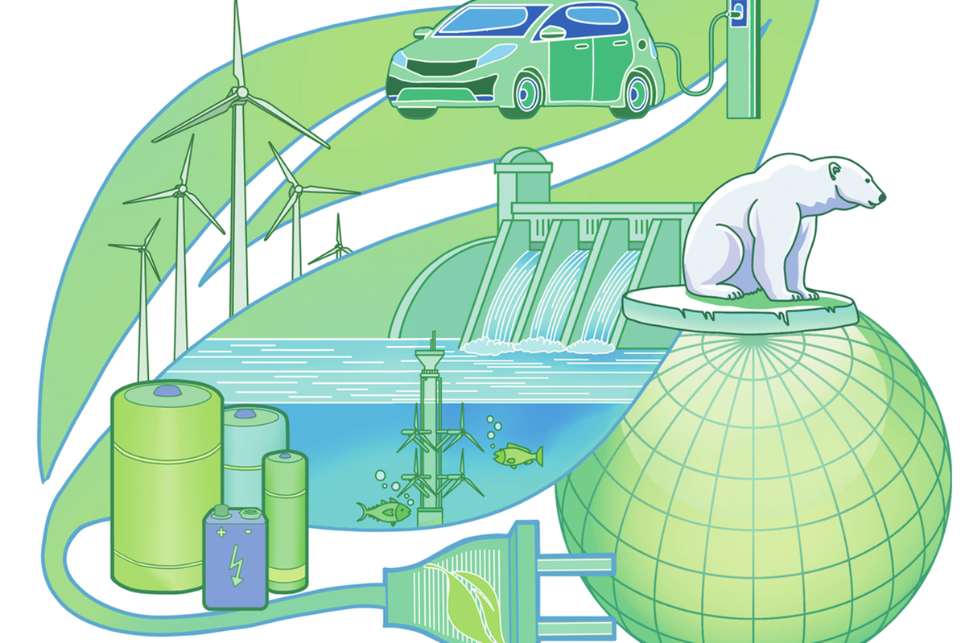
Doing so will require China to maintain high levels of growth to support its rapidly expanding net worth and prosperity. The biggest opportunity may well be investments in sustainability, and China has already begun increasing its commitments to mitigating its impact on the environment. The country has rapidly become a leader in renewable energy production, and China's 2020 Government Work Report earmarked money for investment in new electric vehicle recharging stations to complement its ambitions of becoming the world's leading producer of battery-powered cars and trucks.
In short, China and the world have the wealth-and finance-to make bold, new investments that will enhance the social contract, address climate change and stimulate greater economic vitality. China is already taking important steps in that direction.
Jonathan Woetzel is a senior partner in McKinsey's Shanghai office and director of McKinsey Global Institute. Jan Mischke is a partner of McKinsey Global Institute. The authors contributed this article to China Watch, a think tank powered by China Daily. The views do not necessarily reflect those of China Daily.
Contact the editor at editor@chinawatch.cn