COVID-19 cases spike as South Korea bids for normalcy to address pandemic









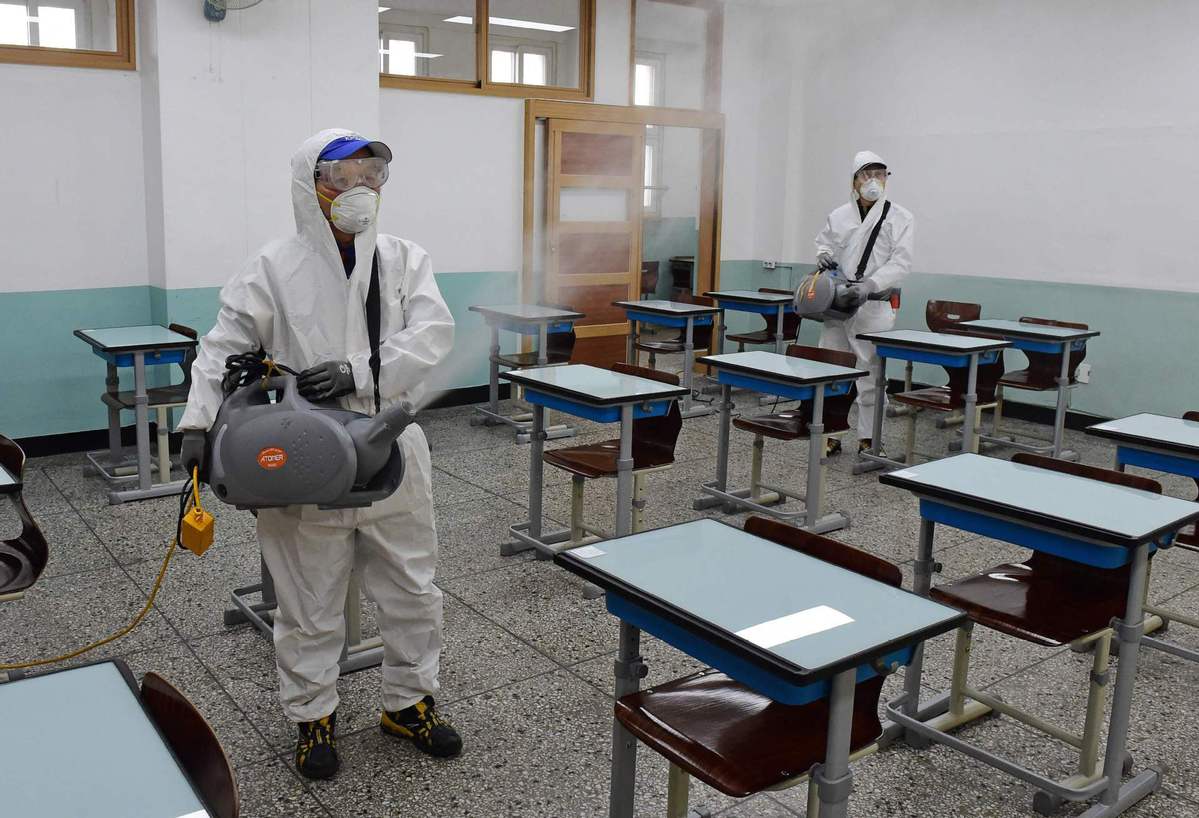
The Republic of Korea faces challenges wrought by rising COVID-19 infections, but experts say the country can still proceed with its return to normalcy with close monitoring and countermeasures.
David Kwak, clinical assistant professor at Soon Chun Hyang University Hospital in Seoul, said he does not think the government should immediately put a stop to its "living with COVID-19" programs in light of the country's currently high rates of infection.
The rise in new confirmed cases came amid South Korea's efforts to gradually return to normalcy. The country began implementing its three-stage "living with COVID-19" plan on Nov 1. Under the first phase, which was planned to last four weeks, restrictions were eased on multi-use facilities such as restaurants and cafes. Gatherings of up to 10 people were allowed, regardless of vaccinations.
The country's total COVID-19 caseload reached 425,065 on Nov 24, after 4,115 new cases were reported, according to the Korea Disease Control and Prevention Agency, or KDCA. This marked the highest daily increase since South Korea first detected novel coronavirus infections in January last year. The number of critical cases also hit an all-time high to 586.
South Korean Prime Minister Kim Boo-kyum said on Nov 24 that the country's virus situation is worse than expected, Yonhap News Agency reported. He said the Seoul metropolitan area is an urgent situation and needs to consider imposing an emergency COVID-19 response plan based on health authorities' virus risk assessment.
"Our gradual return to normal life has faced its first hurdle," Kim was quoted as saying, noting the country is at a point to review whether it should proceed to the next phase.
As of 5pm local time Nov 23, the occupancy rate of ICU beds in Seoul and its neighboring area was 83.3 percent.
"This was to be expected," Kwak said, noting the rise in daily confirmed cases and the occupancy rate of intensive care units were already considered in the government's plan. He cautioned, however, that a solution to overcome the current situation is needed as soon as possible.
On Nov 22, health authorities said that the national COVID-19 risk was "high" over the past week, with the greater capital area's risk level being "very high" while other regions' were marked "medium". This came a week after the announcement of a new five-tier rating system to assess COVID-19 risks on a weekly basis.
The KDCA previously said it will consider issuing a circuit breaker on the relaxed distancing curbs if more than 75 percent of ICU beds are used nationwide and other factors pose high risks, Reuters reported on Nov 18.
The government is working to secure sufficient hospital beds and medical staff, in addition to speeding up vaccination of vulnerable people.
With the shortage in ICU beds, Kwak said one of the key issues the government needs to address is the safety of people monitoring their conditions in home isolation, including those only experiencing mild symptoms.
Kwak warned that the "natural progress of the disease" includes patients' situations that "suddenly turn severe in a very short time", noting even people showing mild symptoms may abruptly need intensive care or even die. The government and the medical sector therefore need to have better plans to take care of this group, he said.
"As stated by the South Korean government, controlling the number of severe COVID-19 patients is the No 1 priority in 'living with COVID-19', not the number of total COVID-19 cases," said Kim Seung-taek, a virologist at the Institut Pasteur Korea, a research center in Seongnam city.
Around 40.63 million people, or 79.1 percent of the entire population, have been fully vaccinated as of Nov 24, while 2.1 million people have received booster shots, according to the KDCA.
Starting the country's "living with COVID-19" was a timely action as the vaccination rate in South Korea had exceeded 70 percent, Kim said, adding that the transition to the second phase is not an automatic process as the government will need to constantly monitor, evaluate and respond to the evolving situation.
Kim said it is not surprising to see a rise in breakthrough cases – which refer to infections among fully vaccinated people – since most of the vaccines in use were developed to prevent "disease" not "infection".
"When the vaccination rate increases, we would see more cases of breakthrough infections … booster shots would help ease the current situation because they would increase neutralizing antibodies in the vaccines," said Kim.
As part of the efforts to reduce breakthrough cases, the KDCA has decided to shorten the dosing interval of booster shots for senior citizens to four months from six.
Kim said oral drugs will play a major role in changing current COVID-19 pandemic treatments while personal hygiene will remain important, adding that "masks are very cost-effective measures and wearing masks should continue for a while".
Noting South Korea is probably going through the hardest time ever since the beginning of the pandemic, Kwak from Soon Chun Hyang University Hospital said the efforts by the government, including social isolation, to strike a balance between managing COVID-19 and keeping the economy growing can provide lessons to other countries.
As the "living with COVID-19" plan continues, Kwak said he hopes people will still have the mindset that certain anti-pandemic measures should remain in place. "Once that is settled … I think we are going to back to, hopefully, a much lower number of mortality or ICU bed occupancy," he said.