From silos to systems
Embracing interdependence is not just an existential imperative, but a precious opportunity for holistic societal progress









Since its emergence in the late 1960s, the idea of a "sustainable development paradigm" has essentially consisted of a call to fundamentally redefine the way we conceive and pursue "progress".
As our understanding of resource consumption, economic growth and demographic patterns vis-a-vis planetary boundaries has deepened over the years, the dominant view of development as a quantitative and market-output-driven exercise has become increasingly problematic.
Prominent economists have consistently drawn attention to GDP being a partial and misleading prism for the monitoring of societal progress.
A series of milestones-from the Club of Rome's seminal 1972 report "The Limits to Growth" to the Earth Summits in 1992 and 2002-prompted a shift toward a holistic and intergenerational interpretation of progress, or rather "well-being", that would recognize its various mutually reinforcing and equally vital components-such as economic prosperity, social inclusion and environmental protection, to name just a few-and address the needs of present generations without hindering the ability of future ones to address theirs.
In the last two decades the reasons for a fundamental change of mindset have only grown in number and urgency.
The COVID-19 pandemic has further highlighted the complex, multidimensional nature of modern challenges: in particular, this latest public health crisis, just like many similar ones before it, has significant environmental underpinnings, arising from the constant redrawing of wild-human, as well as urban-rural boundaries, in the unfettered pursuit of economic expansion.
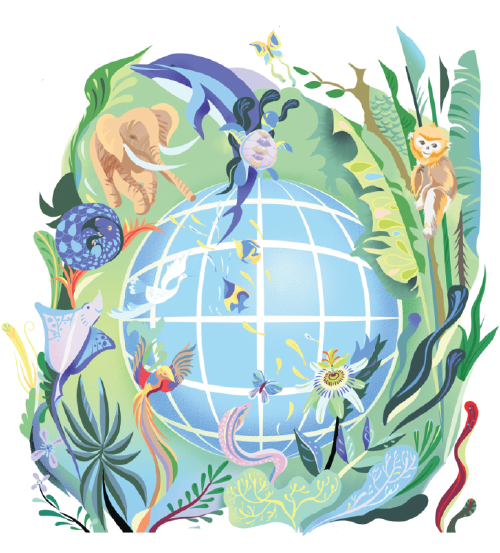
Multiple international panels of experts have raised the alarm about the planet's seemingly inexorable anthropogenic climate change trajectory, casting serious doubts over our ability to limit the temperature increase to only 2 C above preindustrial levels. Biodiversity is being lost at an unprecedented pace: in fact, the overall population of mammals, birds, fish, reptiles and amphibians has declined by almost 70 percent over the last 50 years.
It is therefore legitimate-if not imperative-to ask ourselves: have we truly heeded these cries of alarm? What needs to be done for a mindset (r) evolution to trickle down from the scientific circles through governance systems and ultimately permeate societies worldwide?
What we currently have is a "half full, half empty" cup: there are encouraging signs of change, but more needs to be done as a matter of urgency.
The 17 Sustainable Development Goals adopted by the United Nations as part of the UN 2030 Agenda for Sustainable Development heralded the active promotion of a more holistic view of development. The 169 targets and over 230 indicators of the SDGs show how one single measure, such as GDP, can't possibly capture all that development encompasses. And even when the temptation of using one single measure can't be resisted, more complex single measures-such as the Human Development Index, or its "reverse", the Multidimensional Poverty Index, which feature regularly in UN reports-are available today to gauge, at once, different aspects like living standards, life expectancy and educational attainment. There are even sound, nationwide attempts at measuring both quantitative and qualitative aspects of well-being: a model that comes to mind is the Kingdom of Bhutan, where Gross National Happiness-measured by an ad-hoc "GNH Index"-is the country's overarching development paradigm.
Global governance mechanisms are critical, because modern challenges are not only thematically but also geographically multidimensional-in other words, inevitably global. In this sense, the COVID-19 pandemic response did not set any particularly encouraging example: in 2020, it was troubling to see Western leaders waste precious time trying to point fingers and label a common health threat as someone else's exclusive responsibility, instead of learning from others' experiences and striving to organize an effective, concerted response-which climate change also demands. In order to be effective, global governance platforms would have to become genuinely inclusive and reflective of the rise of the Global South and its legitimate expectations, therefore transcending the all-too-common, North-dominated exploitative approaches that often produce double standards and fail to recognize historical legacies and differentiated responsibilities. At the recent COP 26 meeting in Glasgow, Scotland, for instance, the proposal by China and the G77 (a coalition of developing countries that has grown from 77 initial members to 134, representing roughly 85 percent of the world population) for a Loss and Damage Facility to financially assist vulnerable developing nations affected by climate change, was de facto rejected by richer players such as the European Union, Australia and the United States. Again, developed nations have also caused crippling delays in the implementation of the 2015 Paris Agreement, as they have consistently broken their promise to provide the South with $100 billion a year to help with mitigation and adaptation.
It's crucial to adopt science-based approaches that highlight interdependence, especially when it comes to nature and its values: the "trade-off" mentality, typical of the neo-liberal, post-World War II reconstruction that considered environmental preservation as antithetic to economic prosperity, is not only increasingly dangerous, but also essentially flawed. In a multitude of sectors, sustainability has been proven to be functional to growth, as the ever-increasing investment by the private sector worldwide in voluntary standards and transparent value chains demonstrate.
At the same time, education-possibly from the earliest stages-and leadership are essential, respectively, to encourage a mainstream, grassroots cultural shift and to translate principles into policy. In this sense, prominent agents of change who can champion the values of sustainability over time, withstand the headwinds of ignorance and particularism and promote transformative policies that can mobilize all sectors of society, are of immense importance.
President Xi Jinping is one of these. The ecological civilization he pursues, in a grand, unprecedented design for a community with a shared future for mankind, moves away from a harmful "silos "mentality that looks at elements-even communities-as "distinct "and "independent", and instead embraces "systems thinking" that identifies synergies, bridges traditional gaps and overcomes "own backyard" perspectives. The further evolution of our species depends on the very upscaling and success of such ambitious designs.
The author is an associate professor of international development and sustainability, and director of the "Globalization and Development" Programme at BNU-HKBU UIC in Zhuhai, Guangdong province. The author contributed this article to China Watch, a think tank powered by China Daily.
The views do not necessarily reflect those of China Daily. Contact the editor at editor@chinawatch.cn