Visible confidence booster










China's fight against air pollution lends credence to trust that a greener future is attainable
From my window on the 18th floor of a Beijing office building, I can see distant mountains on three sides, standing out against a clear blue sky. The contrast is striking compared to the smog-wrapped city I first visited in the years running up to the 2008 Summer Olympics. As athletes, sports fans and political commentators prepare for the 2022 Winter Olympics in Beijing, amid geopolitical tensions and climate risks, what lessons have been learned from the two-decade effort to clean up Beijing's skies?
Efforts to improve the air quality have resulted in clear skies known as "Beijing Blue" which became the new normal after the Chinese government intervened. According to the International Olympic Committee, to fulfill its commitments made in the 2000 bid, China invested $21 billion in air quality improvements, including upgrading 60,000 coal-burning boilers and converting more than 4,000 public buses to run on natural gas.
Concrete achievements, not just rhetoric, are what enabled China to gain international acknowledgment and create "a lasting environmental legacy", according to a United Nations Environment Programme report. As anyone who has breathed Beijing air for the past decade can attest, the path to blue skies has not been linear, but China's commitments highlight measurable progress.
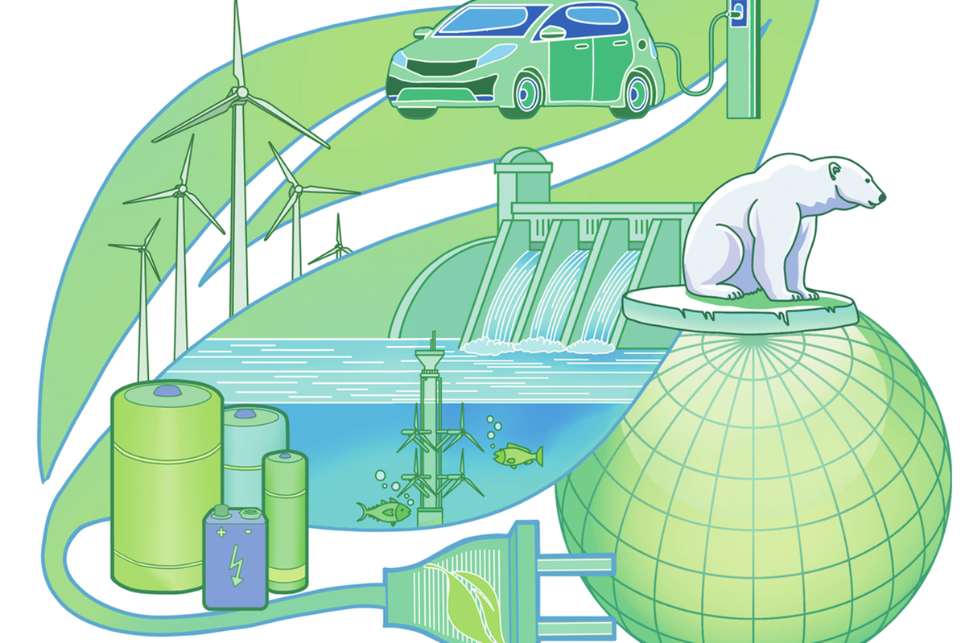
The fight against air pollution is an example that foreshadows China's ability to take action on climate change and redeem global trust for a more inclusive, resilient and sustainable future. President Xi Jinping's ambitious pledges that China will peak emissions before 2030 and achieve carbon neutrality before 2060 have motivated industries to take action and prompted other countries to up their game on emissions.
Figures show that China's carbon intensity in 2020 was 48.4 percent less than that in 2005, fulfilling China's commitment to the international community to achieve a 40-45 percent reduction in carbon intensity from the 2005 level by 2020. Now the"1+N" policy framework, meaning a general guideline plus various specific action plans, is dedicated to putting actionable policies in place in response to President Xi's initial commitment.
This Herculean task gained momentum with the China-US Joint Glasgow Declaration on Enhancing Climate Action in the 2020s during the United Nations Climate Change Conference (COP 26) in late 2021. The two nations have also reached a consensus on climate finance and nationally determined contributions under the Paris Agreement. As the World Economic Forum President Borge Brende has said, future cooperation between China and the United States is crucial. "The only way (to move) forward is to realize that we are in the same boat and we have to collaborate."
However, the picture is not entirely rosy. PricewaterhouseCooper's 2021 Net Zero Economy Index shows that currently we are reducing the carbon intensity of our activities at less than one-fifth of the rate we need-12.9 percent a year. Along with other studies, the report concludes that such a huge transition cannot be achieved without a systematic and complex rewiring of the entire global economy. But declining trust among the public further dampens this prospect. A global climate study by the WEF, covering 28 countries, found that only around one-fourth of respondents trust business sustainability claims and most participants feel strongly that current environmental protection efforts are not sufficient.
To restore trust, the WEF is committed to supporting all stakeholders to find a common language on sustainability targets and actions. In 2020, in collaboration with other leading institutions in the field, the WEF co-developed a comprehensive set of metrics to fill the gap in consistent environmental, social and governance (ESG) reporting standards. A follow-up report on the ESG landscape among Chinese companies concluded that a measurable global language of sustainability that accords with global green investing priorities while helping Chinese companies along the journey to reach national environmental targets is increasingly relevant and would be appreciated by Chinese stakeholders. Meanwhile, the Green Investment Principles for the Belt and Road demonstrate the commitment of Chinese stakeholders to uphold climate action beyond its borders by supporting developing and emerging countries to harness green finance and technology to scale up low-carbon infrastructure.
Not only climate, but other global environmental concerns such as biodiversity, are high on China's priority action list. The WEF began publishing its New Nature Economy Report Series in 2020, using data to identify pathways for businesses and governments to join the transition to a nature-positive economy.
Looking back at events over the past two years, it is clear to the world that collaboration and trust are not just important-they are essential-if human beings are to survive and thrive. World leaders will have the chance to renew the world's trust in their commitments to improve the state of the world at the upcoming Davos Agenda Week which will be convened virtually.
Outside, the cloudless sky gives an impression of timelessness, but we should not forget that it was not achieved instantly, effortlessly or single-handedly. To ensure that future generations can still enjoy the gifts of nature, we must shoulder the responsibility: working together, restoring trust.
The author is chief representative officer at China Office of the World Economic Forum Beijing.
The author contributed this article to China Watch, a think tank powered by China Daily.
The views do not necessarily reflect those of China Daily.
If you have a specific expertise, or would like to share your thought about our stories, then send us your writings at opinion@chinadaily.com.cn, and comment@chinadaily.com.cn.