Powering common prosperity









Renewable energy projects are an effective way for China to provide green development assistance
In the context of the global response to climate change, more and more countries regard renewable energy as an important way to promote energy transition and reduce greenhouse gas emissions. Since the beginning of this century, the installed capacity of renewable energy in the world has grown steadily. Although China started a little later than developed countries, its achievements in the past decade have attracted worldwide attention. China's installed capacity of renewable energy has remained the world's largest for many consecutive years, accounting for 30 percent of the global market.
Moreover, China's renewable energy capacity has also underpinned the rapid growth of global installed capacity, contributing to low-carbon transition globally. At the same time, renewable energy applications and capacity in China have contributed to the rapid reduction in costs globally, making renewable energy affordable and competitive enough to contribute to the low-carbon energy transition in China and the world. With technological advances and iterations, the market has expanded further and the global cost of renewable energy has fallen rapidly over the past decade, with the cost of solar photovoltaic energy in particular falling by more than 80 percent. The cost of offshore wind power has fallen by 29 percent. Notably, the World Resources Institute study found that while overall PV costs are falling, the proportion of non-technical costs is rising.
The proportion of PV module costs decreased from 60 percent in 2007 to 40 percent in 2020, while that of non-module costs, such as land taxes and fees, grid connection and delivery costs and financing costs, increased from 40 percent to 60 percent.
From an analysis of China's outbound investment in the energy sector, since the launch of the Belt and Road Initiative in 2013, it emerges that Chinese enterprises have been actively going global and their outbound investment has shown significant growth. In recent years, enterprises have also been practicing the concept of green and sustainable development. Among many energy varieties, PV is the most typical and successful case.
In the past 10 years, the cumulative installed capacity of Chinese enterprises' overseas investment in PV projects has been increasing year after year, with greenfield investments being the main investment and the rest realized through mergers and acquisitions.
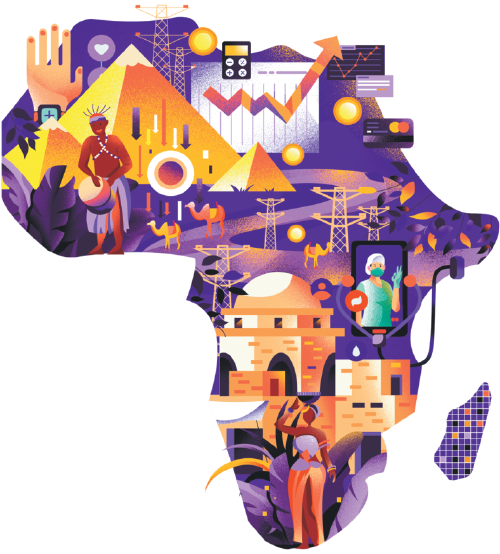
One of the beneficiaries is Africa, which is facing the dual challenges of fighting COVID-19 and economic recovery. The continent is dealing with economic recession and extreme poverty, disrupted health and medical services, inaccessible energy sources, and declining foreign investment and official aid. Africa's economy contracted 2.1 percent in 2020 as a result of the pandemic, dropping 5.6 to 7.3 percentage points from pre-pandemic forecasts, the worst recession in half a century, and the fiscal deficits of African countries doubled to an all-time high (8.4 percent of GDP) by 2020.
In the area of energy, nearly 60 percent of health centers in sub-Saharan Africa do not have access to electricity, while among those that have access to electricity, only 34 percent of hospitals and 28 percent of clinics have a reliable electricity supply. About three-fifths of clinics in Africa use refrigerators without access to reliable electricity needed for safe storage of vaccines and medicines. Today, 75 percent of the world's people without electricity live in sub-Saharan Africa, and 620 million people in Africa face energy poverty.
By 2030, it is forecast that 560 million people in sub-Saharan Africa will still have no access to electricity, making it harder for many countries to reach their goal of universal access by that time. In the face of this dilemma, the application of renewable energy is a viable alternative to ensure access to electricity, green recovery and economic development in large parts of Africa.
In the process of renewable energy development, China has accumulated experience through a series of innovative applications, such as PV poverty alleviation, PV agriculture and fisheries, PV anti-pandemic equipment, solar household systems, PV industrial parks and so on. In particular, the PV poverty alleviation project implemented from 2014 to 2017, with a total scale of 15.5 gigawatts, has played an important role in the national poverty alleviation campaign. In terms of installing rooftop PV panels for poor families and constructing village-level PV power stations and other measures, this project has lifted 2.8 million poor households and about 8.4 million people out of poverty. It provides useful experience for Africa to address energy access and post-pandemic recovery.
The energy assistance program is an excellent way for China to participate in global climate governance. With its carbon peaking and neutrality targets at home and its commitment to high-quality green development of the Belt and Road Initiative, China is more vocal in addressing climate change. In the field of assistance, energy projects with excellent environmental benefits, low project costs, short development cycles and sufficient supporting domestic capacity will not only demonstrate China's responsibility as a major country in green development assistance, but also help promote the further development of the domestic renewable energy industry.
The author is director of the Sustainable Investment Program at the World Resources Institute. The author contributed this article to China Watch, a think tank powered by China Daily.
The views do not necessarily reflect those of China Daily.
Contact the editor at editor@chinawatch.cn